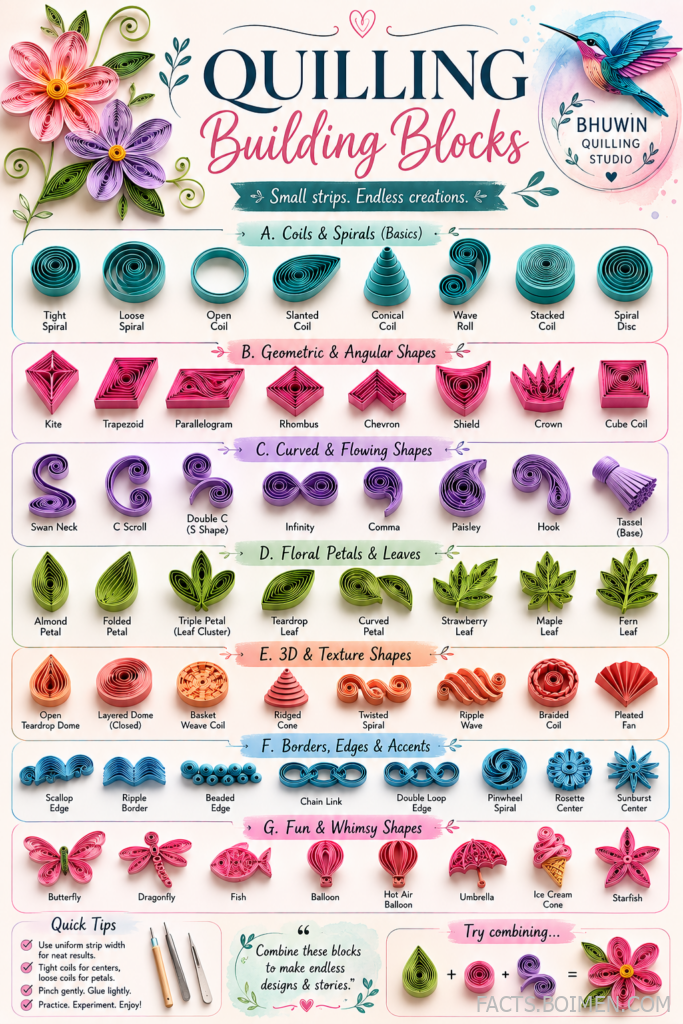
Paper quilling turns thin strips of paper into delicate coils, teardrops, and scrolls that look far harder than they actually are. The secret isn’t talent, it’s knowing the shape vocabulary. Once you can form a marquise, a heart, or a tight peg coil without thinking, you can build flowers, lettering, and even abstract wall art from a handful of strips. This quilling shape guide walks through 19 shape references, tutorials, and pattern libraries that show you exactly how each coil is made, measured, and combined. Whether you are brand new to a slotted tool or you already own a dozen quilling combs, these resources will sharpen your shaping instincts and give you a shape for every project idea.
Table of Contents(Click to Toggle)
- Why a Quilling Shape Guide Changes Everything
- 19 Quilling Shape Guides and Shape Libraries
- 1. Quilling.com Shape Guide
- 2. Twisted Paper Studio Shape Library
- 3. All Things Paper Shape Tutorials
- 4. Paper Quilling Patterns on Etsy
- 5. The Quilling Guild Shape Reference
- 6. YouTube Quilling Shape Playlists
- 7. Pinterest Quilling Shape Boards
- 8. Quilling by Hand Shape Charts
- 9. Craftsy Quilling Shape Classes
- 10. Quilling Card Shape Breakdowns
- 11. Instructables Quilling Shape Projects
- 12. Reddit r/quilling Shape Threads
- 13. Facebook Quilling Groups
- 14. Quilling Comb Shape Techniques
- 15. Slotted Tool Shape Basics
- 16. Quilling Shape Printable Templates
- 17. Quilling Shape Books on Amazon
- 18. Quilling Shape Videos on Vimeo
- 19. Quilling Shape Apps and Tools
- Bonus: Quilling Strip Cutters
- Bonus: Quilling Shape Challenges
- Bonus: Quilling Shape Swatch Books
- Bonus: Quilling Shape Communities
- Bonus: Quilling Shape Inspiration
- Turn Simple Coils Into Showpieces
Why a Quilling Shape Guide Changes Everything
Every quilling project, from a greeting card to a framed portrait, is built from the same small set of shapes. A loose coil becomes a teardrop with one pinch. A teardrop becomes a marquise with a second pinch. A marquise becomes a leaf, a heart, or a star with a few more folds. The problem for most beginners isn’t the tool or the paper, it’s that they never see the full shape family laid out in one place. A good quilling shape guide shows the pinch sequence, the strip length, and the finished silhouette side by side, so you can plan a design before you glue anything down. The resources below range from formal guild references to casual video playlists, and each one teaches shapes in a slightly different way. Use two or three together and you will quickly build muscle memory for the entire shape vocabulary.
19 Quilling Shape Guides and Shape Libraries
1. Quilling.com : The classic shape reference every beginner should bookmark first
What it is: A long-running quilling resource site with a dedicated shape guide page that catalogues the standard coil, scroll, and pinch shapes with photos and instructions.
Category: Reference site
Why it stands out:
- Shows the basic coil, teardrop, marquise, square, and heart in one continuous chart.
- Explains the difference between a tight coil and a loose coil, which trips up most beginners.
- Free to browse, no account or download required.
Best for: Absolute beginners who want one page that names every shape before they buy supplies.
2. Twisted Paper Studio : Shape tutorials paired with project ideas
What it is: A quilling blog and shop that walks through individual shapes and then shows them assembled into cards, ornaments, and framed art.
Category: Blog and shop
Why it stands out:
- Each shape post ends with a finished project, so you see the shape in context.
- Clear close-up photography makes the pinch points easy to copy.
- Occasional free printables for shape practice sheets.
Best for: Crafters who learn better when they see the shape used in a real design.
3. All Things Paper : A curated hub of shape tutorials from many artists
What it is: A paper craft blog that regularly features quilling artists and links out to their shape tutorials and pattern releases.
Category: Blog and directory
Why it stands out:
- Aggregates shape techniques from multiple quillers instead of one style.
- Good for discovering niche shapes like the crescent, shield, and tulip.
- Artist interviews often include tips on strip width and paper weight.
Best for: Intermediate quillers hunting for shapes beyond the standard dozen.
4. Paper Quilling Patterns on Etsy : Printable shape charts and templates from independent designers
What it is: A marketplace where quilling designers sell downloadable PDF shape guides, printable templates, and full pattern packs.
Category: Marketplace
Why it stands out:
- Many listings include a shape key that maps each coil to its position in the design.
- Prices are usually low, often a few dollars per pattern pack.
- Instant download means you can start shaping the same evening.
Best for: Crafters who want a full project with the shape list already worked out.
5. The Quilling Guild : A formal shape reference backed by a community
What it is: An international quilling organization with member resources, newsletters, and reference material on traditional shapes.
Category: Organization and reference
Why it stands out:
- Uses consistent shape terminology, which helps when following older patterns.
- Connects you with regional groups and in-person workshops.
- Archives explain historic shapes rarely covered on modern blogs.
Best for: Serious hobbyists who want accurate names and a wider quilling community.
6. YouTube Quilling Shape Playlists : Watch each pinch happen in real time
What it is: Channels dedicated to quilling often organize their videos into playlists specifically about shapes and coils.
Category: Video
Why it stands out:
- Slow-motion or close-up footage shows exactly how much pressure to apply.
- You can pause at the pinch step and copy it immediately.
- Free access to hundreds of shape variations.
Best for: Visual learners who struggle to read written pinch instructions.
7. Pinterest Quilling Shape Boards : Endless visual shape inspiration in one scroll
What it is: Pinterest boards where quillers pin shape charts, step photos, and finished designs from around the web.
Category: Visual discovery
Why it stands out:
- Shape charts appear as single infographic images you can save for later.
- Related pins surface unusual shapes you would never search for by name.
- Easy to build a private board as your personal shape mood board.
Best for: Browsers who want a quick visual overview before committing to a project.
8. Quilling by Hand : Shape charts built for hand-rolling without a tool
What it is: A resource focused on rolling and shaping paper strips by hand, including shape charts for tool-free quilling.
Category: Technique reference
Why it stands out:
- Shows how to form coils with just your fingers when a slotted tool isn’t available.
- Useful for quilling on the go or with kids.
- Emphasizes strip tension, which affects every shape you make.
Best for: Traveling crafters or anyone teaching quilling to children.
9. Craftsy Quilling Classes : Structured lessons that build shape skills in order
What it is: Online craft classes, including quilling courses that start with basic coils and progress to complex shaped designs.
Category: Online course
Why it stands out:
- Lessons are sequenced, so you learn shapes in a logical order.
- Instructor feedback and class comments help correct mistakes.
- Downloadable reference sheets often accompany each lesson.
Best for: Learners who want a guided path instead of scattered tutorials.
10. Quilling Card : See how professional shapes are assembled at scale
What it is: A company that produces handmade quilled greeting cards, with a site that showcases finished designs and occasionally shares technique.
Category: Inspiration and shop
Why it stands out:
- Shows what clean, production-quality shaping looks like up close.
- Designs reveal how repeated shapes create pattern and rhythm.
- Useful for studying color placement as much as shape.
Best for: Crafters who want to raise their finishing quality to a professional level.
11. Instructables Quilling Projects : Step-by-step shape builds with photos at every stage
What it is: A community project site where makers post quilling tutorials that break designs into individual shapes.
Category: Tutorial community
Why it stands out:
- Each step has a photo, so you can verify your shape before moving on.
- Comment sections often contain troubleshooting from other makers.
- Projects range from beginner to advanced, clearly labeled.
Best for: Makers who like to follow along with a photo at every step.
12. Reddit r/quilling : Ask shape questions and get real answers
What it is: A subreddit where quillers share work, ask about specific shapes, and troubleshoot problems.
Category: Community forum
Why it stands out:
- You can post a photo of a shape you are struggling with and get feedback.
- Discussions cover paper weight, strip width, and glue choices that affect shaping.
- Searchable archives answer many common shape questions instantly.
Best for: Self-taught quillers who need a second opinion on a tricky pinch.
13. Facebook Quilling Groups : Fast, friendly shape help from active hobbyists
What it is: Numerous Facebook groups dedicated to paper quilling where members post shape charts, ask questions, and share patterns.
Category: Community
Why it stands out:
- Response times are often minutes rather than days.
- Members frequently share free shape printables and challenges.
- Groups often run themed shape-of-the-month activities.
Best for: Crafters who want ongoing encouragement and quick answers.
14. Quilling Comb Shape Techniques : Build multi-loop shapes in one motion
What it is: A technique category covering the quilling comb, a tool that wraps paper around evenly spaced pins to create loops, leaves, and flower petals.
Category: Tool technique
Why it stands out:
- Produces symmetrical loops that are difficult to shape by hand.
- Ideal for grape clusters, flower petals, and butterfly wings.
- Learning one comb pattern unlocks a whole family of related shapes.
Best for: Quillers ready to move beyond single-coil shapes into looped designs.
15. Slotted Tool Shape Basics : The first tool that makes coils consistent
What it is: The slotted quilling tool holds the strip end so you can roll a uniform coil, the starting point for almost every shape.
Category: Tool technique
Why it stands out:
- Consistent coil size makes every subsequent pinch predictable.
- Available in needle-tip and standard sizes for different strip widths.
- Inexpensive and widely stocked in craft stores.
Best for: Beginners who want reliable coils before attempting pinched shapes.
16. Quilling Shape Printable Templates : Trace, fill, and glue with confidence
What it is: Printable sheets that show shape outlines at actual size, so you can place coils directly onto the design.
Category: Printable resource
Why it stands out:
- Removes guesswork about where each shape belongs.
- Great for lettering and symmetrical mandala designs.
- Often free from blogs and guild newsletters.
Best for: Planners who want to map a design before rolling a single strip.
17. Quilling Shape Books : Deep reference you can keep on the shelf
What it is: Printed quilling books that dedicate chapters to shape libraries, often with dozens of variations and project galleries.
Category: Books
Why it stands out:
- Comprehensive shape indexes you can flip through offline.
- Often include strip length and paper width recommendations per shape.
- Project chapters show shapes combined into finished art.
Best for: Crafters who prefer a permanent reference over scattered web pages.
18. Quilling Shape Videos on Vimeo : High-quality close-ups from dedicated artists
What it is: Vimeo hosts quilling videos from artists who prioritize clean, high-resolution close-up footage.
Category: Video
Why it stands out:
- Less compression than typical social video, so fine detail stays visible.
- Artists often narrate the pinch sequence step by step.
- Good source for advanced shapes not covered on mainstream channels.
Best for: Detail-oriented quillers who want to see the paper fibers move.
19. Quilling Shape Apps and Tools : Digital helpers for planning and measuring
What it is: A small but growing category of apps and digital tools that help you plan quilling designs, calculate strip lengths, and preview shape layouts.
Category: Digital tools
Why it stands out:
- Some let you sketch a design and estimate how many coils each section needs.
- Useful for scaling a pattern up or down before cutting strips.
- Often free or low-cost on mobile app stores.
Best for: Designers who want to plan a large piece before committing paper.
Bonus: Quilling Strip Cutters : Consistent strip width for consistent shapes
What it is: Tools that cut paper into uniform strips, the foundation of repeatable shapes.
Category: Tool
Why it stands out:
- Uniform width means every coil rolls to the same size.
- Saves money compared with buying pre-cut strips.
- Lets you use any paper color or weight you like.
Best for: Quillers who go through a lot of strips and want full control.
Bonus: Quilling Shape Challenges : Practice one shape until it is automatic
What it is: Community challenges that ask participants to make a specific shape and share the result.
Category: Practice activity
Why it stands out:
- Focused repetition builds muscle memory quickly.
- Seeing many versions of the same shape teaches variation.
- Low-pressure way to stay motivated between big projects.
Best for: Anyone stuck in a rut who needs a small, finishable goal.
Bonus: Quilling Shape Swatch Books : Your personal shape dictionary
What it is: A handmade notebook where you glue one example of each shape with its name and strip length.
Category: Personal reference
Why it stands out:
- Forces you to practice every shape at least once.
- Becomes a fast visual index for future projects.
- Customizable to your own paper and tool preferences.
Best for: Organized crafters who like a reference they built themselves.
Bonus: Quilling Shape Communities : Learn faster with other quillers
What it is: Online and local groups where quillers exchange shape tips, patterns, and encouragement.
Category: Community
Why it stands out:
- Real-time feedback on shapes you cannot quite get right.
- Access to shared pattern libraries and swaps.
- Local guilds offer in-person workshops.
Best for: Crafters who stay motivated when learning alongside others.
Bonus: Quilling Shape Inspiration : Study finished art to reverse-engineer shapes
What it is: Galleries, exhibitions, and artist portfolios that show finished quilling art in high detail.
Category: Inspiration
Why it stands out:
- You can identify shapes in finished work and work backward to the technique.
- Exposes you to color and composition ideas alongside shape.
- Often free to browse online.
Best for: Quillers who want to design original pieces rather than follow patterns.
Turn Simple Coils Into Showpieces
The quilling shape guide you choose matters less than the practice you put in. Pick one reference for naming shapes, one video source for technique, and one community for feedback, then roll the same shape twenty times until your fingers know it. From there, the marquise, heart, crescent, and comb-loop shapes all become building blocks you can combine freely. Most of the resources above are free, and the few paid ones cost less than a single craft store haul. Start with the basic coil, add one pinch at a time, and let the shape vocabulary grow with each project. Which quilling shape gave you the most trouble when you first started, and what finally made it click?