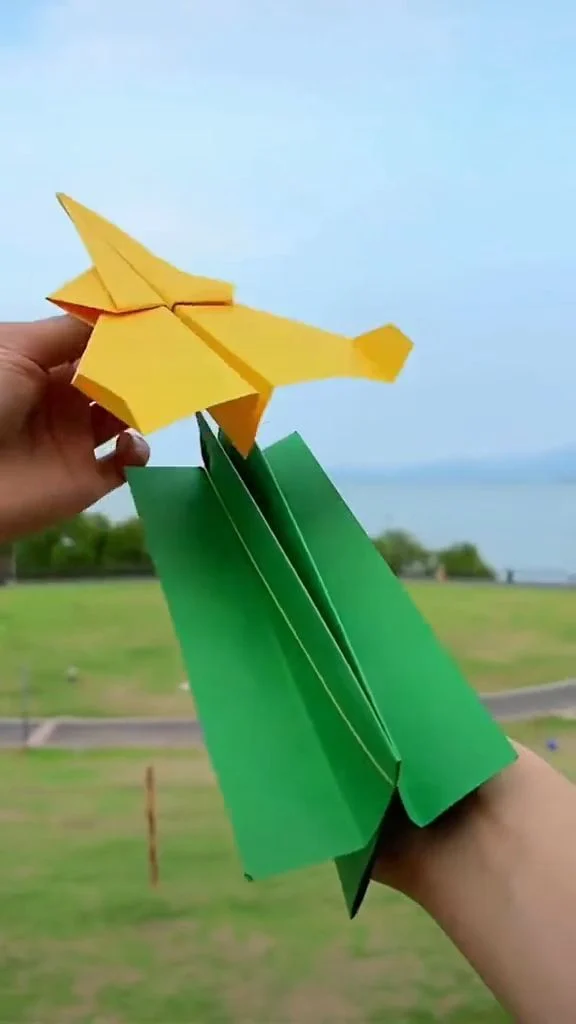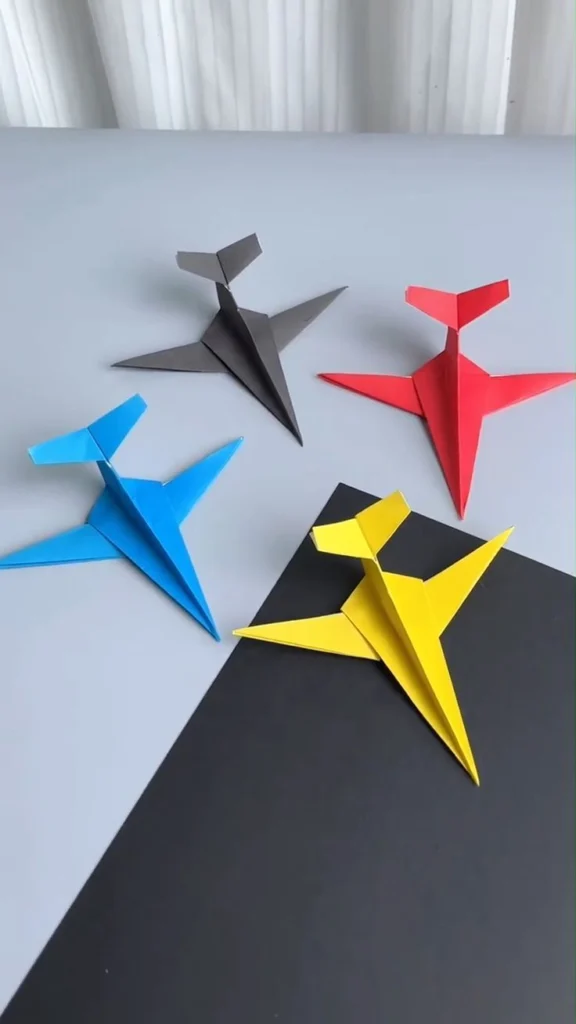
There is a particular kind of disappointment that comes from folding a paper plane, throwing it with confidence, and watching it nose-dive into the carpet two feet away. The fold was fine. The paper was fine. Something about the proportions, the crease pressure, or the wing angle just wasn’t. That’s the gap this list closes. Below are 21 origami airplane tutorials and paper-folding resources — starting with the classic 15×15 cm square-paper approach — each chosen because the instructions are clear enough to actually reproduce, and the resulting plane is tuned to glide rather than tumble. Grab a stack of square paper and work through them in order.
Table of Contents(Click to Toggle)
- Why a Good Origami Airplane Tutorial Changes Everything
- 21 Origami Airplane Tutorials and Paper-Folding Resources
- 1. Fold’N Fly : The Classic 15×15 cm Square-Paper Method
- 2. Origami.me : Step-by-Step Photo Diagrams for Beginners
- 3. Origami Way : Simple Dart and Glider Instructions
- 4. Foldable Flight : Templates for High-Performance Paper Planes
- 5. Paper Airplane World : Flight Tuning and Trimming Guides
- 6. Origami Instructions : Diagram Library with Difficulty Ratings
- 7. The Paper Airplane Book (Ken Blackburn) : Record-Holding Designs
- 8. Instructables Paper Planes : Community-Tested Folds
- 9. YouTube Paper Plane Channels : Slow-Motion Folding Videos
- 10. Canon Creative Park : Printable Patterned Paper
- 11. Origami Resource Center : History and Diagram Archive
- 12. NASA Glenn Paper Airplane Resources : Real Aerodynamics
- 13. Whitewings : Precision Kits and Glider Plans
- 14. Pinterest Paper Plane Boards : Visual Fold Collections
- 15. Reddit r/origami : Feedback on Your Fold
- 16. Tavin’s Origami : Video Tutorials for Clean Creases
- 17. Paper Plane Depot : Distance and Duration Records
- 18. Print-A-Paper : Free Downloadable Plane Templates
- 19. Origami-Fun : Animated Folding Diagrams
- 20. Science Buddies : Paper Airplane Physics Experiments
- 21. The Origami Paper Shop : Sourcing the Right 15×15 cm Squares
- Bonus Mentions
- The Best Paper Planes Are the Ones You Fold Twice
Why a Good Origami Airplane Tutorial Changes Everything
Paper airplanes sit at an unusual intersection: they are craft, physics, and play at the same time. A single fold changes how air moves over a wing, and a single millimetre of asymmetry decides whether a plane tracks straight or banks into the sofa. That’s why bad instructions are so frustrating — they hide the one step that matters.
The tutorials below are selected for one thing above all: reproducibility. Most assume a standard 15×15 cm square, the size that fits neatly in the hand and produces a plane light enough to glide but stiff enough to hold a crease. Some are pure diagrams, some are videos, and a few go further and explain the aerodynamics so you can adjust a design instead of just copying it. Whether you’re folding with a child at the kitchen table or chasing a personal distance record in a hallway, there’s something here that will get you from crumpled first attempt to a plane that actually flies.
21 Origami Airplane Tutorials and Paper-Folding Resources
1. Fold’N Fly : The Classic 15×15 cm Square-Paper Method
What it is: An online database of paper airplane designs organised by difficulty, each built around a standard square or A4 sheet.
Category: Tutorial database
Why it stands out: It starts exactly where the pin does — a 15×15 cm square — and walks through the fold sequence with clear diagrams rather than a single confusing photo. The beginner tier produces a plane in under two minutes, which makes it ideal for testing paper stock before committing to harder designs.
Best for: First-time folders who want a guaranteed-flying plane from a square sheet.
2. Origami.me : Step-by-Step Photo Diagrams for Beginners
What it is: A clean, ad-light origami site with photographic step sequences for planes, animals, and boxes.
Category: Photo tutorial site
Why it stands out: Each step is shot from the same angle, so you can compare your fold to the reference without mentally rotating the paper. The plane section includes a simple dart and a wider glider, and the site notes which steps are the ones people usually get wrong.
Best for: Visual learners who find video too fast to follow.
3. Origami Way : Simple Dart and Glider Instructions
What it is: A large library of origami instructions with a dedicated, well-organised paper airplane category.
Category: Instruction library
Why it stands out: The written instructions sit beside the diagrams, which matters more than it sounds — a line like “crease firmly, then unfold” is the difference between a plane that flies and one that flops. Difficulty labels help you avoid jumping straight into an intermediate fold.
Best for: Readers who prefer text plus images over pure video.
4. Foldable Flight : Templates for High-Performance Paper Planes
What it is: A site and template shop focused on planes designed to fly unusually far and stay aloft.
Category: Performance designs
Why it stands out: The designs go beyond the classroom dart, using folded winglets and weighted noses. Printable templates remove the guesswork about proportions, which is the single biggest reason home-folded planes underperform. Expect a steeper learning curve than a basic dart.
Best for: Folders ready to move past beginner planes and chase distance.
5. Paper Airplane World : Flight Tuning and Trimming Guides
What it is: A long-running reference site covering designs, folding technique, and — crucially — how to fix a plane that won’t fly.
Category: Reference and troubleshooting
Why it stands out: Most tutorials stop at the final fold. This one explains trimming: bending the trailing edge slightly up to correct a dive, or adjusting a winglet to stop a turn. That single section rescues more planes than any new design.
Best for: Anyone whose plane looks right but flies wrong.
6. Origami Instructions : Diagram Library with Difficulty Ratings
What it is: A traditional diagram-based origami archive with clear line-art folding symbols.
Category: Diagram archive
Why it stands out: Learning standard origami notation — valley fold, mountain fold, squash fold — unlocks every other resource on this list. The plane designs here are simple, but the notation skills transfer to far more complex models.
Best for: Building a foundation in origami diagram reading.
7. The Paper Airplane Book (Ken Blackburn) : Record-Holding Designs
What it is: A classic print book by a former Guinness world record holder for paper airplane flight duration.
Category: Book
Why it stands out: Blackburn’s designs are engineered rather than improvised, with explanations of why each fold affects lift and drag. The book format suits slow, careful folding far better than a scrolling page, and it’s a reliable gift for a curious kid.
Best for: Families who want a screen-free folding session.
8. Instructables Paper Planes : Community-Tested Folds
What it is: A user-generated project site with hundreds of paper airplane builds, photos, and comments.
Category: Community tutorials
Why it stands out: The comment sections are the hidden value — folders post what broke, what they changed, and which paper weight worked. Quality varies wildly, so check the step photos before committing to a long fold.
Best for: Tinkerers who like modifying designs.
9. YouTube Paper Plane Channels : Slow-Motion Folding Videos
What it is: A cluster of dedicated creators who film folds from directly overhead at a watchable pace.
Category: Video tutorials
Why it stands out: Watching a crease being pressed — where the thumbnail sits, how the paper is held — teaches technique that diagrams can’t convey. Use the playback speed control; 0.5× is genuinely useful for the trickier wing folds.
Best for: Learning by watching rather than reading.
10. Canon Creative Park : Printable Patterned Paper
What it is: A free printable craft library that includes patterned and coloured paper sheets.
Category: Printable paper
Why it stands out: Patterned paper makes a finished plane feel like an object worth keeping, and printing your own lets you control weight — a slightly heavier sheet flies more predictably than thin copy paper. Print on 80–100 gsm for the best balance.
Best for: Making planes that look as good as they fly.
11. Origami Resource Center : History and Diagram Archive
What it is: A deep archive of origami history, diagrams, and educational material.
Category: Reference archive
Why it stands out: The site treats paper folding as a genuine craft tradition, with context on where designs come from. Useful if you want to turn a folding session into a short lesson for a classroom or scout group.
Best for: Teachers and group activity leaders.
12. NASA Glenn Paper Airplane Resources : Real Aerodynamics
What it is: Educational materials from NASA explaining lift, drag, thrust, and how they apply to simple gliders.
Category: Educational science
Why it stands out: This is the resource that explains why your plane behaves the way it does. Understanding that a nose-heavy plane flies faster but shorter turns trial-and-error into deliberate design — and the explanations are written for students, not engineers.
Best for: Curious folders who want the physics, not just the folds.
13. Whitewings : Precision Kits and Glider Plans
What it is: A maker of paper airplane kits with die-cut parts and detailed assembly plans.
Category: Kits
Why it stands out: Pre-cut parts remove the variance that ruins hand-folded planes, and the plans include balance adjustments. It’s a step toward model aviation rather than pure origami, which makes it a natural next purchase for a kid who’s hooked.
Best for: Folders who want repeatable, high-quality results.
14. Pinterest Paper Plane Boards : Visual Fold Collections
What it is: Curated boards collecting diagrams, videos, and finished-plane photos.
Category: Visual inspiration
Why it stands out: Excellent for discovering designs you didn’t know to search for, and for saving a fold to try later. The catch is that pins often link to broken pages, so treat them as a starting point and verify the source.
Best for: Browsing and saving ideas quickly.
15. Reddit r/origami : Feedback on Your Fold
What it is: An active community forum for origami folders of all levels.
Category: Community
Why it stands out: Post a photo of a plane that won’t fly straight and you’ll usually get specific, useful replies within a day — often pointing to a crease that isn’t sharp enough. The subreddit skews toward complex origami, but beginners are welcomed.
Best for: Getting personalised troubleshooting help.
16. Tavin’s Origami : Video Tutorials for Clean Creases
What it is: A YouTube channel known for calm, clearly framed folding tutorials.
Category: Video tutorials
Why it stands out: The camera stays still and the hands stay out of the way, which is rarer than it should be. Crease quality is emphasised throughout — press with a fingernail, fold against a table edge — and that habit alone improves every plane you make afterwards.
Best for: Improving technique, not just collecting designs.
17. Paper Plane Depot : Distance and Duration Records
What it is: A reference site tracking paper airplane designs, records, and competition categories.
Category: Records and reference
Why it stands out: Seeing the gap between a record-holding design and a classroom dart is genuinely motivating, and the site breaks down what makes the best designs different — wing loading, nose weight, surface area. Good for setting a personal target to beat.
Best for: Competitive folders chasing a record.
18. Print-A-Paper : Free Downloadable Plane Templates
What it is: A collection of printable paper airplane templates with fold lines already marked.
Category: Printable templates
Why it stands out: Printed fold lines act as training wheels — you fold exactly where the design intends, then graduate to blank paper once the proportions are in your hands. Ideal for younger folders who get frustrated by freehand measuring.
Best for: Kids and absolute beginners.
19. Origami-Fun : Animated Folding Diagrams
What it is: A tutorial site using animated diagrams alongside printable instructions.
Category: Animated diagrams
Why it stands out: Animation sits neatly between a static diagram and a full video — you can pause on the exact fold that confuses you. The printable versions mean you can take the instructions away from the screen, which is far more practical at a table.
Best for: Folders who want to print and fold offline.
20. Science Buddies : Paper Airplane Physics Experiments
What it is: A science education site with structured experiments built around paper planes.
Category: Educational experiments
Why it stands out: The experiments turn folding into a proper investigation — change one variable, such as wingspan or paper weight, and measure the effect on distance. It’s a ready-made activity for a rainy afternoon or a school project, with clear recording sheets.
Best for: Parents and teachers turning play into learning.
21. The Origami Paper Shop : Sourcing the Right 15×15 cm Squares
What it is: A specialist retailer stocking square origami paper in a range of weights and finishes.
Category: Supplies
Why it stands out: Paper choice quietly decides whether a plane flies. Standard 15×15 cm kami at around 70–80 gsm is the sweet spot for most designs — light enough to glide, crisp enough to hold a fold. Glossy or very thin paper looks lovely but slides apart mid-flight.
Best for: Stocking up properly instead of folding printer paper.
Bonus Mentions
Origami Club : Animated Beginner Folds
A Japanese site with charming animated diagrams. The interface is dated, but the animations are unusually clear for simple models.
wikiHow : Quick Refreshers on Common Folds
Useful when you’ve forgotten one step of a familiar plane. The illustrations are consistent and the steps are numbered, though the pages are ad-heavy.
Gilad’s Origami Page : A Deep Book and Design Index
A long-standing enthusiast archive cataloguing origami books and designers — the place to look when you want to go deeper than free tutorials.
Origami.org : Community Hub and Events
Connects folders with societies, exhibitions, and group folding sessions. Worth a look if you’d like to fold with others rather than alone.
The Best Paper Planes Are the Ones You Fold Twice
Almost nobody gets a clean, long-flying plane on the first attempt, and that’s the point. The first fold teaches you where the paper resists; the second teaches you to press the crease harder; the third is the one you actually throw. Work through a handful of the tutorials above with a consistent 15×15 cm square, and you’ll start to notice patterns — nose weight for speed, wing area for glide, symmetry for straight flight — that make every subsequent design easier to read.
The resources here cover the full range: quick beginner diagrams, video walkthroughs for tricky creases, trimming guides for planes that misbehave, and science material for anyone who wants to know why. Pick two or three, fold them properly, and keep the ones that fly. A stack of square paper and twenty minutes is genuinely all it takes.
Which design ended up flying furthest for you — and did you tweak the folds to get there? Share your best plane in the comments.