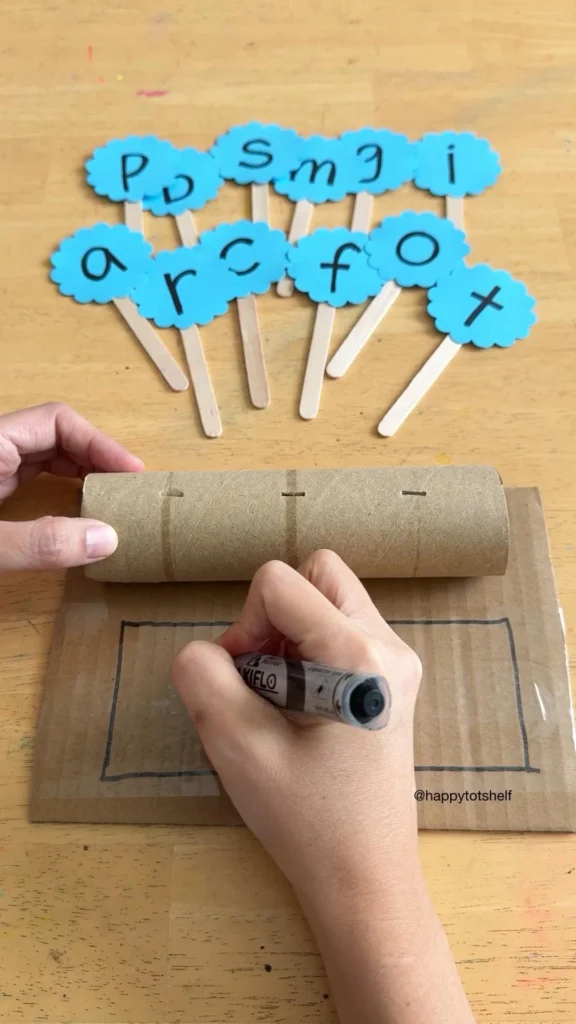
If you clicked through expecting a hands-on way to help a child sound out and blend their first words, you are in the right place. The CVC Word Flowers idea is simple but powerful: children pick up letter petals, match them to a stem, and physically plant the letters in order to build a consonant-vowel-consonant word like cat, sun, or pig. Because the letters are movable and the flower only “grows” when the word is correct, kids get instant feedback without a screen telling them they are wrong.
Below are 20 variations, printables, and companion tools that follow the same match-and-plant logic. Some are printable flower templates, some are magnetic or felt versions, and a few are clever digital twists. Every entry is something a parent, teacher, or tutor can actually set up this week.
Table of Contents(Click to Toggle)
- Why CVC Word Flowers Work So Well
- 20 CVC Word Flower Activities and Tools
- 1. CVC Word Flower Printable Set
- 2. Letter Petal Matching Mats
- 3. Felt Flower Word Garden
- 4. Magnetic Letter Flower Pots
- 5. Playdough Letter Blossoms
- 6. Clothespin Petal Word Builder
- 7. Flower Pot Word Sort
- 8. Sound-by-Sound Bloom Cards
- 9. Garden Sensory Bin Letters
- 10. Blooming Word Sliders
- 11. Flower Word Family Wheels
- 12. Watercolor Letter Garden
- 13. Pocket Chart Flower Stems
- 14. Letter Bead Flower Sticks
- 15. Real Flower Pot Word Hunt
- 16. Flower CVC Clip Cards
- 17. Build-a-Bloom File Folder Game
- 18. Flower Word Lacing Cards
- 19. Chalk Garden Word Paths
- 20. Flower Word Wall Display
- Bonus Mentions
- Where to Start Growing Readers
Why CVC Word Flowers Work So Well
CVC words are the bridge between knowing letter sounds and actually reading. A child has to hold three sounds in mind, blend them, and recognize the result as a real word. That is a lot of cognitive work, so the activity needs to be physical enough to keep attention but simple enough to leave room for thinking.
Flower-themed letter matching hits a useful sweet spot. The flower has a natural structure: petals attach to a center, and a stem holds it up. That maps neatly onto letters building a word. When a child places the wrong petal, the flower looks off, so the mistake is visible and fixable. There is no buzzer and no red X, just a flower that does not quite match yet. That gentle self-correction is exactly what early readers need, and it is why so many teachers build word work around this format.
20 CVC Word Flower Activities and Tools
1. CVC Word Flower Printable Set : The classic match-and-plant printable
What it is: A printable flower template where the stem and center show a picture or word prompt, and separate letter petals are cut out to complete it.
Category: Printable worksheet
Why it stands out: It is the closest match to the original pin promise. You print, laminate, and cut once, then reuse it for years. Most sets include short-a, short-e, short-i, short-o, and short-u word families.
Best for: Kindergarten and first-grade word work centers.
2. Letter Petal Matching Mats : Large, low-prep mats for table work
What it is: Full-page mats showing a flower outline with blank petal spaces and a picture clue in the center.
Category: Printable mat
Why it stands out: The oversized format suits small hands that are still developing fine motor control. Sliding a letter card onto a mat is easier than writing, so the focus stays on sounds rather than pencil grip.
Best for: Preschoolers and children who avoid writing tasks.
3. Felt Flower Word Garden : Quiet, tactile, reusable letter play
What it is: A felt board garden with felt stems and detachable felt petals printed with letters.
Category: Hands-on craft
Why it stands out: Felt sticks to felt without velcro, so petals stay put while a child sounds out the word. It is silent, which makes it ideal for quiet time or a classroom reading corner where noise matters.
Best for: Travel, quiet bins, and sensory-sensitive learners.
4. Magnetic Letter Flower Pots : Build words on a baking sheet garden
What it is: Small magnetic letters arranged on a metal tray decorated as a flower pot or garden bed.
Category: Manipulative
Why it stands out: Magnetic letters are already in most primary classrooms, so this is nearly free to set up. The tray keeps letters from sliding, and children can swap one letter to make a whole new word, like changing cat to bat.
Best for: Practicing word families and rhyming patterns.
5. Playdough Letter Blossoms : Roll, shape, and plant letters
What it is: Playdough mats where children roll dough into letter shapes and press them onto flower petals.
Category: Sensory activity
Why it stands out: Rolling dough builds the hand strength needed for handwriting while the child is focused on letters. Pressing a dough letter onto a petal gives strong tactile feedback that helps letter shapes stick in memory.
Best for: Children who need movement and touch to stay engaged.
6. Clothespin Petal Word Builder : Pin the letters to the flower
What it is: A cardboard or laminated flower center with letters written on clothespins that clip around the edge as petals.
Category: DIY manipulative
Why it stands out: Clipping a clothespin is a genuine pincer-grip workout, so one activity covers phonics and fine motor skills at once. Write letters on both sides of each pin to double the word options.
Best for: Occupational therapy crossover and busy-bag activities.
7. Flower Pot Word Sort : Sort petals into the right word pot
What it is: Several labeled flower pots, each representing a word family, with loose letter petals to sort into the correct pot.
Category: Sorting game
Why it stands out: Sorting adds a decision-making step, so children have to read the pot label and compare it to the petal before placing it. That comparison is where real reading happens.
Best for: Small groups working on -at, -en, -ig, -op, and -ug families.
8. Sound-by-Sound Bloom Cards : One petal per sound
What it is: A card set where each petal represents a single phoneme, and children tap each petal as they say the sound.
Category: Phonemic awareness tool
Why it stands out: Tapping one petal per sound slows children down enough to hear each part of the word. The physical tap keeps the pace steady, which is exactly what blending practice needs.
Best for: Children who blend too fast and guess at words.
9. Garden Sensory Bin Letters : Dig for letters in a soil bin
What it is: A shallow bin filled with dried beans or shredded paper “soil” and hidden letter tiles, plus flower cards showing words to build.
Category: Sensory bin
Why it stands out: Hunting for letters adds a discovery element that keeps kids at the bin far longer than a flat worksheet would. Once they find the letters, they plant them on the flower card to finish the word.
Best for: Independent play while an adult works with another child.
10. Blooming Word Sliders : Slide a strip to reveal new words
What it is: A flower-shaped card with a slot, and a paper strip threaded through it that shows one letter at a time.
Category: Printable manipulative
Why it stands out: Sliding the strip changes the first letter while the ending stays the same, so children read a whole chain of words in a minute. That repetition builds fluency fast.
Best for: Quick fluency drills and one-on-one tutoring.
11. Flower Word Family Wheels : Spin to make a new blossom
What it is: A two-layer paper wheel where the outer ring of petals spins past a fixed center letter to create new CVC words.
Category: Printable spinner
Why it stands out: The spin adds a small element of chance, which makes repeated reading feel like a game rather than a drill. One brad fastener is all the assembly required.
Best for: Centers and early finishers.
12. Watercolor Letter Garden : Paint a letter, plant a word
What it is: A painting project where children watercolor a letter onto each paper petal before assembling the flower.
Category: Art-integrated literacy
Why it stands out: Painting a letter means looking at its shape closely for several minutes, which is far more exposure than tracing it once. The finished flowers make a bright bulletin board display.
Best for: Reluctant readers who love art.
13. Pocket Chart Flower Stems : Whole-class word building
What it is: A hanging pocket chart with flower-stem pockets that hold letter cards, sized for group lessons.
Category: Classroom display tool
Why it stands out: The large format lets a teacher build a word with the whole class watching, then swap one letter to show how the word changes. Cards are easy for small hands to insert during turn-taking.
Best for: Whole-group phonics warm-ups.
14. Letter Bead Flower Sticks : Thread letters onto stems
What it is: Pipe cleaner stems and alphabet beads that children thread in the correct order to spell a CVC word.
Category: Fine motor literacy
Why it stands out: Threading forces children to plan the letter order before they start, which is a subtle but real comprehension step. The finished beaded stems can be bent into a loop and hung up as a word garden.
Best for: Quiet independent practice and hand-strength building.
15. Real Flower Pot Word Hunt : Take the activity outdoors
What it is: Small terracotta pots labeled with CVC words, with letter stones or cards hidden in the garden to match.
Category: Outdoor activity
Why it stands out: Moving the word work outside resets attention, and hunting for letter stones adds healthy movement. It also works with real planting: children can plant a seed in the pot once the word is complete.
Best for: Spring afternoons and summer learning loss prevention.
16. Flower CVC Clip Cards : Clip the correct word
What it is: Cards showing a flower picture and three word choices, with a clothespin used to mark the matching word.
Category: Printable clip cards
Why it stands out: Clip cards are self-checking when you place a small dot on the back behind the correct answer, so children can verify their own work without an adult. That independence builds confidence quickly.
Best for: Independent centers and early finishers.
17. Build-a-Bloom File Folder Game : A folder that fits in a bag
What it is: A file folder game with flower pieces stored in a pocket, ready to pull out and play anywhere.
Category: Portable game
Why it stands out: Everything lives in one folder, so there are no lost pieces rattling around a drawer. It is a genuinely practical choice for tutors who travel between homes or classrooms.
Best for: Traveling tutors and restaurant waiting time.
18. Flower Word Lacing Cards : Lace the letters in order
What it is: Laminated flower cards with punched holes beside each letter, and a shoelace to thread through in word order.
Category: Fine motor activity
Why it stands out: Lacing in letter order reinforces left-to-right directionality, which many early readers still need to internalize. The physical sequence mirrors the reading sequence.
Best for: Children reversing letters or reading right to left.
19. Chalk Garden Word Paths : Hop from letter to letter
What it is: Sidewalk chalk flowers drawn with letters inside, and children hop from petal to petal saying each sound.
Category: Gross motor literacy
Why it stands out: Hopping one letter at a time gives a full-body rhythm to blending, which helps children who learn through movement. It costs nothing but chalk and a patch of pavement.
Best for: High-energy kids and outdoor summer sessions.
20. Flower Word Wall Display : Grow a garden of mastered words
What it is: A wall display where each completed flower represents a CVC word the child can now read independently.
Category: Progress display
Why it stands out: The garden grows only as skills grow, so progress is visible at a glance. Children often point to their garden and read old words unprompted, which is a natural review.
Best for: Building motivation and tracking progress over a term.
Bonus Mentions
Starfall : Free phonics games with word-building practice
A long-running free site with simple word-building activities that pair well with hands-on flower work for screen time that still teaches blending.
ABCya : Letter and word games by grade level
Organized by grade, so you can find CVC-level word games without scrolling past content that is too advanced.
Khan Academy Kids : Free early literacy app
A genuinely free app with letter-sound activities that can reinforce what children practice with physical letter petals.
Education.com : Printable worksheet library
Worth checking for extra CVC word family printables when you want to extend a flower unit.
Pinterest : Endless photo inspiration for setups
Search “CVC word flower” for real classroom photos that show how other teachers set up the activity.
Where to Start Growing Readers
If you only try one thing this week, start with a printable flower set and a small stack of letter petals. Keep it to five or six words at first, and let the child build each flower slowly, saying every sound out loud before blending. Once that feels easy, add a word family variation, then move to a magnetic or felt version so the same skill gets practiced in a new way.
The real value of the CVC flower format is that it turns reading practice into something children want to return to. A flower that only blooms when the word is right gives a clear, kind signal, and that small moment of success is what keeps early readers going.
What is your child’s favorite hands-on way to practice letter sounds? Share your best find in the comments, because the cleverest setups usually come from other parents and teachers.