
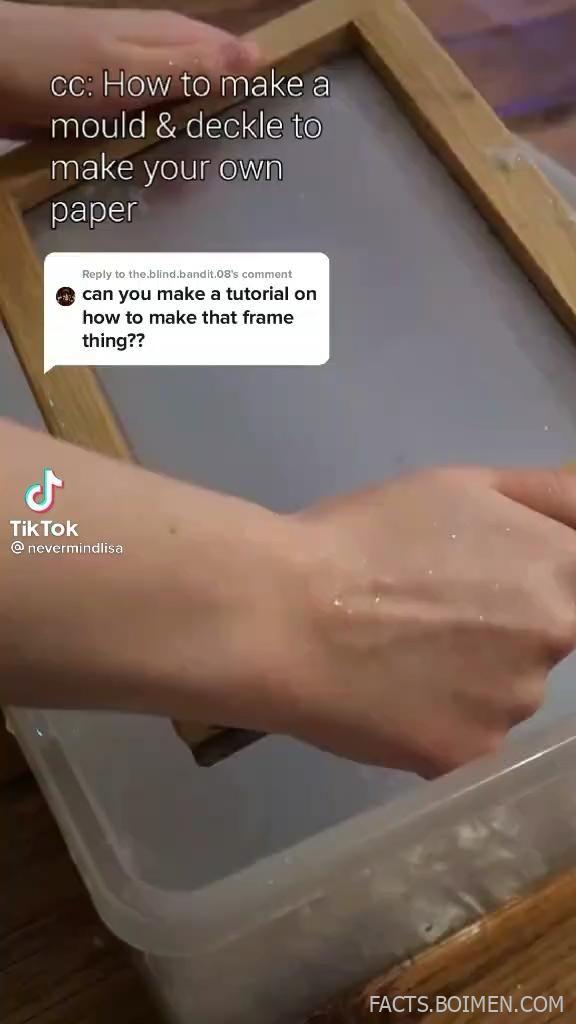
If you have ever watched someone pull a wet sheet of handmade paper out of a vat and wondered how that simple wooden frame works, you are in the right place. The frame is called a mould and deckle, and it is the single piece of equipment that separates “pulp in a bucket” from “actual paper.” The good news: you do not need a workshop, a kiln, or expensive gear. You need two frames, some mesh, and about an afternoon.
Below are 17 resources, tools, and supply sources that will help you build a mould and deckle, then actually put it to work. Some are tutorials, some are material suppliers, and some are communities where paper makers share what worked and what turned into a soggy mess. Item one is the core build itself.
Table of Contents(Click to Toggle)
- Why Building a Mould and Deckle Is the Gateway to Paper Making
- 17 Tools and Tutorials for Making a Mould, Deckle, and Handmade Paper
- 1. DIY Mould and Deckle Build Guide
- 2. Arnold Grummer’s Paper Making Kits
- 3. Carriage House Paper
- 4. Twinrocker Handmade Paper
- 5. Hollander Beaters and Pulp Prep Resources
- 6. Blick Art Materials
- 7. Lee Valley Tools
- 8. Instructables Paper Making Projects
- 9. Reddit r/papermaking
- 10. YouTube: Paper Making Tutorial Channels
- 11. Etsy Handmade Paper Mould Sellers
- 12. Talas Bookbinding Supplies
- 13. Hiromi Paper
- 14. Pinterest Paper Making Boards
- 15. Local Hardwood Offcuts and Reclaimed Frames
- 16. Botanical Colors
- 17. Your Local Recycling Bin and Shredder
- Bonus: Paper Making Facebook Groups
- Bonus: Library and Museum Workshops
- Bonus: Secondhand Screen Printing Frames
- Bonus: Seed Paper and Plantable Pulp
- From Scrap Paper to Something Worth Keeping
Why Building a Mould and Deckle Is the Gateway to Paper Making
A mould is the frame with a screen stretched across it. A deckle is the empty frame that sits on top and holds the wet pulp in place so your sheet has clean edges instead of a ragged blob. Together they cost very little to make and they unlock everything: recycled paper, embedded petals, colored pulp, deckled edges, watermarks, and sheets you can actually write on.
Most beginners quit because they try to improvise with a single frame and end up with paper that is lumpy, uneven, or stuck to the screen. Building a proper pair solves that. The list below mixes build guides, suppliers, and communities so you can go from “I saw this on TikTok” to “I made a stack of sheets this weekend.”
17 Tools and Tutorials for Making a Mould, Deckle, and Handmade Paper
1. DIY Mould and Deckle Build Guide : The core frame build, step by step
What it is: A photo-heavy, step-by-step walkthrough for building a matched mould and deckle from pine or hardwood strips, brass tacks, and aluminum window screen.
Category: Tutorial
Why it stands out: It shows the exact spacing and depth that keep a sheet from draining too fast, plus a simple trick for sealing the wood so it does not swell and warp after repeated dunkings. The screen tension step is the one most people skip, and this guide makes it obvious why it matters.
Best for: First-time builders who want a working pair of frames in a single afternoon.
2. Arnold Grummer’s Paper Making Kits : Beginner kits that include a mould and deckle
What it is: A long-running paper making brand selling starter kits, pour moulds, and pulp packs designed for classrooms and hobbyists.
Category: Kit supplier
Why it stands out: Their beginner kit includes a small mould and deckle, a couching cloth, and enough pulp to make several sheets, so you can test the process before committing to a full build. It is also a good reference for sizing: once you see a real mould in person, building a larger one gets much easier.
Best for: Testing whether you enjoy paper making before buying lumber.
3. Carriage House Paper : Specialty pulp, fibers, and paper making supplies
What it is: A paper making supplier offering abaca, cotton, flax, and ready-to-pour pulp sheets, plus formation aids and pigments.
Category: Material supplier
Why it stands out: Their pulp sheets dissolve in a blender in minutes, which is far faster than shredding and soaking junk mail. If you want to experiment with different fiber blends before committing to a recycled-paper workflow, this is the cleanest way to test.
Best for: Makers who want consistent fiber and predictable results.
4. Twinrocker Handmade Paper : A historic studio selling moulds and finished paper
What it is: One of the oldest continuously operating handmade paper studios in the United States, offering supplies, moulds, and finished sheets.
Category: Studio and supplier
Why it stands out: Buying a sheet of professional handmade paper alongside your supplies gives you a reference point for what good formation actually looks like. Their site also explains fiber preparation in plain language, which helps you understand why your first sheets may be cloudy or uneven.
Best for: Makers who want a quality benchmark to aim for.
5. Hollander Beaters and Pulp Prep Resources : Understanding fiber preparation before you pull a sheet
What it is: Reference material and equipment around Hollander beaters, the machines that hydrate and cut fiber into paper-ready pulp.
Category: Technique resource
Why it stands out: Even if you never buy a beater, understanding what beating does explains why a blender produces shorter, weaker fiber and why your recycled sheets tear easily. That single insight changes how you sort and prepare your scrap paper.
Best for: Makers whose sheets keep coming out fragile or fuzzy.
6. Blick Art Materials : Screens, felts, and couching supplies in one cart
What it is: A large art supply retailer carrying felts, couching cloths, blotters, and paper making tools.
Category: Retailer
Why it stands out: The couching process, where you flip a wet sheet onto felt, is where most beginners lose their paper. Having proper wool felts instead of towels makes an enormous difference in how cleanly the sheet releases. Blick stocks these in sizes that fit standard mould dimensions.
Best for: Assembling the supporting cast of felts and blotters.
7. Lee Valley Tools : Hardwood strips, brass tacks, and fine mesh
What it is: A woodworking and garden tool retailer with an excellent selection of hardwood offcuts, brass hardware, and screening.
Category: Build materials
Why it stands out: Their hardwood selection lets you build a mould that will not warp after a hundred dunks. Brass tacks resist rust, which matters because your mould lives in water. Their fine mesh options also let you choose between a fast-draining screen for thicker sheets and a tighter one for delicate work.
Best for: Builders who want a mould that lasts for years.
8. Instructables Paper Making Projects : Community builds and variations
What it is: A community platform with dozens of paper making projects, from basic moulds to embedded-flower sheets and seed paper.
Category: Community tutorials
Why it stands out: Because projects are user-submitted, you get honest notes about what failed. Several builds include cost breakdowns and photos of warped frames, which is far more useful than a polished tutorial that hides the mistakes.
Best for: Comparing multiple build approaches before you cut wood.
9. Reddit r/papermaking : Real troubleshooting from active makers
What it is: An active subreddit where hobbyists post photos of their sheets, ask for diagnosis, and share supply deals.
Category: Community
Why it stands out: If your paper is sticking, tearing, or drying curled, someone here has already posted the fix with photos. The community is small enough that questions usually get answered within a day, and the archive is searchable.
Best for: Diagnosing specific problems with your first batches.
10. YouTube: Paper Making Tutorial Channels : Watching the pull-and-couch motion in real time
What it is: Video tutorials covering the dip, the pull, the drain, and the couch, filmed at real speed.
Category: Video tutorials
Why it stands out: The motion is hard to describe in text. Watching someone tilt the mould, let the water drain, and then press the sheet onto felt teaches you more in three minutes than a page of instructions. Look for videos that show the full process without heavy editing.
Best for: Visual learners who need to see the technique once.
11. Etsy Handmade Paper Mould Sellers : Pre-built frames from small workshops
What it is: Individual makers selling finished moulds and deckles in standard sizes, often with custom dimensions available.
Category: Marketplace
Why it stands out: If you want to skip the build entirely, a small-shop mould is often better finished than a DIY version, with properly tensioned mesh and sealed frames. Read reviews for notes about screen mesh size, since coarse mesh drains fast and fine mesh holds more water.
Best for: Makers who would rather buy once than build twice.
12. Talas Bookbinding Supplies : Felts, blotters, and pressing equipment
What it is: A bookbinding and conservation supplier carrying felts, blotters, and pressing boards used in paper making.
Category: Specialty supplier
Why it stands out: Conservation-grade materials behave predictably, which matters when you are drying sheets flat. Their blotting papers pull moisture evenly and their felts do not shed fibers into your pulp, a problem that plagues cheap alternatives.
Best for: Makers who want clean, flat, archival-quality sheets.
13. Hiromi Paper : Japanese paper traditions and fiber knowledge
What it is: A supplier and reference source focused on Japanese washi and traditional fiber preparation.
Category: Specialty supplier
Why it stands out: Japanese paper makers use a different formation technique and fiber set, and studying it will change how you approach your own sheets. Their reference pages explain how kozo and gampi behave differently from recycled cotton, which helps you decide what to try next.
Best for: Makers ready to move beyond recycled office paper.
14. Pinterest Paper Making Boards : Visual inspiration and build variations
What it is: Curated boards of mould designs, sheet textures, and color combinations from makers worldwide.
Category: Inspiration
Why it stands out: It is the fastest way to see what is possible with the same basic frame: embedded botanicals, layered colors, deckled edges, and watermark techniques. Save a board before you start building so you have a target in mind.
Best for: Deciding what kind of paper you actually want to make.
15. Local Hardwood Offcuts and Reclaimed Frames
What it is: The cheapest source of build material: offcuts from a local lumber yard, old picture frames, or a neighbor’s scrap pile.
Category: Sourcing strategy
Why it stands out: A mould only needs to be rigid and water-tolerant, so oak, maple, or even a sturdy old picture frame can work. Ask a lumber yard for their cutoffs bin, which often sells by the pound. Just avoid treated lumber, which can leach chemicals into your pulp.
Best for: Budget builders who do not mind a little sanding.
16. Botanical Colors : Natural dyes and pigments for pulp
What it is: A supplier of natural dyes, mordants, and pigments used for coloring fiber and pulp.
Category: Color supplier
Why it stands out: Adding pigment to pulp, rather than painting finished sheets, gives you color that runs all the way through. Their guidance on which dyes bond well with cellulose fiber saves you from batches that bleed every time they get damp.
Best for: Makers who want richly colored sheets, not just natural tones.
17. Your Local Recycling Bin and Shredder
What it is: The most underrated supply on this list: junk mail, receipts, brown paper bags, and old notebooks.
Category: Free material
Why it stands out: Shredded office paper makes bright, smooth sheets; brown kraft bags make sturdy, earthy ones. Soak shreds overnight, blend in small batches, and you have free pulp forever. Avoid glossy flyers and anything with plastic windows, since they will not break down.
Best for: Anyone who wants to start today with zero supply cost.
Bonus: Paper Making Facebook Groups
What it is: Several active groups where makers trade pulp, sell used moulds, and post process photos.
Category: Community
Why it stands out: Used moulds show up for sale regularly when makers upgrade, and group members often share regional supply store recommendations that you will not find in a search engine.
Best for: Finding secondhand equipment and local sources.
Bonus: Library and Museum Workshops
What it is: Many public libraries, art centers, and history museums run paper making workshops, sometimes free.
Category: In-person learning
Why it stands out: Handling a real mould under guidance compresses the learning curve dramatically. You also get to ask about local fiber sources and drying conditions specific to your climate.
Best for: Hands-on learners who want to try before building.
Bonus: Secondhand Screen Printing Frames
What it is: Retired screen printing frames with stretched mesh, often sold cheaply when a shop upgrades.
Category: Repurposed equipment
Why it stands out: They already have tensioned mesh and rigid frames, so a light cleaning and a deckle built to match gives you a working mould for very little money.
Best for: Tinkerers who want a shortcut to a professional-grade frame.
Bonus: Seed Paper and Plantable Pulp
What it is: A technique for embedding wildflower seeds into pulp so the finished sheet can be planted.
Category: Advanced technique
Why it stands out: It turns handmade paper into gifts, wedding favors, and packaging that actually gets used. The key constraint is temperature: seeds cannot survive a hot drying method, so you air-dry these sheets.
Best for: Makers who want a project with a built-in second life.
From Scrap Paper to Something Worth Keeping
A mould and deckle is one of those rare tools that costs almost nothing and changes everything. Once you have a matched pair, you stop thinking of paper as something you buy and start seeing it as something you can make from the pile next to your printer. Start with a simple pine frame and aluminum screen, pull a few ugly sheets, and let the process teach you.
The makers who get good at this are the ones who keep testing: different fibers, different mesh sizes, different drying methods. Every sheet that tears or curls is information. Within a few weekends you will have a stack of paper that looks nothing like what you started with.
What is the strangest thing you have ever recycled into paper? Share it in the comments.