Most people don’t decide to become minimalists because they love throwing things away. They decide because they’re tired. Tired of cleaning around clutter, tired of losing receipts, tired of standing in front of a full closet with nothing to wear. The nine habits below are the ones that actually move the needle, and each one is paired with a free tool or resource that makes the habit easier to start this week.
None of these require a personality transplant. They’re small, repeatable moves — the kind you can try tonight, before you buy a single storage bin.
Table of Contents(Click to Toggle)
Why Minimalism Is a Skill, Not a Personality
Minimalism gets marketed as an aesthetic — white walls, three shirts, one plant. In practice it’s closer to a set of maintenance habits, like flossing. Nobody is born organized. People who live in calm, uncluttered homes are usually just running better systems: a place for paper, a rule for new purchases, a short list of meals they actually cook.
That’s good news, because habits can be borrowed. The nine steps below come from the checklist that circulates most in minimalist communities, and each one maps to a free tool that removes friction. You don’t need to do all nine at once. Pick the one that makes you sigh when you think about it — that’s usually the one costing you the most energy.
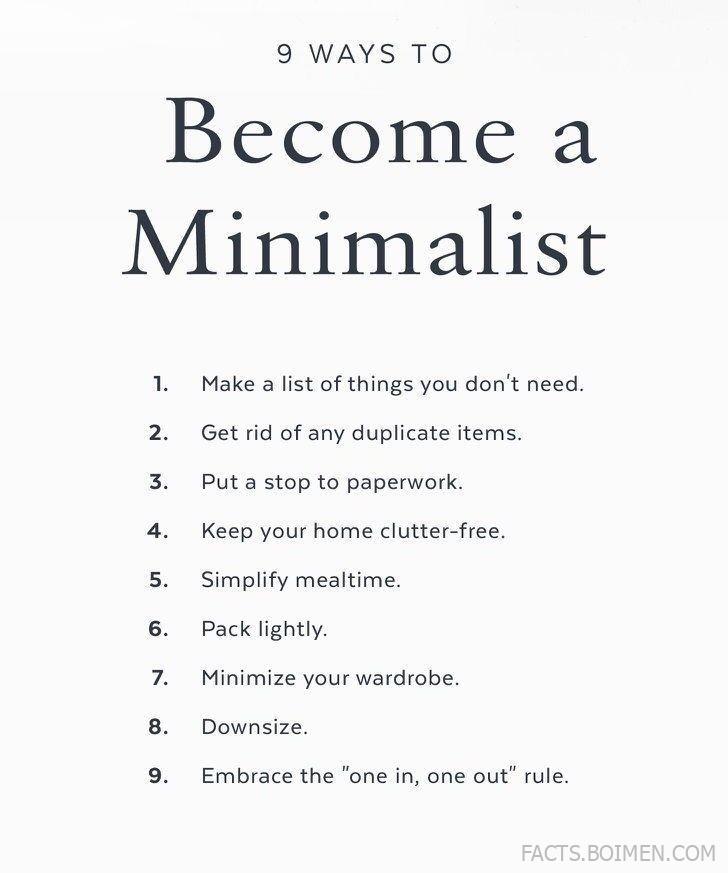
9 Ways to Become a Minimalist
1. Google Keep : Make a list of things you don’t need
What it is: A free, lightweight note app with color-coded notes, checkboxes, and instant sync across phone and desktop.
Category: Note-taking and decluttering checklist
Why it stands out: The first step of minimalism isn’t throwing anything away — it’s noticing. Keep lets you build a running “don’t need” list room by room, with checkboxes you can tick as items leave the house. Notes can be pinned to the top, so your current target room stays visible.
Best for: Anyone who feels overwhelmed and needs a low-pressure starting point that takes under five minutes.
2. Decluttr : Get rid of duplicate items
What it is: A buyback service that pays you for used phones, tablets, game consoles, CDs, DVDs, and books.
Category: Resale and buyback
Why it stands out: Duplicates are the easiest category to purge because there’s no emotional debate — you genuinely only need one can opener, one spare charger, one copy of a book. Decluttr turns the purge into a small payout instead of a trip to the donation bin, and it accepts items by mail with a prepaid label.
Best for: Households with a drawer of old electronics and a shelf of media nobody has played in years.
3. Evernote : Put a stop to paperwork
What it is: A long-running note and document app with web clipping, searchable text inside scans, and notebook organization.
Category: Digital document management
Why it stands out: Paper piles up because each sheet feels important and none of it is findable. Evernote’s search reads text inside scanned receipts and PDFs, so a warranty or tax document becomes findable in seconds instead of an afternoon. Scan, tag, shred — that’s the whole loop.
Best for: People whose kitchen counter has become a permanent filing cabinet.
4. Tody : Keep your home clutter-free
What it is: A cleaning and maintenance app that tracks how long since each task was done and shows a visual “dirtiness” level per room.
Category: Home maintenance
Why it stands out: Clutter-free isn’t a one-time event; it’s upkeep. Tody breaks a home into rooms and tasks, then nudges you only when something is actually due. It’s the difference between a vague Sunday panic-clean and fifteen focused minutes on the bathroom.
Best for: Anyone who cleans in bursts and then wonders why the house drifts back into chaos.
5. Paprika : Simplify mealtime
What it is: A recipe manager that saves recipes from websites, builds grocery lists automatically, and scales ingredient quantities.
Category: Meal planning
Why it stands out: Kitchen clutter is mostly decision clutter — too many recipes, too many half-used ingredients, too many “what’s for dinner” negotiations. Paprika strips a web recipe down to ingredients and steps, then merges everything into one shopping list sorted by aisle.
Best for: Busy households that want a short rotation of reliable meals instead of a new experiment every night.
6. PackPoint : Pack lightly
What it is: A packing list generator that builds a custom checklist from your destination, trip length, and planned activities.
Category: Travel planning
Why it stands out: Overpacking is a minimalism problem in a suitcase. PackPoint accounts for weather and whether you’ll be hiking, working, or at a formal dinner, then suggests only what fits those conditions. You can save and reuse lists, which quietly trains you to pack less each trip.
Best for: Carry-on travelers and anyone who returns from a weekend away with unworn clothes.
7. Stylebook : Minimize your wardrobe
What it is: A closet organizer app where you photograph each garment, log wear counts, and build outfits from what you already own.
Category: Wardrobe management
Why it stands out: The wear-count feature is the honest part. After a month you can see exactly which ten pieces you actually reach for and which twenty have never left the hanger. It also calculates cost-per-wear, which makes letting go of an expensive mistake much easier.
Best for: People with a full closet and a nagging feeling they wear the same four things.
8. Thumbtack : Downsize
What it is: A marketplace for hiring local professionals, from movers and junk removal to handymen and organizers.
Category: Home services
Why it stands out: Downsizing stalls at the logistics — someone has to haul the sofa, patch the wall, and take the old freezer. Thumbtack lets you compare local pros, request quotes, and book in one place, which turns a months-long fantasy into a scheduled weekend.
Best for: Anyone moving to a smaller place or clearing a garage that has become a storage unit.
9. Notion : Embrace the one in, one out rule
What it is: A flexible workspace where you can build a simple inventory database, wishlist, or purchase log.
Category: Personal organization
Why it stands out: One in, one out only works if you remember what you own. A Notion database with columns for item, category, and date acquired takes ten minutes to set up and makes the rule enforceable — when something new arrives, you check the list and something old leaves the same day.
Best for: People who keep re-buying things they already have tucked in a cupboard somewhere.
Bonus Mentions
Goodreads : Track books before you buy more
A reading log that shows how many unread titles are already waiting on your shelf — a useful reality check before the next bookstore visit.
LibraryThing : Catalog a home library
Scan barcodes to build a searchable catalog of your books, which makes duplicates and never-read volumes obvious at a glance.
Freecycle : Give things away locally
A community network where you post items you no longer want and neighbors claim them, often the same day.
Toggl Track : See where your time goes
Time tracking for people whose clutter is digital — it reveals how much of the week disappears into low-value tasks.
Unroll.Me : Cut inbox noise
Rolls subscription emails into a single digest or unsubscribes in bulk, which clears a surprising amount of mental clutter.
The Quiet Payoff of Owning Less
Minimalism isn’t about deprivation, and it isn’t a contest to own the fewest forks. It’s about reducing the number of small decisions standing between you and the things you actually care about. Every duplicate item, unopened envelope, and unworn jacket is a tiny tax on your attention — and the nine habits above are really nine ways of lowering that tax.
Start with whichever step made you wince. Make the list. Clear the duplicate drawer. Scan the paperwork. Then let the rest happen over a few weekends, not a single dramatic purge you’ll resent by Tuesday. The tools help, but the habit is the point: a home that stays calm because it’s maintained, not because it was conquered once.
Which of these nine finally worked for you — and what’s the one clutter category you still can’t beat?