Teeth Scaling Myths: Does Dental Cleaning Weaken Your Teeth? 10 Safe Ways to Whiten Your Smile
A bright, white smile is often associated with confidence and good oral health. However, many people avoid professional dental cleaning because they’ve heard a common myth: “Teeth scaling weakens your teeth.” This belief has been passed around for years, but is it actually true?
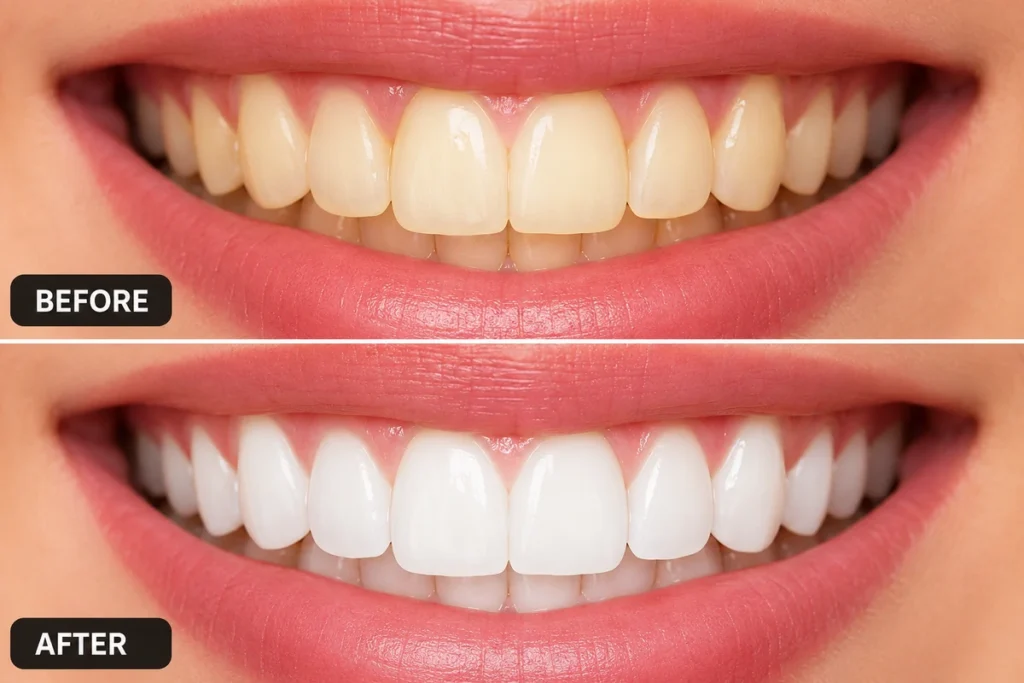
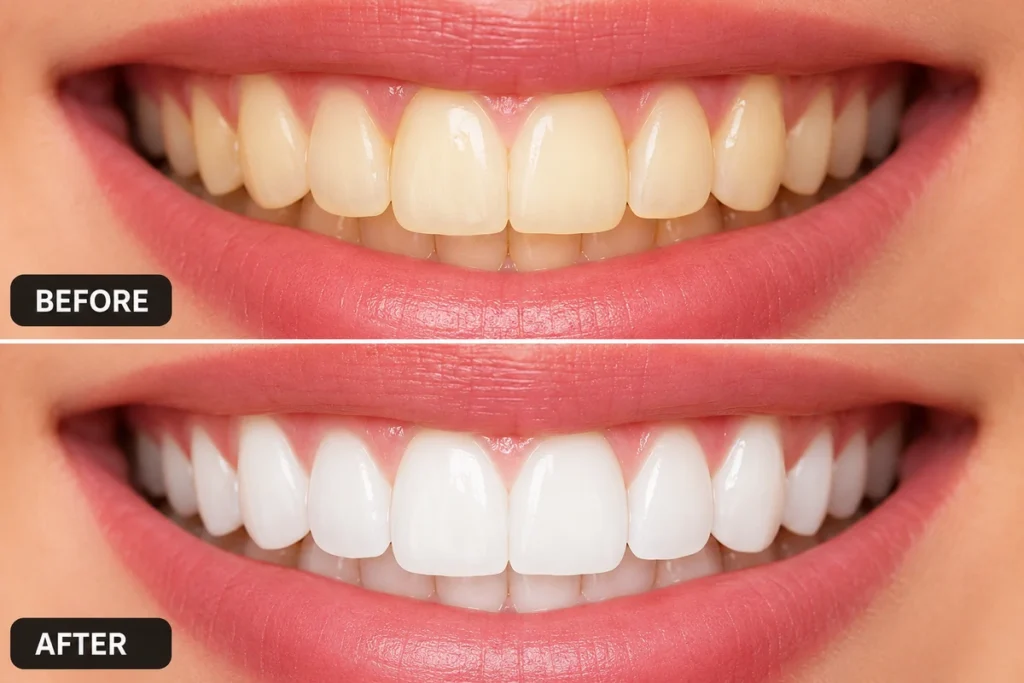
The short answer is no. Professional teeth scaling removes plaque and hardened tartar that build up over time. It doesn’t weaken healthy teeth. In fact, regular dental cleanings are one of the best ways to protect your teeth and gums while helping your smile look cleaner and brighter.
If you’re looking for safe ways to whiten your teeth while maintaining excellent oral health, this guide explains the facts, the myths, and the best whitening methods recommended by dental professionals.
Myth vs. Fact
One of the biggest misconceptions about dental care is that removing tartar somehow damages the teeth.
Myth
Teeth scaling makes teeth weak, loose, or sensitive forever.
Fact
Scaling removes hardened plaque (tartar) and bacteria that collect around the teeth and under the gumline. The procedure does not remove healthy tooth enamel. Some people notice temporary sensitivity after cleaning because tartar that covered exposed areas has been removed, but this usually improves within a few days.
Keeping tartar on your teeth is actually much more harmful because it can lead to gum disease, cavities, and bad breath.
Why Do Teeth Become Yellow?
Even people who brush every day may notice their teeth becoming darker over time.
Common causes include:
- Coffee and tea
- Red wine
- Smoking or tobacco products
- Dark-colored soft drinks
- Poor oral hygiene
- Aging
- Certain medications
- Genetics
Fortunately, many surface stains can be reduced with proper dental care and healthy habits.
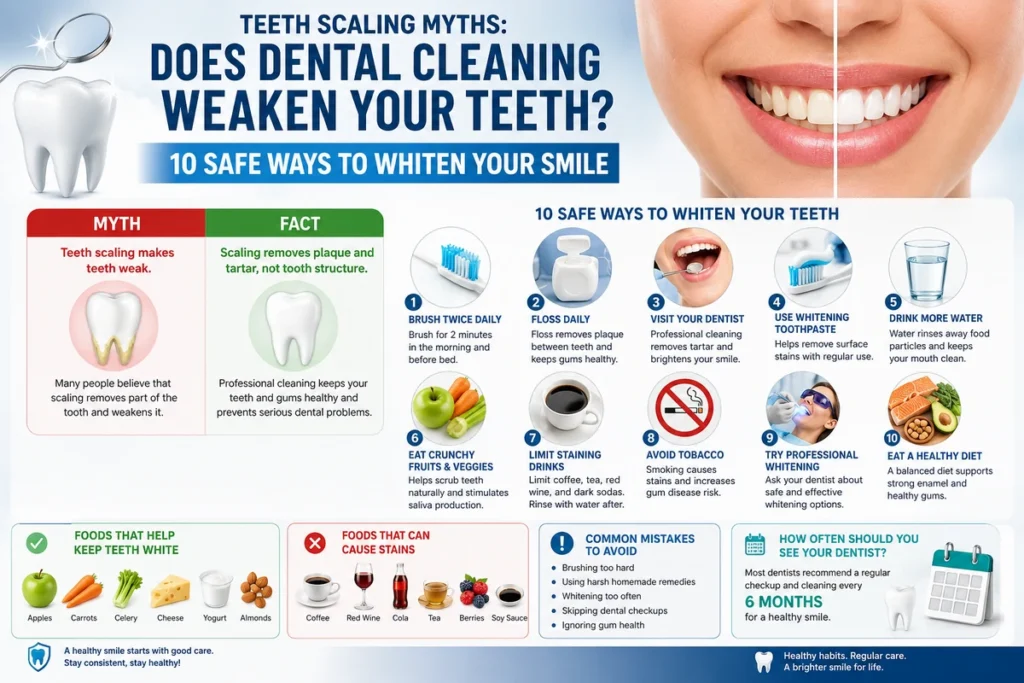
10 Safe Ways to Whiten Your Teeth
1. Brush Twice Every Day
Brush your teeth for at least two minutes using a soft-bristled toothbrush and fluoride toothpaste. Regular brushing helps remove surface stains before they become more noticeable.
2. Floss Daily
Floss removes plaque between teeth where a toothbrush cannot reach. Cleaner teeth naturally appear brighter.
3. Visit Your Dentist for Professional Cleaning
Professional scaling removes plaque and tartar that ordinary brushing cannot remove. After cleaning, many people notice their teeth immediately look cleaner and brighter.
4. Use Whitening Toothpaste
Whitening toothpaste can help remove mild surface stains with gentle polishing ingredients. Results usually appear after several weeks of consistent use.
5. Drink More Water
Water helps rinse away food particles, sugar, and acids that can stain teeth.
Drinking water after coffee or tea may reduce discoloration.
6. Eat Crunchy Fruits and Vegetables
Foods like apples, carrots, celery, and cucumbers naturally help clean the tooth surface while stimulating saliva production.
Saliva helps wash away bacteria and protects tooth enamel.
7. Limit Staining Drinks
Coffee, black tea, cola, and red wine are common causes of staining.
Using a straw for cold beverages and rinsing with water afterward may help reduce discoloration.
8. Avoid Tobacco
Smoking is one of the leading causes of yellow and brown tooth stains.
Quitting tobacco benefits not only your smile but also your overall health.
9. Try Professional Whitening
Dentists offer professional whitening treatments that are generally more effective than over-the-counter products.
Always follow your dentist’s advice before starting any whitening treatment.
10. Maintain Healthy Eating Habits
A balanced diet rich in fruits, vegetables, dairy products, and lean proteins supports healthy teeth and gums.
Healthy teeth naturally look brighter than teeth affected by plaque and decay.
Foods That Help Keep Teeth Looking Bright
Adding these foods to your diet may support good oral hygiene:
- Apples
- Strawberries
- Carrots
- Celery
- Cheese
- Yogurt
- Leafy greens
- Almonds
- Cucumbers
- Water
Foods That Can Cause Tooth Stains
Try to enjoy these in moderation:
- Coffee
- Black tea
- Red wine
- Cola drinks
- Soy sauce
- Tomato sauce
- Dark berries
- Candy with artificial coloring
Brushing about 30 minutes after eating acidic foods or rinsing with water can help reduce staining.
Common Whitening Mistakes
Many people accidentally damage their teeth by following internet trends.
Avoid these common mistakes:
- Brushing too hard
- Using charcoal products too often
- Whitening every day
- Using homemade acidic mixtures like lemon juice and baking soda excessively
- Skipping regular dental checkups
Healthy enamel is far more important than extremely white teeth.
Frequently Asked Questions
Does teeth scaling damage enamel?
No. Professional scaling removes tartar and plaque while preserving healthy tooth enamel.
Why do my teeth feel sensitive after cleaning?
Temporary sensitivity may occur because tartar that covered certain areas has been removed. It usually improves within a few days.
How often should I have my teeth cleaned?
Many dentists recommend a professional cleaning every six months, although some people may need more frequent visits depending on their oral health.
What’s the safest way to whiten teeth?
Professional advice from your dentist, combined with good daily oral hygiene and approved whitening products, is generally the safest approach.
Can yellow teeth become white again?
Many surface stains can be improved with professional cleaning and whitening treatments, although results vary depending on the cause of discoloration.
Final Thoughts
A healthy smile starts with good oral hygiene—not myths. Professional teeth scaling does not weaken your teeth. Instead, it removes harmful plaque and tartar that can lead to cavities and gum disease if left untreated.
If your goal is a brighter smile, focus on consistent brushing, daily flossing, regular dental checkups, and healthy eating habits. Safe whitening methods can improve the appearance of your teeth, but protecting your enamel should always come first.
By following these simple habits, you can enjoy cleaner teeth, healthier gums, and a naturally brighter smile for years to come.