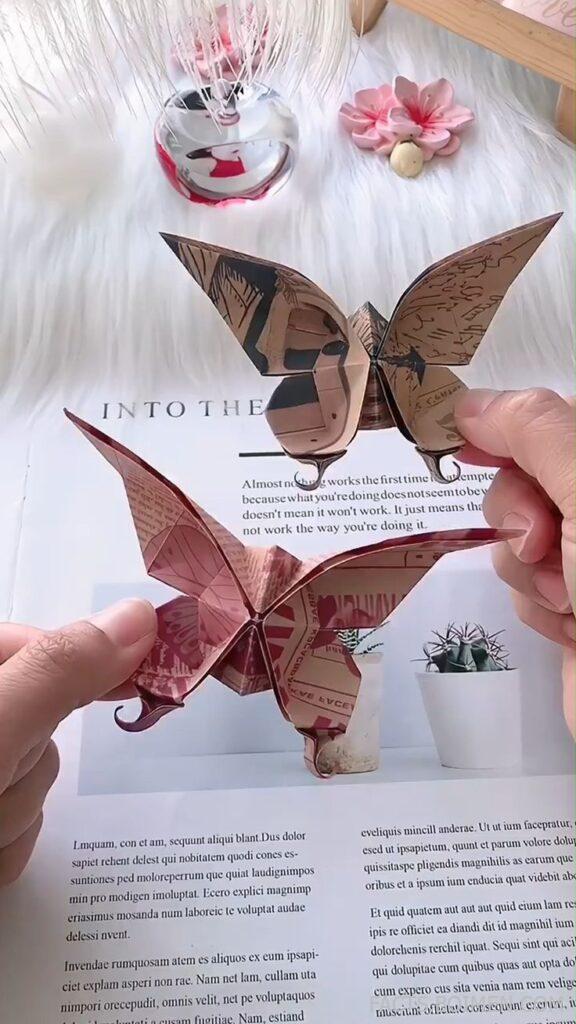
A swallowtail butterfly is one of the most recognizable shapes in nature: those long, tapered tails, the wide wingspan, the bold contrasting patterns. It is also one of the most satisfying shapes to fold. The problem is that most origami collections stop at the basic butterfly, and once you have folded that a few times, you want more. You want the tails. You want the layered wings. You want the version that makes people pick it up and turn it over in their hands.
This list gathers twenty origami swallowtail butterfly ideas, from beginner-friendly patterns to advanced multi-piece builds, plus a handful of bonus mentions for tools and papers that make the whole process easier. Every entry is a real, findable resource with something specific to offer, whether you fold with cheap printer paper or imported washi.
Table of Contents(Click to Toggle)
- Why the Swallowtail Is the Fold Worth Mastering
- 20 Swallowtail Butterfly Origami Ideas
- 1. Origami.me
- 2. Origami Guide
- 3. Paper Kawaii
- 4. Jo Nakashima
- 5. Origami Tutorials by Sara Adams
- 6. Robert J. Lang Origami
- 7. Gilad’s Origami Page
- 8. Origami Plus
- 9. Folded Paper Flowers
- 10. Tavin’s Origami
- 11. Origami-Fun
- 12. Craft Passion
- 13. The Origami Resource Center
- 14. Red Ted Art
- 15. Origami Spirit
- 16. Happy Folding
- 17. Origami Way
- 18. Paper Kawaii Shops
- 19. Origami Tree
- 20. Origami Instructions
- Bonus Mentions
- Where to Start Folding Today
Why the Swallowtail Is the Fold Worth Mastering
Most origami butterflies are symmetrical, simple, and finished in under five minutes. A swallowtail is different. Its silhouette depends on two things that basic butterfly models rarely include: elongated hindwing tails and a wing shape that tapers rather than rounds. That combination forces you to think about proportion, not just crease accuracy.
The swallowtail also rewards material choice more than almost any other insect model. Fold it in crisp 15 cm kami and the tails look sharp but flat. Fold the same diagram in double-sided washi or tissue foil and the model suddenly reads as a living thing. That is why the same pattern can feel like a beginner project one day and an advanced study the next.
Finally, swallowtails are seasonal. They appear in spring and summer, which makes them a natural fit for greeting cards, window displays, and gift toppers. A model that can be folded quickly and still look distinctive is worth keeping in your rotation.
20 Swallowtail Butterfly Origami Ideas
1. Origami.me : The cleanest starting point for a first swallowtail
What it is: A large diagram library with step photography and short written notes for each fold.
Category: Diagram archive
Why it stands out:
- Butterfly diagrams are grouped by difficulty, so you can start with a simple four-wing model and move up.
- Photos are shot from a consistent angle, which makes the valley and mountain folds easy to read.
- The site loads fast on mobile, useful when you are folding at a table with a phone nearby.
Best for: Folders who want a reliable first attempt before investing in specialty paper.
2. Origami Guide : Step-by-step photos with a beginner-first layout
What it is: A tutorial site that walks through each model one photo at a time, with no video required.
Category: Photo tutorials
Why it stands out:
- Each step is a single frame, so you can pause without scrubbing a video timeline.
- Butterfly and insect sections are separated, which keeps the search quick.
- Diagrams use standard origami symbols, so the skills transfer to printed books later.
Best for: People who prefer still images over video when learning a new fold.
3. Paper Kawaii : Cute, giftable butterflies with a polished finish
What it is: A craft blog and video channel focused on small, decorative paper projects.
Category: Video tutorials and printables
Why it stands out:
- Models are designed to look good on cards and in shadow boxes, not just in a display case.
- Printable patterned paper templates are included with several projects.
- Videos are short and clearly narrated, usually under fifteen minutes.
Best for: Crafters making cards, mobiles, or party decorations.
4. Jo Nakashima : Some of the clearest advanced insect tutorials online
What it is: A YouTube channel by a well-known origami designer, with detailed real-time folding videos.
Category: Video tutorials
Why it stands out:
- Camera angle stays above the paper, so you always see the crease you are making.
- Complex insect models are broken into chapters, which helps when a step goes wrong.
- Several butterfly and moth designs include shaping notes for the final wings.
Best for: Intermediate folders ready to try a model with more than thirty steps.
5. Origami Tutorials by Sara Adams : Thoughtful instruction with paper recommendations
What it is: A long-running tutorial site and video archive covering a wide range of models.
Category: Tutorial archive
Why it stands out:
- Each tutorial notes the paper size and type used, which matters for thin tails.
- Explanations include why a fold works, not just where to fold.
- Archive is organized by designer and by model type.
Best for: Folders who want to understand the structure behind the shape.
6. Robert J. Lang Origami : The reference point for serious insect design
What it is: The official site of a leading origami artist and theorist, with galleries, crease patterns, and papers.
Category: Artist portfolio and research
Why it stands out:
- Crease patterns for advanced insects are published alongside finished photos.
- Technical articles explain how thin appendages are engineered into a single sheet.
- Galleries show what is possible with patience and the right paper.
Best for: Advanced folders studying crease patterns rather than step diagrams.
7. Gilad’s Origami Page : A deep database for finding specific models
What it is: A vast index of origami books, designers, and model diagrams from around the world.
Category: Reference database
Why it stands out:
- You can search by model name to find which book contains a butterfly diagram.
- Book reviews describe difficulty and paper requirements honestly.
- Useful for tracking down out-of-print titles through libraries.
Best for: Collectors and folders hunting a specific published diagram.
8. Origami Plus : Modular and decorative butterfly variations
What it is: A tutorial site covering modular, practical, and decorative paper projects.
Category: Modular and decorative origami
Why it stands out:
- Modular butterflies let you build larger wall pieces from repeated units.
- Instructions often include assembly diagrams for multi-part models.
- Projects are sorted by occasion, which helps for seasonal displays.
Best for: Folders who want to build something bigger than a single model.
9. Folded Paper Flowers : Paper craft projects with a delicate finish
What it is: A craft site focused on paper flowers and small decorative folds.
Category: Decorative paper craft
Why it stands out:
- Techniques for curling and shaping petals transfer directly to butterfly wings.
- Projects are designed for gift wrapping and table settings.
- Material lists are short and easy to source locally.
Best for: Crafters who want butterflies that sit alongside floral arrangements.
10. Tavin’s Origami : Fast, friendly folds for beginners
What it is: A beginner-oriented origami site and video channel with short, approachable projects.
Category: Beginner tutorials
Why it stands out:
- Models are chosen for quick success, often under ten minutes.
- Videos are filmed in bright, uncluttered settings that are easy to follow.
- Good gateway into origami for kids and classroom settings.
Best for: Teachers and parents folding with children.
11. Origami-Fun : Printable diagrams in a simple format
What it is: A diagram site with printable instructions and a clean, ad-light layout.
Category: Printable diagrams
Why it stands out:
- Diagrams are formatted to print on a single page, handy for folding offline.
- Difficulty ratings are shown before you open a tutorial.
- Symbols are explained in a dedicated glossary.
Best for: Folders who like working from paper rather than a screen.
12. Craft Passion : Detailed craft tutorials with templates
What it is: A long-running craft blog with tutorials, patterns, and printable templates.
Category: Craft tutorials
Why it stands out:
- Butterfly projects often combine folding with wire or mounting techniques.
- Printable templates remove the guesswork from wing proportions.
- Tutorials include finished-size measurements for planning displays.
Best for: Makers who mix origami with other craft materials.
13. The Origami Resource Center : Diagrams, history, and background in one place
What it is: A reference site with diagrams, articles, and context on origami traditions.
Category: Reference and diagrams
Why it stands out:
- Explains terminology that appears in printed Japanese diagrams.
- Collections of butterfly and insect models are grouped by source.
- Background articles are useful for classroom or club presentations.
Best for: Anyone who wants the story behind the fold, not just the steps.
14. Red Ted Art : Kid-friendly paper butterflies with big visual appeal
What it is: A family craft site with simple paper projects for young makers.
Category: Kids’ crafts
Why it stands out:
- Projects use basic supplies like colored paper and glue sticks.
- Instructions are written for adults helping children, with safety notes.
- Seasonal butterfly crafts fit spring and summer themes.
Best for: Family craft afternoons and classroom activities.
15. Origami Spirit : Gentle, well-explained lessons for all levels
What it is: A tutorial site by an experienced teacher, with videos and written guidance.
Category: Video and written tutorials
Why it stands out:
- Lessons emphasize handling tricky folds like reverse folds and sinks.
- Projects often include variations so you can adapt a model to your paper.
- Tone is calm and encouraging, which helps when a step fails.
Best for: Self-taught folders who want clear troubleshooting.
16. Happy Folding : A video library built for careful learners
What it is: A tutorial archive with a large catalog of filmed instructions.
Category: Video library
Why it stands out:
- Videos are indexed by difficulty and designer.
- Many tutorials include paper suggestions for thin, detailed models.
- Older and newer models sit side by side, so you can compare styles.
Best for: Folders building a personal skill progression.
17. Origami Way : Quick diagrams for everyday folding
What it is: A straightforward diagram site with a wide range of simple models.
Category: Diagram archive
Why it stands out:
- Diagrams are short and easy to scan on a phone.
- Beginner butterflies are included alongside animals and flowers.
- Pages load quickly with minimal clutter.
Best for: A five-minute fold when you only have a small square of paper.
18. Paper Kawaii Shops : Printable patterned paper for standout wings
What it is: A shop offering printable paper packs and craft printables.
Category: Paper and printables
Why it stands out:
- Patterned sheets let you give wings color without painting or dyeing.
- Digital downloads can be printed in the exact size your diagram needs.
- Designs pair well with small decorative models.
Best for: Folders who want instant color variety without buying imported paper.
19. Origami Tree : Seasonal and holiday paper projects
What it is: A craft site with origami and paper projects tied to seasons and holidays.
Category: Seasonal paper craft
Why it stands out:
- Butterfly projects appear in spring and garden-themed collections.
- Many tutorials include display ideas like garlands and mobiles.
- Instructions are written for mixed-age craft groups.
Best for: Decorating for a season or event.
20. Origami Instructions : A broad catalog for practice folds
What it is: A general diagram site covering animals, insects, and decorative shapes.
Category: Diagram archive
Why it stands out:
- Wide model selection makes it easy to practice related folds.
- Insect section includes several wing-based shapes to compare.
- Simple navigation helps when you are browsing on a tablet.
Best for: Building a folding habit with varied, low-pressure models.
Bonus Mentions
Origami Shop : Specialty papers including tissue foil and double-sided washi
Thin, strong papers are what make slender swallowtail tails possible. Tissue foil holds a crease and resists tearing, while double-sided washi gives a color change on the reverse. Worth ordering a small sampler before committing to a full pack.
Bone Folder and Craft Clips : Small tools that sharpen every crease
A bone folder flattens folds far more crisply than a fingernail, and small clips hold layered wings together while you shape them. Neither is required, but both noticeably improve the final silhouette on detailed models.
YouTube Slow-Motion Playback : A free way to decode fast tutorial steps
When a video moves too quickly through a reverse fold, dropping playback speed to half helps you see the paper move. It is the simplest fix for the step where most butterfly models go wrong.
Where to Start Folding Today
The swallowtail is a shape that grows with you. Start with a simple four-wing butterfly from a diagram site, fold it ten times until the creases feel automatic, then move to a model with tails and a color change. The jump in difficulty is real, but it is also where origami stops being a craft and starts being a design exercise.
Paper choice matters more here than in almost any other model. A crisp 15 cm square is fine for practice, but a thin, strong sheet will let the tails hold their shape instead of drooping. If you only change one thing after reading this list, change the paper.
Keep a few finished butterflies on hand, too. They make fast gift toppers, card decorations, and window accents, which means your practice folds never go to waste.
Which swallowtail pattern or paper has worked best for you? Share your favorite find in the comments.