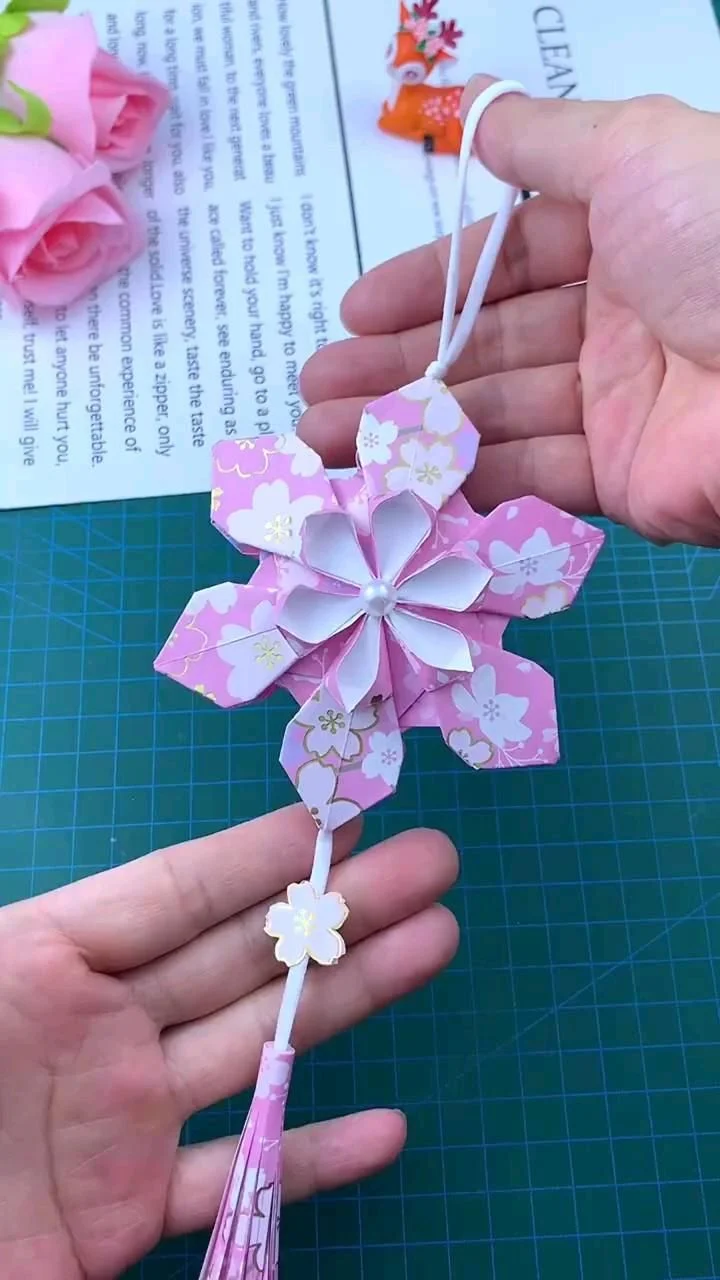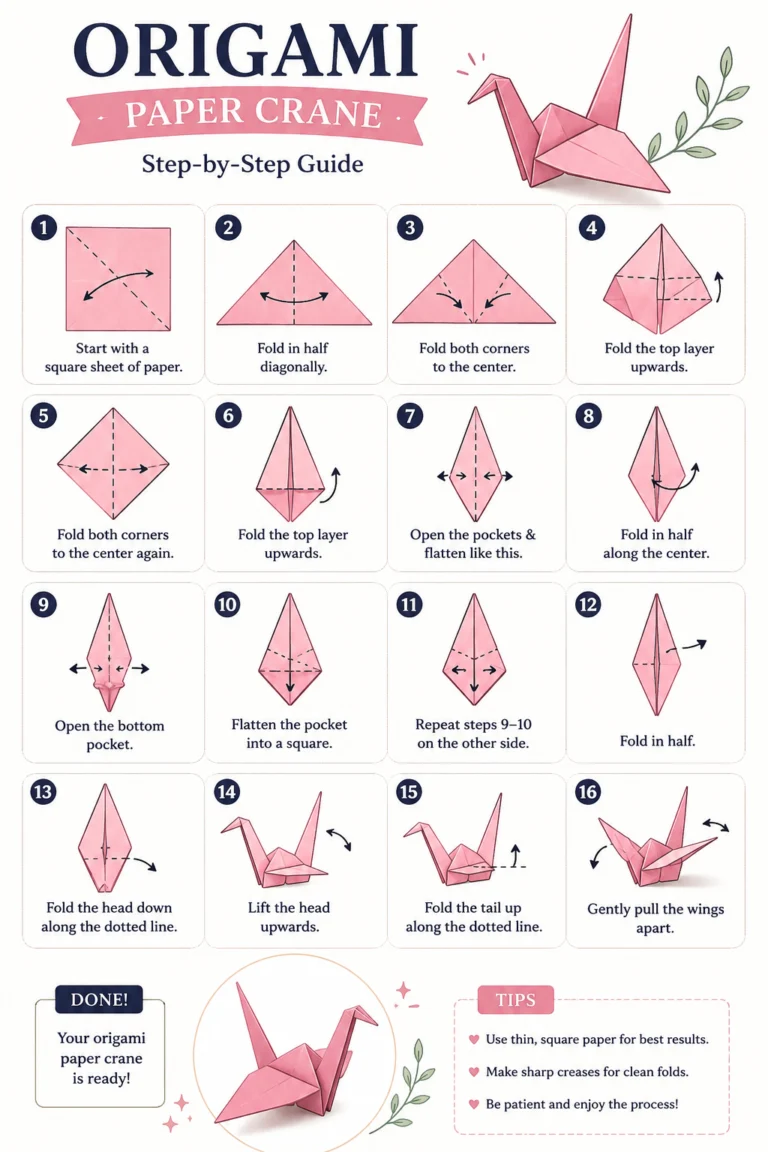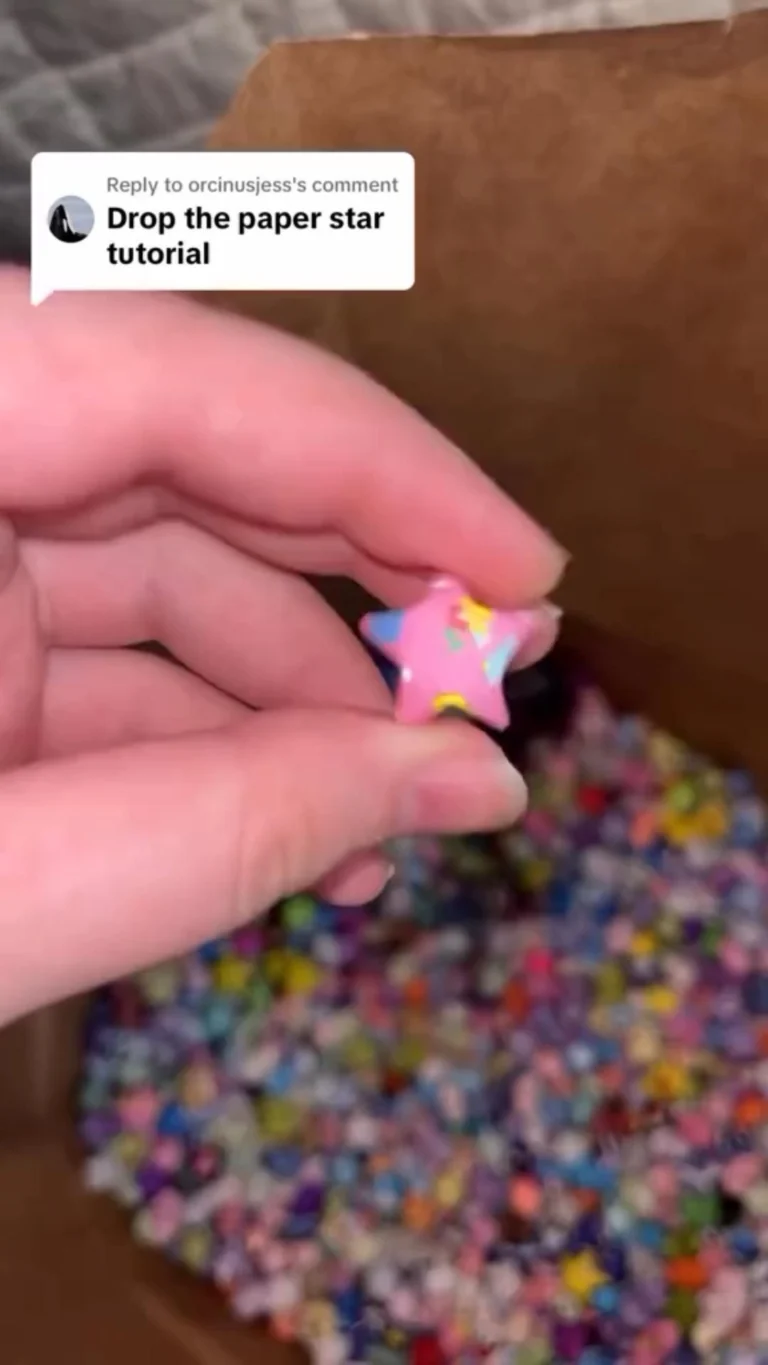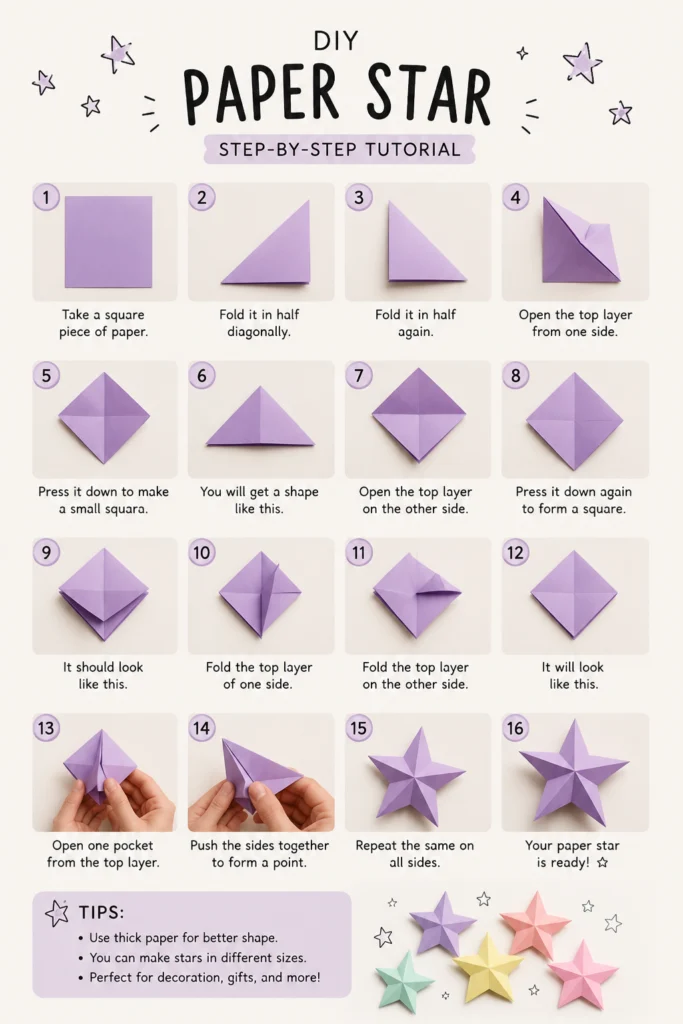
There is a particular kind of quiet satisfaction that comes from turning a flat square of paper into a three-dimensional star. The pin you just tapped promised a step-by-step tutorial for origami stars, and that is exactly what this collection delivers. Below are nineteen genuinely useful places to learn paper folding, from beginner-friendly square-base diagrams to advanced modular designs, each with clear instructions you can actually follow. Whether you are folding your first star or your fiftieth, these resources reward a little patience with something lovely to hold.
Table of Contents(Click to Toggle)
- Why Origami Stars Are the Perfect Beginner Paper Project
- 19 Step-by-Step Origami Star Tutorials and Paper Folding Resources
- 1. Origami.me
- 2. Origami Guide
- 3. Paper Kawaii
- 4. Origami-Fun
- 5. Origami Instructions
- 6. Gilad’s Origami Page
- 7. Origami Resource Center
- 8. Red Ted Art
- 9. Easy Peasy and Fun
- 10. Origamiway
- 11. Origami Club
- 12. Paper Crafts by Craftbits
- 13. Instructables
- 14. WikiHow
- 15. The Spruce Crafts
- 16. YouTube Origami Channels
- 17. Origami Plus
- 18. Pinterest Paper Crafts Boards
- 19. Origami Spirit
- Bonus Mentions
- The Best Paper Folding Resources to Start With
Why Origami Stars Are the Perfect Beginner Paper Project
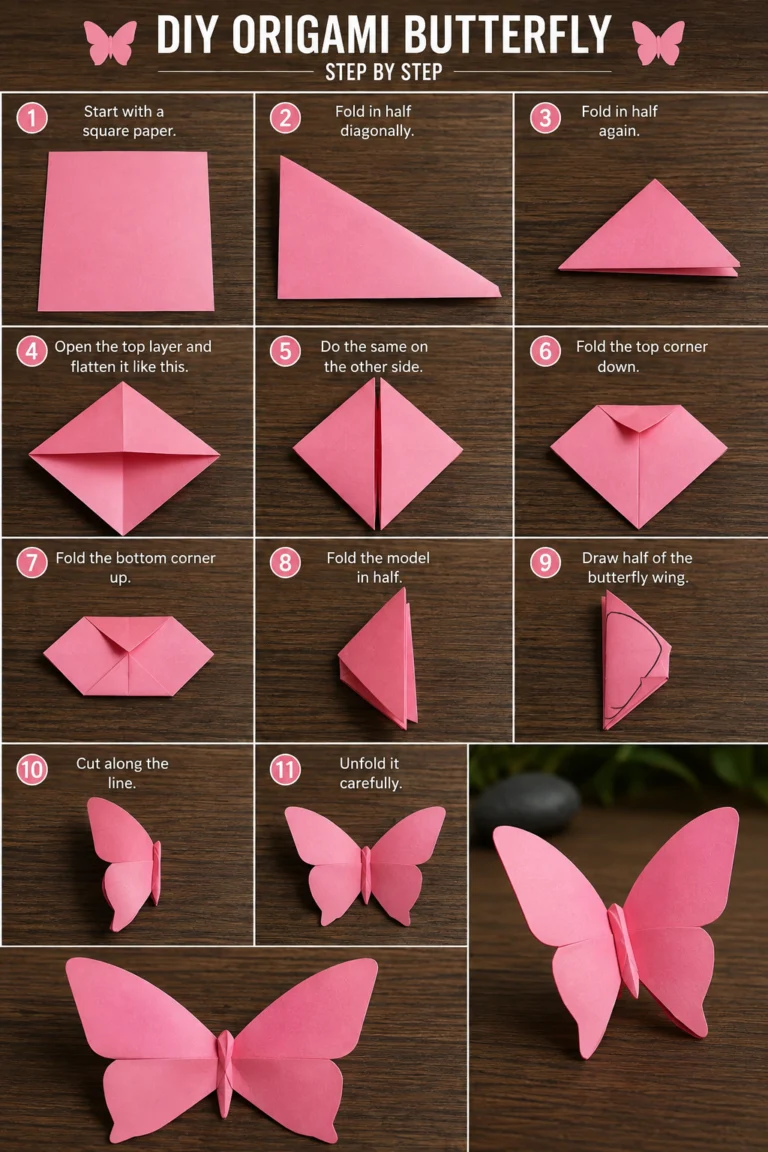
Origami stars hit a sweet spot that few crafts manage. They need only a square of paper, no glue or scissors in most cases, and the folding sequence itself is short enough to finish in one sitting. The classic square-base star starts with a diagonal fold, then a horizontal fold, then a series of layer-opening steps that gradually transform a flat sheet into a pointed star. That same sequence appears in countless tutorials, which is why comparing a few versions helps: one site may explain the “open the top layer and press it down” step differently than another, and the wording that clicks is often the one that finally makes the fold make sense. Stars also scale beautifully, from tiny lucky stars folded from paper strips to large modular pieces assembled from dozens of units.
The resources below range from printable diagram sheets to video walkthroughs, and each one earns its place for a specific reason. Start with the ones that match how you learn best.
19 Step-by-Step Origami Star Tutorials and Paper Folding Resources
1. Origami.me : Clean diagram tutorials that mirror the classic square-base star
What it is: A long-running origami instruction site with hundreds of models organized by difficulty and by base fold.
Category: Diagram tutorial library
Why it stands out: Its step-by-step photo sequences are shot from a consistent overhead angle, so the “open the top layer and press it down” move is easy to follow. Each model page also notes the paper size and estimated folding time.
Best for: Beginners who want still images rather than video, and anyone following a printed pin diagram.
2. Origami Guide : Beginner-first instructions with a dedicated easy section
What it is: A tutorial site that sorts models by skill level, starting with very simple folds.
Category: Beginner tutorial hub
Why it stands out: The easy tier includes several star variations that use the same square base, so you can practice one fold sequence and produce different results. Diagrams are large and uncluttered.
Best for: Kids and first-time folders who need generous visual spacing.
3. Paper Kawaii : Video and photo tutorials for cute modular stars
What it is: A paper craft blog by a folder who specializes in small, decorative origami.
Category: Video and photo tutorials
Why it stands out: Each post pairs a written photo sequence with an embedded video, so you can switch between formats mid-fold. The site covers lucky stars folded from strips as well as five-pointed modular stars.
Best for: Crafters who want decorative results and like following along in video.
4. Origami-Fun : Printable diagram pages you can take offline
What it is: A straightforward instruction site with printable PDF diagrams for many models.
Category: Printable diagrams
Why it stands out: The printable format is genuinely useful for classroom settings or folding away from a screen. Star instructions are grouped with other geometric models, making them easy to find.
Best for: Teachers, parents, and anyone who prefers paper instructions on the table.
5. Origami Instructions : Detailed written steps alongside each diagram
What it is: A tutorial archive that explains each fold in words as well as pictures.
Category: Written and visual instructions
Why it stands out: The text descriptions clarify ambiguous moves like opening a layer from one side, which is exactly where many pin diagrams lose readers. Pages load fast and have no clutter.
Best for: Readers who learn better from words than from arrows.
6. Gilad’s Origami Page : A deep reference library for serious folders
What it is: One of the oldest and most comprehensive origami reference sites, covering books, diagrams, and creators.
Category: Reference and history
Why it stands out: If you fall in love with folding stars, this is where you learn about modular designs and the designers behind them. It is less a tutorial site and more an encyclopedia, with reviews of instruction books.
Best for: Folders ready to move beyond beginner models and explore modular star assemblies.
7. Origami Resource Center : Organized model index with star-specific pages
What it is: A categorized directory of origami instructions and paper information.
Category: Instruction directory
Why it stands out: The site groups star models together by type, including five-pointed, eight-pointed, and lucky stars, so you can compare designs in one place. It also explains paper weight and size choices.
Best for: Anyone choosing which star design to attempt next.
8. Red Ted Art : Family-friendly paper star crafts with clear photos
What it is: A kids’ craft blog with a large paper folding section.
Category: Family craft tutorials
Why it stands out: Instructions are written for adults folding with children, with short step counts and everyday materials. Star projects often combine folding with simple decoration.
Best for: Parents and caregivers looking for a calm afternoon activity.
9. Easy Peasy and Fun : Quick folding projects with printable templates
What it is: A craft site offering step tutorials plus downloadable templates.
Category: Craft tutorials with printables
Why it stands out: Some star projects include pre-marked templates, which removes the guesswork of measuring and cutting squares evenly. The photo steps are bright and easy to scan.
Best for: Crafters who want a guaranteed square starting sheet.
10. Origamiway : Simple diagrams sorted by difficulty
What it is: A beginner-oriented instruction site with a clean layout.
Category: Diagram tutorials
Why it stands out: Each model page lists the number of steps upfront, so you know what you are committing to. Star diagrams use consistent arrow conventions throughout the site.
Best for: Folders who like knowing the step count before starting.
11. Origami Club : Animated folding sequences
What it is: A Japanese origami site with animated diagrams that show folds in motion.
Category: Animated tutorials
Why it stands out: The animation format resolves the trickiest part of any diagram: understanding which layer moves. Models are organized by season and theme, with stars appearing in several categories.
Best for: Visual learners who struggle to read static arrows.
12. Craftbits : A broad craft library with paper folding sections
What it is: A general craft instruction site covering paper, fabric, and more.
Category: General craft tutorials
Why it stands out: Useful when you want to combine folding with other techniques, such as stringing folded stars into garlands. Instructions are written in plain language.
Best for: Crafters who want to turn folded stars into decorations.
13. Instructables : Community tutorials with photos and reader tips
What it is: A large user-generated project site with an active paper craft community.
Category: Community project platform
Why it stands out: The comment sections often contain the fix for a step that confused everyone, which is invaluable for tricky layer folds. Search for star projects and you will find dozens of variations.
Best for: Folders who like learning from other people’s troubleshooting.
14. WikiHow : Illustrated guides with consistent step formatting
What it is: A collaborative how-to site with illustrated instructions on nearly every topic.
Category: How-to reference
Why it stands out: The origami star articles use a uniform step structure with both illustrations and short captions, and many include a video summary. The format is easy to follow on a phone.
Best for: Quick reference when you need one clear step explained.
15. The Spruce Crafts : Edited tutorials with material guidance
What it is: A professionally edited craft site covering paper arts.
Category: Edited craft guides
Why it stands out: Articles typically explain which paper weight works best for a given model, which matters more than beginners expect. Lighter paper folds more crisply for small stars.
Best for: Readers who want context and paper recommendations alongside steps.
16. YouTube Origami Channels : Real-time folding you can pause and rewind
What it is: A vast collection of video tutorials from individual folders and studios.
Category: Video tutorials
Why it stands out: Video removes ambiguity entirely, since you can watch a hand open a layer and press it flat in real time. Look for tutorials filmed from directly overhead with good lighting.
Best for: Anyone stuck on a single step in a static diagram.
17. Origami Plus : A modern tutorial site with a growing model library
What it is: A newer origami instruction site with photo-based tutorials.
Category: Diagram tutorials
Why it stands out: The layout is clean and mobile-friendly, and model pages load quickly. It is a good complement when a model you want is missing from older sites.
Best for: Mobile folders who want a distraction-free page.
18. Pinterest Paper Crafts Boards : Visual discovery for star variations
What it is: The platform where most step-by-step folding diagrams circulate, including the one that brought you here.
Category: Visual discovery
Why it stands out: Boards collect dozens of diagram styles in one scroll, which is ideal for comparing approaches before committing to a fold. Save a few and cross-check the steps against a written tutorial.
Best for: Browsing ideas and finding variants of the same star base.
19. Origami Spirit : Thoughtful tutorials with technique explanations
What it is: A tutorial site that emphasizes understanding folds rather than memorizing steps.
Category: Technique-focused tutorials
Why it stands out: Posts explain why a fold works, which helps you apply the same move to new models. The site also covers folding for gifts and display.
Best for: Folders who want to build real skill rather than follow one diagram.
Bonus Mentions
Origami Shop : Specialty paper for crisp star points
If your folds keep looking soft, the paper is often the culprit. Specialty shops stock thin, strong papers that hold a crease sharply.
Origami Paper Packs : Pre-cut squares in consistent sizes
Buying pre-cut squares saves the measuring step and keeps every unit identical, which matters for modular stars.
Etsy Paper Craft Sellers : Handmade star decorations and kits
Useful for seeing finished results up close or gifting a kit to someone who wants to start folding.
r/origami : A community that answers fold questions
A friendly forum where you can post a photo of a stuck fold and get specific help, often within hours.
Library of Congress Paper Arts Resources : Free cultural and historical context
For the curious, public archives hold material on paper folding traditions that add depth to the craft.
The Best Paper Folding Resources to Start With
If you only open one tab today, start with a site that matches your learning style: diagrams for readers, video for watchers, and printables for anyone folding away from a screen. The square-base star in that pin is a genuinely good first project, and once the layer-opening move clicks, a whole family of star designs opens up with it. Keep a few sheets of thin paper nearby, fold slowly, and do not worry if the first attempt looks a little uneven. Every folder’s early stars look that way.
Which tutorial finally made folding click for you, or which star design are you hoping to master next? Share your favorite resource in the comments.