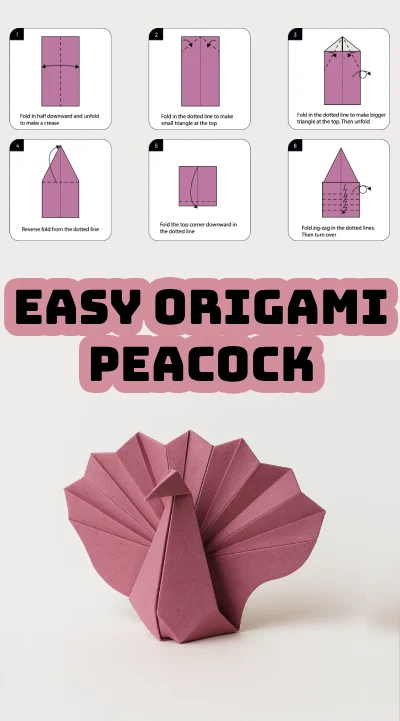
There is something quietly satisfying about folding a single square of paper into a bird with a fanned tail. The origami peacock has become a favorite starter project for beginners because it looks impressive on a shelf but uses only a handful of basic folds. The catch is that most people never find a clear, step-by-step guide — they stumble onto a blurry diagram or a video that moves too fast.
This list solves that. Below are 19 genuinely useful places to learn an easy origami peacock, from printable diagram archives to video-first tutorial channels and paper-folding communities. Each entry is a real, existing site with a specific reason to visit. Start at number one, then work your way down for variations, better paper, and new folds to try next.
Table of Contents(Click to Toggle)
- Why the Easy Origami Peacock Is the Perfect First Fold
- 19 Easy Origami Peacock Tutorials and Paper Craft Sites
- 1. Origami.me
- 2. Origami Guide
- 3. Origami Instructions
- 4. Origami Resource Center
- 5. Origami-Fun
- 6. Paper Kawaii
- 7. Origami Way
- 8. Gilad’s Origami Page
- 9. Origami Spirit
- 10. Origami Plus
- 11. Red Ted Art
- 12. Easy Peasy and Fun
- 13. Origami Tutorials
- 14. Craft Passion
- 15. Paper Crafts Connection
- 16. Instructables
- 17. YouTube Origami Channels
- 18. Pinterest Paper Craft Boards
- 19. r/origami Community
- Bonus Mentions
- The Best Places to Fold Your First Peacock
Why the Easy Origami Peacock Is the Perfect First Fold
Most beginner origami projects fall into one of two traps: they are either too simple to feel rewarding (a paper boat) or too complex to finish (a modular dragon). The peacock sits in a rare middle ground. A basic version uses a bird base, a few reverse folds, and a fan-shaped tail that can be pleated or left flat. That means you practice real folding techniques — valley folds, mountain folds, squash folds — without needing an hour of uninterrupted concentration.
The peacock is also forgiving in a way that matters for beginners. Symmetry is the goal, but a slightly uneven tail still reads as a peacock. Paper choice does a lot of the visual work: a sheet with a printed feather pattern or a two-tone sheet makes the finished bird look far more advanced than the folds actually are. And because the model is flat enough to press into a card or mount on a wall, it turns practice into something you can actually display or gift.
The real bottleneck is instruction quality. Diagrams need to be crisp and clearly labeled; videos need to be filmed from above with slow pacing. The sites below were chosen because they get those basics right, and each one offers something slightly different — printable diagrams, video walkthroughs, printable templates, or community feedback when a fold goes wrong.
19 Easy Origami Peacock Tutorials and Paper Craft Sites
1. Origami.me : Clean, beginner-friendly diagrams that load fast
What it is: A long-running origami instruction site with a large library of step-by-step diagram tutorials organized by difficulty and animal type.
Category: Diagram tutorial library
Why it stands out:
- Diagrams are drawn as clean line art rather than photos, so fold directions stay readable on a phone screen.
- Each tutorial lists the difficulty level and the paper shape you need before you start folding.
- Bird and animal sections make it easy to jump from a peacock to a crane, swan, or parrot once you have the base down.
Best for: Absolute beginners who want a printable-looking diagram they can follow without pausing a video.
2. Origami Guide : Illustrated guides with clear fold arrows
What it is: A tutorial site built around illustrated step sequences with consistent arrow notation and short written explanations under each step.
Category: Illustrated step-by-step guides
Why it stands out:
- Every step pairs a drawing with a one-line instruction, which helps when a fold looks ambiguous.
- Difficulty ratings and paper-size recommendations appear at the top of each project page.
- Animal and bird categories are grouped together, so variations on the peacock shape are easy to find.
Best for: Learners who read better than they watch and want the fold explained in words alongside the picture.
3. Origami Instructions : A deep archive of free diagrams
What it is: One of the older free origami archives online, with hundreds of diagrams spanning simple models to intermediate animals.
Category: Diagram archive
Why it stands out:
- The site is text-light and image-heavy, so pages load quickly even on a slow connection.
- Models are sorted by category, including a dedicated birds section with several tail-fan designs.
- Because the archive is old, it includes traditional models you will not find on newer tutorial blogs.
Best for: Crafters who want a big menu of bird models to compare before committing to one tutorial.
4. Origami Resource Center : Reference material plus history and paper advice
What it is: A reference-style site covering diagrams, paper types, folding terminology, and the history of paper folding.
Category: Reference and education
Why it stands out:
- Its paper guide explains the difference between kami, foil, and tissue foil — useful when a peacock tail needs to hold a pleat.
- Glossaries of fold names make it easier to follow any other tutorial you find later.
- Diagrams are indexed by difficulty, so you can confirm a model is beginner-safe before starting.
Best for: People who want to understand why a fold works, not just copy the steps.
5. Origami-Fun : Simple animated diagrams for quick wins
What it is: A beginner-focused site with animated diagrams that show the fold happening rather than just the before and after.
Category: Animated diagram tutorials
Why it stands out:
- Animation removes the guesswork about which flap moves where on a squash fold.
- Projects are labeled easy, medium, or hard, and the easy section is genuinely easy.
- Printable paper patterns are offered alongside some tutorials, which suits a patterned peacock tail.
Best for: Visual learners who find static diagrams hard to interpret.
6. Paper Kawaii : Cute, well-filmed video tutorials
What it is: A paper craft site and video channel known for clear, brightly lit tutorials of origami and paper decorations.
Category: Video tutorials and paper craft blog
Why it stands out:
- Videos are shot from directly above with steady hands, which is the angle that actually helps.
- Many projects use decorative paper, so the finished model looks gift-ready.
- Written instructions accompany most videos for people who prefer to fold without sound.
Best for: Crafters who want a polished, display-worthy result and do not mind watching a short video.
7. Origami Way : Fast, no-fuss beginner diagrams
What it is: A straightforward tutorial site with short, numbered diagram sets aimed at kids and first-time folders.
Category: Beginner diagram tutorials
Why it stands out:
- Steps are numbered and kept to a minimum, so a simple bird model finishes in under ten folds.
- Pages are uncluttered, with no pop-ups interrupting the diagram sequence.
- A dedicated easy section makes it a good starting point before attempting a fanned tail.
Best for: Parents folding with children or anyone who wants a five-minute project.
8. Gilad’s Origami Page : The deepest origami reference on the web
What it is: A meticulously maintained database of origami books, creators, diagrams, and model galleries.
Category: Database and gallery
Why it stands out:
- Book reviews tell you exactly which models a book contains, so you can buy with confidence.
- Creator indexes let you trace a specific designer’s bird and peacock models across publications.
- Galleries show finished models photographed properly, which helps you judge what a design should look like.
Best for: Folders who have outgrown free diagrams and want to find a book worth owning.
9. Origami Spirit : Thoughtful tutorials with folding tips
What it is: A teaching-focused origami blog with video tutorials, folding tips, and reflections on technique.
Category: Tutorial blog
Why it stands out:
- Posts often explain how to recover from a common mistake rather than pretending folds go perfectly.
- Paper recommendations are specific, including which weights hold a pleated tail without cracking.
- Tutorials are organized by theme and season, which is handy for gift and card projects.
Best for: Adults learning origami properly who want technique notes alongside the steps.
10. Origami Plus : A modern, mobile-friendly tutorial hub
What it is: A contemporary origami site with a clean layout, video embeds, and beginner-to-intermediate projects.
Category: Modern tutorial hub
Why it stands out:
- Pages are designed for mobile, so you can fold with the phone propped beside you.
- Projects are tagged by difficulty and by paper type, making browsing quick.
- Video and diagram options are often offered for the same model, so you can switch formats mid-fold.
Best for: Phone-first folders who want a tidy, ad-light reading experience.
11. Red Ted Art : Kid-tested paper crafts with printable templates
What it is: A large kids’ craft site with a big paper-folding section, printable templates, and photo-heavy instructions.
Category: Kids’ craft and printables
Why it stands out:
- Printable templates remove the measuring step, which is where most beginners lose patience.
- Instructions are written for a parent reading aloud to a child, so the language is plain.
- Bird and peacock crafts are grouped with decorations you can hang or turn into cards.
Best for: Families and classroom teachers planning a paper craft session.
12. Easy Peasy and Fun : Simple folds plus printable paper packs
What it is: A craft blog with a strong paper section, including folding projects and downloadable patterned paper.
Category: Craft blog with printables
Why it stands out:
- Patterned printable paper is included with many projects, which is ideal for a decorative tail.
- Each post opens with a photo of the finished model so you know what you are aiming for.
- Written steps are short enough to follow without scrolling back and forth.
Best for: Crafters who want the paper and the instructions in one place.
13. Origami Tutorials : Categorized diagrams with clear labeling
What it is: A tutorial collection organized by animal, flower, and geometric categories with step diagrams.
Category: Diagram collection
Why it stands out:
- Category browsing means you can compare several bird designs in one sitting.
- Diagrams use consistent shading to show which side of the paper faces out.
- Most projects note the starting paper shape, saving you from folding the wrong base.
Best for: Folders who like to browse a catalog rather than search for one specific model.
14. Craft Passion : Detailed craft tutorials with pattern support
What it is: A craft site with thorough tutorials, templates, and pattern downloads across paper, fabric, and felt.
Category: Craft tutorials and patterns
Why it stands out:
- Instructions are unusually detailed, with notes on paper weight and scoring.
- Printable patterns can be scaled, which helps when you want a larger display bird.
- Projects often include finishing touches like mounting or card assembly.
Best for: Makers who want to turn a folded model into a finished card or decoration.
15. Paper Crafts Connection : Inspiration and technique roundups
What it is: A paper craft community site featuring project roundups, designer posts, and technique articles.
Category: Community and inspiration
Why it stands out:
- Roundup posts collect many paper bird ideas in one place, which is great for planning a theme.
- Technique articles cover basics like scoring, creasing, and choosing adhesive for paper layers.
- Contributor posts show different styles, from minimalist folds to layered paper art.
Best for: Crafters looking for ideas beyond a single tutorial.
16. Instructables : Community projects with photos at every step
What it is: A large DIY community where makers publish step-by-step projects with photos, materials lists, and comments.
Category: Community project platform
Why it stands out:
- Photo-heavy steps show real hands and real paper, which is often clearer than line diagrams.
- Comments frequently contain fixes for the exact step that confused other readers.
- Searching paper crafts surfaces variations, including folded birds used in cards and mobiles.
Best for: Learners who want to see a real person complete the model.
17. YouTube Origami Channels : Slow, overhead video walkthroughs
What it is: The largest pool of origami video tutorials, with channels dedicated to beginner folding and speed-controlled playback.
Category: Video platform
Why it stands out:
- Playback speed can be dropped to half, which is the single best fix for a fast tutorial.
- Overhead camera angles are common on dedicated origami channels and far easier to follow.
- Timestamps and chapters let you jump straight to the tail section of a model.
Best for: Anyone who learns by watching a fold happen in motion.
18. Pinterest Paper Craft Boards : Visual discovery for variations and paper ideas
What it is: A visual bookmarking platform where paper craft tutorials, printable patterns, and finished models are pinned and saved.
Category: Visual discovery
Why it stands out:
- Searching for paper bird crafts surfaces dozens of finished examples to compare before choosing a design.
- Boards often collect paper patterns and color palettes alongside the tutorials themselves.
- Saved pins act as a personal project queue you can return to later.
Best for: Visual planners who want inspiration before they start folding.
19. r/origami Community : Real feedback from experienced folders
What it is: A Reddit community where folders share finished models, ask for help, and critique each other’s work.
Category: Community forum
Why it stands out:
- Posting a photo of a stuck fold usually gets a helpful reply within hours.
- The community recommends specific paper brands and weights based on real experience.
- Beginner threads collect answers to questions that tutorials never address.
Best for: Folders who want feedback and a reason to keep practicing.
Bonus Mentions
Origami Shop : Specialist paper and book retailer
A dedicated supplier for folding paper, including duo-colour and foil sheets that make a peacock tail look sharp. Worth bookmarking once you know which paper weight you prefer.
Tuttle Publishing : Origami book publisher with beginner kits
Publishes many beginner origami titles and boxed kits that include paper, which is a practical next step after free diagrams.
British Origami Society : Long-running folding society with resources
A society site with diagrams, event information, and articles on the craft’s history. Useful for anyone who wants to go deeper.
Origami Artists : Gallery-style inspiration from designers
A showcase of folded work from designers, handy for seeing how far the craft can go once the basics click.
The Best Places to Fold Your First Peacock
The easiest path is to start with a clean diagram from a site like Origami.me or Origami Guide, fold the model once in plain paper, then repeat it in a patterned or duo-colour sheet once the sequence is in your hands. The second fold is always faster and always looks better. From there, video tutorials help you refine the tail pleats, and communities like r/origami help when a step refuses to cooperate.
None of these sites require an account, a purchase, or a printer — though a printer helps if you want printable templates. Pick one, set aside fifteen minutes, and fold the peacock once. The finished model is a surprisingly good test of whether origami is a hobby you want to keep.
Which site did you end up folding along with — and did you find a paper pattern that made the tail pop? Share your favorite find in the comments.