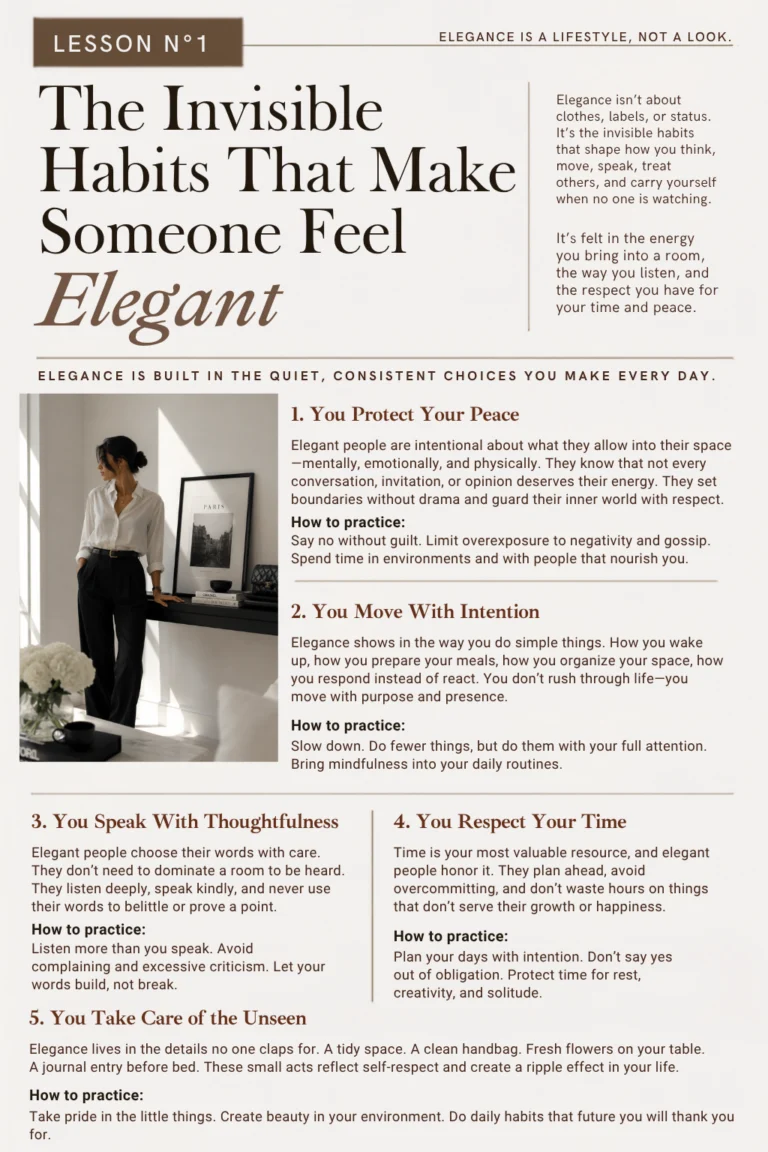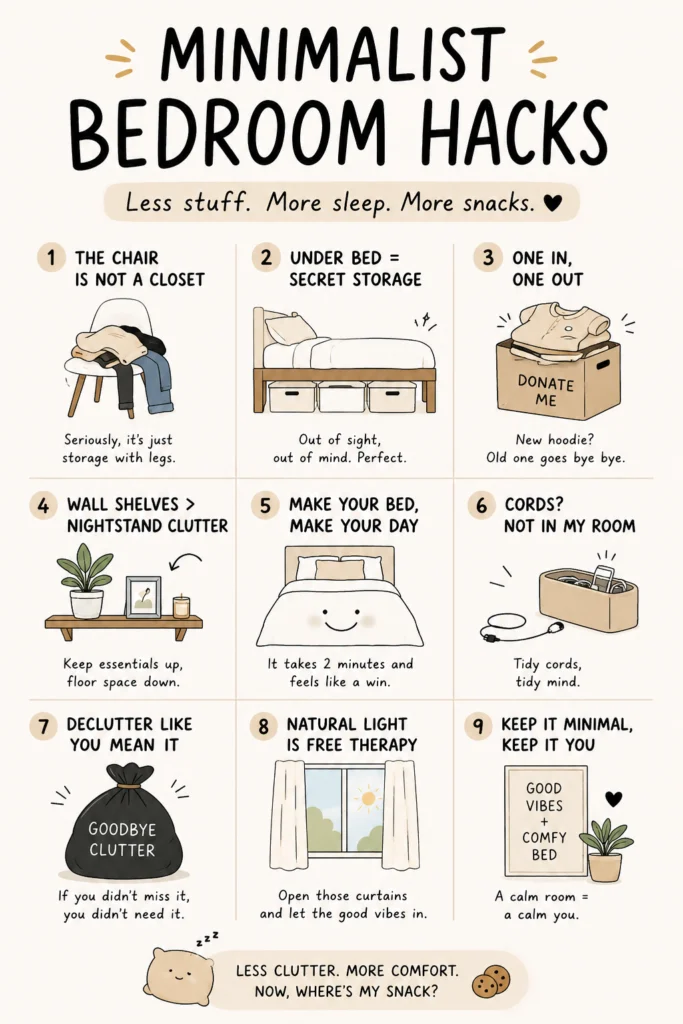
A poster with instructions on how to use minimalist bedroom hacks sounds almost too simple to work, but that is exactly the point. Minimalism is not about owning nothing. It is about removing the small frictions that keep a bedroom from feeling calm, restful, and easy to maintain. The best minimalist bedroom hacks are visual rules you can pin to a wall and follow without thinking, which is why a single well-designed poster can outperform a 300-page design book.
Below you will find 16 resources that turn that poster concept into something actionable: printable hack sheets, layout tools, decluttering checklists, and visual reference libraries. Each one helps you translate a few clean rules into a bedroom that feels quieter the moment you walk in.
Table of Contents(Click to Toggle)
Why a Minimalist Bedroom Poster Actually Works
Most people do not fail at minimalism because they lack taste. They fail because they lack a repeatable system. A bedroom accumulates clutter in tiny increments: a chair that becomes a clothes pile, a nightstand that collects chargers and receipts, a shelf that slowly fills with objects nobody looks at. A poster with clear instructions interrupts that drift by giving you a visible checklist at the exact moment you need it.
There is also a design principle at work. Bedrooms are the one room where visual noise has the highest cost, because the space is meant for rest. Studies of environmental psychology repeatedly link cluttered sleeping spaces with a harder time winding down, and designers have long used a simple trick: reduce the number of visible surfaces and objects until the eye has somewhere calm to land. A minimalist bedroom hack poster is essentially a set of rules for doing that consistently.
The resources below are not all posters. Some are design tools that help you plan a minimalist layout before you buy anything, some are printable checklists, and some are visual libraries where you can study how real minimalist bedrooms are composed. Together they cover the full loop: plan, declutter, style, and maintain.
16 Minimalist Bedroom Hacks and Poster Resources
1. Pinterest : The visual library where minimalist hack posters actually live
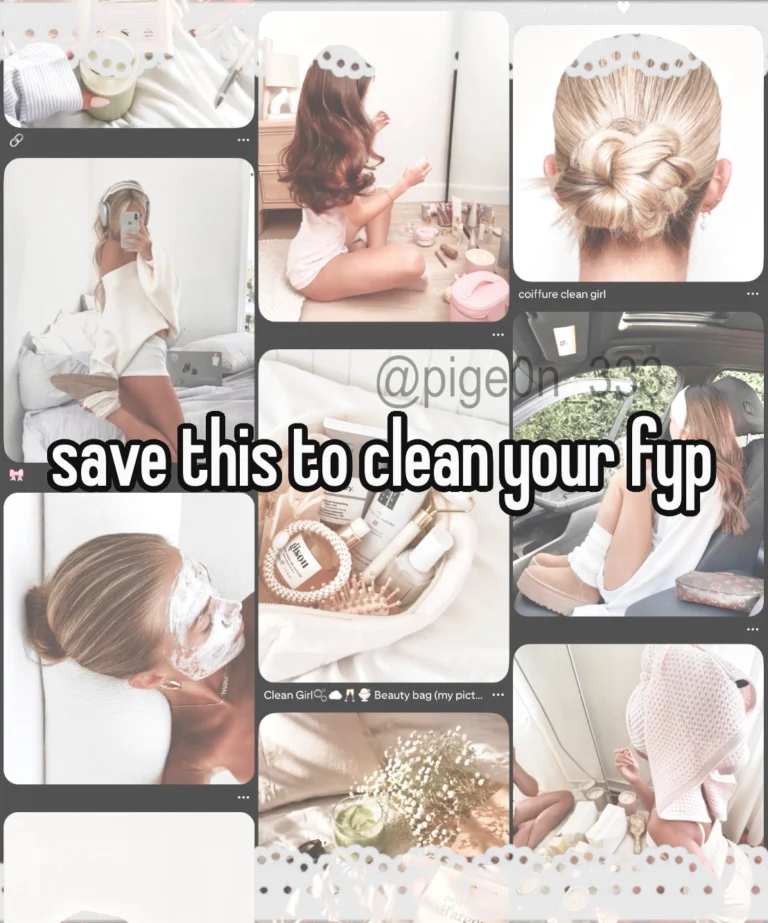
What it is: A visual discovery platform where users save and organize images into boards, including thousands of minimalist bedroom posters, hack sheets, and layout diagrams.
Category: Visual inspiration and reference
Why it stands out: Search a phrase like “minimalist bedroom hacks poster” and you will find printable designs that pack ten or more rules into a single graphic. Boards let you group ideas by theme, so you can keep one board for layout hacks and another for decluttering rules. The catch is that quality varies wildly, so treat it as a starting point rather than a finished product.
Best for: Anyone who wants to see what a good hack poster looks like before making or buying one.
2. Canva : Design your own hack poster in under an hour
What it is: A browser-based design tool with free templates for posters, checklists, and printable wall art.
Category: Design and print
Why it stands out: You can take the rules you like from a Pinterest poster and rebuild them in your own typeface and color palette, which matters if the poster is going on a wall in a carefully styled room. The free tier includes enough templates and export options for a single poster, though premium elements are watermarked until you upgrade.
Best for: People who want a custom poster that matches their bedroom’s exact color scheme.
3. IKEA Room Planner : Test a minimalist layout before you move a single thing
What it is: A free online planning tool that lets you build a to-scale room and drop in furniture from IKEA’s catalog.
Category: Layout planning
Why it stands out: Minimalist bedrooms depend on negative space, and negative space is hard to judge from a photo. The planner shows you exactly how much floor remains once a bed, nightstand, and dresser are placed. It is IKEA-specific, so it is less useful if your furniture comes from elsewhere, but the spatial insight still transfers.
Best for: Anyone planning a bedroom refresh who wants to avoid buying furniture that crowds the room.
4. The Home Edit : The organizing method behind most clean-looking bedrooms
What it is: The official site of the professional organizing team known for color-coded, zone-based systems.
Category: Decluttering and organizing
Why it stands out: Their core idea, that every category of object needs a defined zone, is the engine behind almost every minimalist bedroom hack. Apply it to a nightstand and you immediately see why three loose chargers and a stack of books read as clutter. Their product recommendations lean toward buying bins, so use the method and skip the shopping if budget matters.
Best for: People whose bedroom clutter is actually a storage problem in disguise.
5. Minimalism Life : Written rules you can turn into poster text
What it is: An editorial site about minimalist living, with articles on routines, possessions, and home design.
Category: Minimalist philosophy and guidance
Why it stands out: Hack posters work best when the underlying rules are genuinely good, and this site provides concise, quotable principles you can adapt into your own poster copy. Articles are short and skimmable, which makes it easy to pull five or six rules in one sitting. It is inspiration rather than a tool, so expect reading time rather than a template.
Best for: Anyone who wants their poster to reflect a real minimalist philosophy, not just aesthetics.
6. Apartment Therapy : Real small-bedroom tours that prove the hacks work
What it is: A long-running home design publication with house tours, before-and-afters, and practical organizing guides.
Category: Home design inspiration
Why it stands out: Their small-space tours are the closest thing to evidence that minimalist hacks survive contact with real life. You see how a poster-worthy rule like “one object per surface” actually looks in a 120-square-foot bedroom. The site is ad-heavy and the archive is enormous, so bookmark specific tours rather than browsing aimlessly.
Best for: Renters and small-space dwellers who need proof before committing to a minimalist reset.
7. Notion : Turn your poster into a living checklist
What it is: A flexible workspace tool for notes, databases, and checklists, free for personal use.
Category: Digital checklist and habit tracking
Why it stands out: A poster is static, but a bedroom needs seasonal resets. Build a Notion page with a repeating checklist: clear the chair, wipe the nightstand, rotate two items out of the room each month. The free plan covers everything a single user needs. The tradeoff is that a digital checklist lacks the glanceable-at-the-doorway quality of a printed poster, so many people use both.
Best for: People who like systems and want a maintenance layer behind their wall poster.
8. Figma : Precise poster layouts with real typographic control
What it is: A collaborative design tool, free for individuals, originally built for interface design.
Category: Design and layout
Why it stands out: If you care about typographic hierarchy on your hack poster, Figma gives you exact control over spacing, alignment, and grid structure that template tools gloss over. You can build one poster and duplicate it into a matching checklist and a small framed version. It has a learning curve, and print export settings require a little care.
Best for: Design-inclined readers who want a poster that looks professionally typeset.
9. Behr ColorSmart : Pick the calm palette your poster will sit against
What it is: A free color visualization tool from Behr that lets you preview paint colors in room scenes.
Category: Color planning
Why it stands out: Minimalist bedrooms live or die on wall color, and a poster with strong contrast can fight a soft palette. ColorSmart lets you test coordinated palettes and see them rendered on room photos before you commit to a can of paint. It is tied to one paint brand, so the exact colors you fall for may need matching elsewhere.
Best for: Anyone repainting a bedroom as part of a minimalist reset.
10. Decluttr : Turn cleared-out bedroom clutter into store credit
What it is: A buyback service that pays for used media, electronics, and other items you ship in.
Category: Decluttering and resale
Why it stands out: The hardest part of a minimalist bedroom reset is the box of things you are not sure about. A buyback service gives those items a destination and a small payout, which makes letting go easier. Payouts are modest and condition matters, so treat it as motivation rather than income.
Best for: People who need a concrete exit route for old devices and media before they can clear a room.
11. RoomSketcher : Draw your bedroom and see the negative space
What it is: A floor-plan and interior visualization tool with a free tier for basic room drawing.
Category: Layout planning
Why it stands out: Unlike furniture-specific planners, RoomSketcher works with any dimensions you enter, so it is useful for older homes with awkward wall lengths. The 2D plan view makes it obvious when a dresser is eating the only clear walking path. The free version is limited, and 3D renderings sit behind a subscription.
Best for: Homeowners with irregular rooms who want a true-to-scale minimalist layout.
12. Etsy : Buy a printable hack poster, or sell your own
What it is: A marketplace for handmade and digital goods, including a deep catalog of printable wall art and checklists.
Category: Printable posters and digital downloads
Why it stands out: Searching “minimalist bedroom hacks printable” returns instant-download posters in dozens of styles, usually for a few dollars. You print at home or at a local shop, so the wall art costs a fraction of framed retail pieces. Quality depends entirely on the individual seller, so check reviews and preview images carefully before buying.
Best for: Anyone who wants the poster finished today without designing it themselves.
13. The Spruce : Step-by-step guides for the hacks on your poster
What it is: A home and lifestyle publication with practical how-to content on cleaning, organizing, and decorating.
Category: Practical how-to reference
Why it stands out: A poster tells you what to do; The Spruce tells you how. When a hack says “style the nightstand with three objects,” their guides walk through proportion, height variation, and what to actually put there. Articles are written for beginners and updated regularly. Expect general advice rather than minimalist-specific philosophy.
Best for: Readers who want to execute each hack properly rather than guess.
14. Wayback Machine : Resurrect dead minimalist design blogs
What it is: The Internet Archive’s tool for viewing historical snapshots of websites that no longer exist.
Category: Archive and research
Why it stands out: Some of the best minimalist bedroom writing lived on blogs that shut down years ago. Paste a dead URL and you can often still read the original hack list, complete with layout diagrams. It is genuinely useful for design research and completely free. Pages load slowly and images are sometimes missing, so patience helps.
Best for: Design nerds who want to dig up forgotten minimalist bedroom guides.
15. Habitica : Gamify the daily five-minute bedroom reset
What it is: A free habit-tracking app that turns your to-do list into a role-playing game.
Category: Habit tracking
Why it stands out: Minimalism fails when maintenance stops, and maintenance is boring. Habitica assigns experience points and loot to recurring tasks, so “reset the nightstand” becomes something you want to check off. The retro pixel aesthetic clashes with a minimalist bedroom, but the app lives on your phone, not your wall. It is free with optional subscriptions.
Best for: People who need a nudge to keep the room calm after the initial declutter.
16. Houzz : Study thousands of minimalist bedroom photos by detail
What it is: A home remodeling and design platform with a massive photo library and professional directory.
Category: Design reference and photography
Why it stands out: Houzz photos are tagged by feature, so you can filter for bedrooms with floating nightstands, no headboard, or a single piece of art. That granularity is exactly what a hack poster needs: real examples of each rule in action. The site pushes you toward hiring professionals, and the photo quality varies, but the library is unmatched for volume.
Best for: Anyone building a visual reference board before designing their own hack poster.
Bonus Mentions
Remodelista : A curated design site with a strong minimalist streak
Their “10 Easy Pieces” format distills a single design decision into ten real product examples, which is a useful counterweight to sprawling inspiration boards.
ArchDaily : Architectural photography that shows restraint done well
Search residential projects for bedrooms built around negative space. It is more academic than practical, but the visual education is real.
Design Milk : Daily design finds with a modern-minimal bias
Good for discovering small objects, like a single well-designed charging dock, that solve a clutter problem without adding visual weight.
IKEA : Affordable storage that makes minimalist rules achievable
Their closed-storage pieces are the practical backbone of most minimalist bedroom hacks, hiding the volume that open shelving exposes.
The Quiet Power of One Good Poster
What makes a minimalist bedroom hack poster work is not the paper. It is the decision it represents: that the room should serve rest, not storage. Every resource above supports that decision in a different way, whether by helping you plan negative space, find a home for clutter, or keep the whole thing maintained after week one.
Start with one rule from the poster and apply it today. Clear the chair. Empty one nightstand surface. Remove two items that have no purpose in a room built for sleep. The rest of the list is there when you are ready for the next step.
Which minimalist bedroom hack finally stuck for you, and what did you use to make it happen?