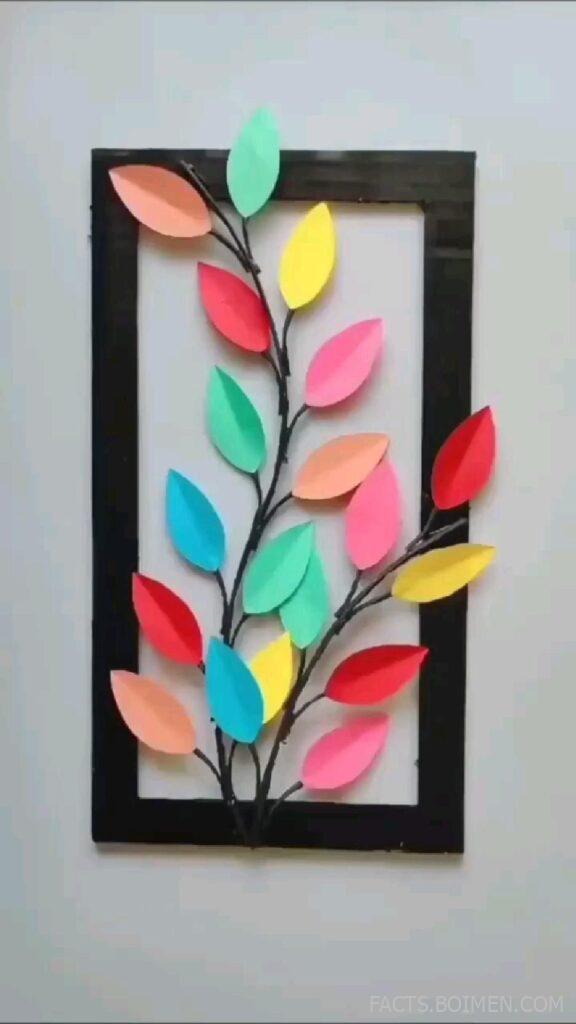
There is a particular kind of quiet that settles over a room when you press a bright maple leaf onto paper and start building around it. Leaf art is one of those rare creative hobbies that costs almost nothing, needs no special talent to begin, and produces something genuinely beautiful — a paper-and-leaf composition that looks deliberate, textured, and alive. The projects below range from five-minute arrangements you can pin to a wall to layered paper-and-leaf pieces worth framing. Each one uses real leaves, paper, and simple tools you probably already own.
Table of Contents(Click to Toggle)
- Why Leaf Art Deserves a Spot on Your Table
- 1. Leaf and Paper Collage Wall Art
- 2. Black-Frame Leaf Silhouette Art
- 3. Pressed Leaf Herbarium Cards
- 4. Leaf-Rubbing Paper Textures
- 5. Paper-Cut Leaf Mandalas
- 6. Negative-Space Leaf Cutouts
- 7. Layered Leaf Shadow Boxes
- 8. Leaf Print Greeting Cards
- 9. Watercolor and Leaf Resist Art
- 10. Leaf Mosaic on Cardstock
- 11. Seasonal Leaf Color Wheels
- 12. Paper Leaf Garlands and Mobiles
- 13. Leaf-Printed Bookmark Sets
- 14. Botanical Leaf Journal Pages
- 15. Framed Leaf Grids for Gallery Walls
- Bonus Mentions
- Where to Start With Your First Leaf Piece
Why Leaf Art Deserves a Spot on Your Table
Most craft hobbies require a shopping trip before you can begin. Leaf art does not. The raw material falls from trees every autumn, and even in summer you can collect fresh green leaves, ferns, and grasses from a park or garden. What makes the paper-and-leaf combination so satisfying is the contrast: crisp, flat paper against the irregular edges, veins, and color gradients of real foliage. A single leaf pressed onto white cardstock inside a black frame reads as intentional design, not a school project — which is exactly why this style keeps showing up in minimalist interiors.
There is also a practical appeal. Leaf art scales from a toddler-friendly afternoon activity to a serious botanical study, and the tools overlap almost entirely: cardstock, glue, scissors, a heavy book for pressing, and optionally a frame. You can finish a piece in ten minutes or spend a weekend refining a layered composition. The projects below are ordered loosely from simplest to most involved, so you can start wherever your patience and materials allow.
1. Leaf and Paper Collage Wall Art : The classic starting point for paper-and-leaf composition
What it is: A flat collage where pressed leaves are arranged over torn or cut paper shapes, then glued to a rigid backing.
Category: Collage and mixed media
Why it stands out:
- Torn paper edges give a soft, handmade texture that contrasts nicely with crisp leaf veins.
- You can build abstract shapes or literal scenes, so it suits both freeform and structured makers.
- Moderate glue works better than heavy glue here — too much moisture wrinkles the paper and darkens thin leaves.
Best for: First-time leaf artists who want a forgiving project with no drawing skill required.
2. Black-Frame Leaf Silhouette Art : The clean, gallery-ready look that started the trend
What it is: A single pressed leaf or small cluster mounted on white or cream paper inside a thin black frame.
Category: Wall decor
Why it stands out:
- The black frame does the heavy lifting — it turns a found leaf into a deliberate object.
- White space is essential; leave at least two inches of margin around the leaf so it can breathe.
- Use acid-free mounting tape rather than liquid glue to avoid staining the paper over time.
Best for: Anyone recreating the minimalist white-wall, black-frame aesthetic seen across design blogs.
3. Pressed Leaf Herbarium Cards : Small, labeled specimens with a scientific charm
What it is: Index-sized cards holding one pressed leaf each, with the plant name, date, and location written below in small handwriting.
Category: Botanical study
Why it stands out:
- The labeling turns a craft into a collection, which makes the cards satisfying to flip through.
- Heavyweight cardstock (around 300gsm) holds up better than printer paper when leaves are bulky.
- Store finished cards in a photo album sleeve to keep them flat and dust-free.
Best for: Nature journalers and anyone who likes organizing as much as making.
4. Leaf-Rubbing Paper Textures : The fastest way to capture leaf structure
What it is: A leaf placed under thin paper and rubbed with a crayon or soft pencil until the veins appear.
Category: Printmaking basics
Why it stands out:
- Works with almost any leaf, including dry ones that would crumble in a collage.
- Peeling the crayon wrapper and using its side gives a wider, smoother texture than the tip.
- Finished rubbings can be cut out and layered into larger paper compositions.
Best for: Kids, classrooms, and anyone who wants a finished texture in under two minutes.
5. Paper-Cut Leaf Mandalas : Radial symmetry made from folded paper and real leaves
What it is: A circular design where cut paper leaf shapes radiate outward, with real pressed leaves tucked between layers.
Category: Paper craft
Why it stands out:
- Folding paper into quarters or eighths before cutting guarantees even, symmetrical shapes.
- Alternating real leaves and paper leaves creates depth without any painting.
- Sharp craft scissors matter more than expensive paper here — clean cuts define the pattern.
Best for: Makers who enjoy precise, meditative cutting work.
6. Negative-Space Leaf Cutouts : Let the hole do the work
What it is: A sheet of colored paper with a leaf shape cut out, layered over a contrasting background so the leaf appears as empty space.
Category: Graphic paper art
Why it stands out:
- Inverting the usual approach makes even a simple shape feel designed.
- Deep colors like navy or charcoal behind cream paper produce strong contrast.
- Trace a real leaf first, then cut slightly inside the line for a cleaner silhouette.
Best for: Design-minded crafters who like bold, minimal results.
7. Layered Leaf Shadow Boxes : Three-dimensional depth in a shallow frame
What it is: A deep frame holding several layers of leaves and paper set at different distances from the glass.
Category: Dimensional wall art
Why it stands out:
- Foam mounting squares let you float layers at half-inch intervals for real shadow play.
- Keep the deepest layer closest to the backing so nothing presses against the glass.
- Backlighting from a nearby lamp transforms the piece in the evening.
Best for: Crafters ready to move beyond flat compositions.
8. Leaf Print Greeting Cards : Handmade cards people actually keep
What it is: Blank cardstock folded into cards, decorated with a single pressed leaf or a small leaf-and-paper arrangement.
Category: Paper craft and stationery
Why it stands out:
- One well-pressed leaf on a blank card looks more considered than a busy design.
- Thin leaves like birch or ginkgo press flat enough to mail in a standard envelope.
- A small handwritten note beside the leaf completes the handmade feel.
Best for: Seasonal greetings, thank-you notes, and gift enclosures.
9. Watercolor and Leaf Resist Art : Paint that pools around pressed foliage
What it is: Leaves glued to watercolor paper, then painted over so color flows around their edges and veins.
Category: Mixed media painting
Why it stands out:
- Leaves act as natural masks, leaving crisp unpainted shapes when removed.
- Wet-on-wet washes blend beautifully around organic leaf outlines.
- Test on scrap paper first — some leaves bleed tannins that tint pale washes brown.
Best for: Painters who want organic shapes without drawing them freehand.
10. Leaf Mosaic on Cardstock : Tiny torn pieces building a bigger picture
What it is: Small torn fragments of dried leaves arranged like mosaic tiles to form a larger shape or scene.
Category: Mosaic and collage
Why it stands out:
- Different leaf species bring different colors, so you can build a palette from the ground up.
- Tweezers make placing tiny fragments far easier than fingers.
- The finished surface has a subtle relief texture that photographs beautifully.
Best for: Patient makers who enjoy slow, detailed assembly.
11. Seasonal Leaf Color Wheels : A year of foliage in one circular chart
What it is: A paper circle divided into segments, each holding a leaf that represents a season or color stage.
Category: Educational art
Why it stands out:
- Collecting across spring, summer, and autumn turns the project into a year-long habit.
- Labeling each segment with the month adds a calendar function to the artwork.
- Laminating the finished wheel protects fragile dried specimens.
Best for: Families, teachers, and anyone documenting a garden or local park.
12. Paper Leaf Garlands and Mobiles : Hanging art that moves with the air
What it is: Cut paper leaves and pressed real leaves strung on thread to hang as garlands or balanced mobiles.
Category: Hanging decor
Why it stands out:
- Alternating paper and real leaves gives visual variety at almost no cost.
- Waxed thread resists tangling better than standard sewing thread.
- Hang mobiles away from direct sun, which fades dried leaf color within weeks.
Best for: Seasonal decorating and window displays.
13. Leaf-Printed Bookmark Sets : Useful art you can actually use daily
What it is: Narrow strips of heavy paper topped with a pressed leaf and sealed for durability.
Category: Functional paper craft
Why it stands out:
- A coat of clear matte medium seals the leaf so it survives being handled.
- Standard bookmark size is roughly 2 by 6 inches — cut a batch at once.
- They make inexpensive, personal gifts for readers and students.
Best for: Quick projects with a practical payoff.
14. Botanical Leaf Journal Pages : Where collecting meets sketching
What it is: Notebook pages combining a pressed leaf, a pencil sketch of the whole plant, and short written notes.
Category: Nature journaling
Why it stands out:
- Sketching the full plant alongside the single leaf trains observation skills fast.
- Dot-grid journals keep handwriting and sketches aligned without rigid lines.
- Notes about weather and location make the pages worth rereading years later.
Best for: Journalers, gardeners, and amateur botanists.
15. Framed Leaf Grids for Gallery Walls : Many small frames, one strong statement
What it is: A grid of identical small black frames, each holding one pressed leaf on white paper.
Category: Wall gallery
Why it stands out:
- Uniform frames and consistent margins matter more than the leaves themselves.
- A three-by-three grid of nine frames fills a wall without a single large investment.
- Gather leaves from one location so the set reads as a coherent series.
Best for: Renters and decorators who want a curated wall on a budget.
Bonus Mentions
Mod Podge Sealing Medium : Locks fragile leaves onto paper without clouding
A matte finish keeps dried leaves from flaking while preserving their natural color better than gloss.
Heavyweight Mixed Media Paper : The backing that holds up to glue and moisture
Around 200gsm or heavier resists buckling when leaves or wet media are involved.
Acid-Free Mounting Tape : Invisible hold that will not yellow over years
Better than liquid glue for anything you plan to frame and keep long term.
Thin Black Frames : The single upgrade that makes leaf art look intentional
A narrow profile frame with a white mat instantly elevates a pressed leaf to gallery status.
Where to Start With Your First Leaf Piece
If you take one thing from this list, let it be this: press your leaves first, decide later. A heavy book and a few days of patience will flatten almost any specimen, and once you have a small stack of pressed leaves, the projects above become obvious rather than intimidating. Start with the black-frame silhouette or a single greeting card, then work your way toward layered shadow boxes and mosaics as your confidence grows.
The paper-and-leaf combination works because it is honest — real texture, real color, real imperfection, framed simply. Nothing about it requires expensive supplies or a studio. A walk outside, a stack of cardstock, and an afternoon are genuinely enough to make something worth hanging on a white wall.
Which leaf project are you trying first — and have you found a leaf-pressing trick that works better than the old heavy-book method? Share your own finds in the comments.