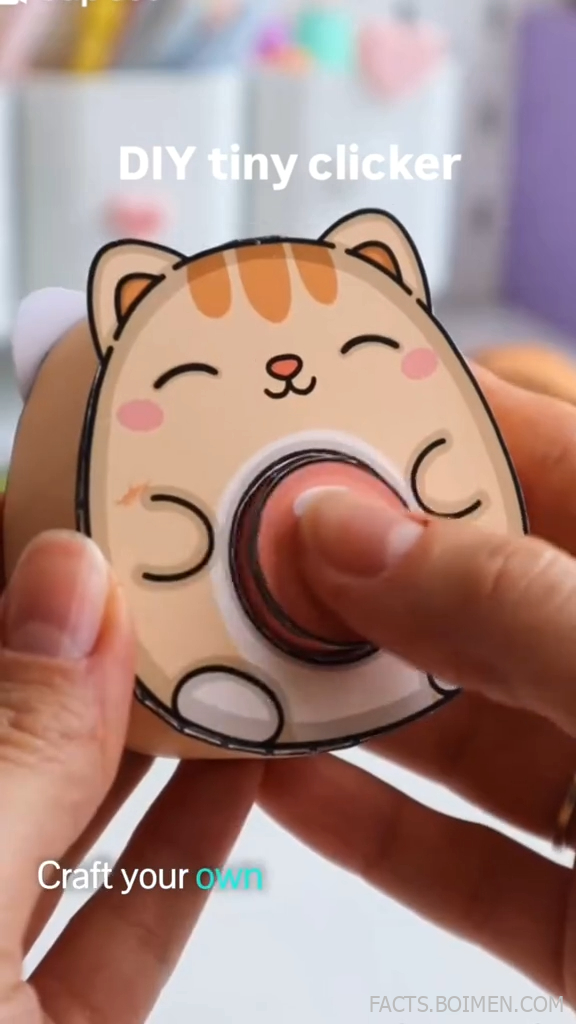
There is something deeply satisfying about a tiny object that fits between your thumb and forefinger, makes a soft click, and costs nothing more than a scrap of paper. That is exactly the appeal of the DIY paper fidget clicker — a miniature origami-style gadget you fold yourself, decorate with a sticker or a doodled cat face, and click whenever your hands need something to do. The best part? Almost every project below uses materials you already have in a drawer: printer paper, cardstock, glue, tape, and a marker. Below are 20 paper fidget clicker crafts and closely related low-cost fidget builds, from beginner folds to clever mechanisms that click, snap, pop, and spin.
Table of Contents(Click to Toggle)
- Why Paper Fidget Clickers Are Worth Folding
- 1. Origami.me
- 2. Paper Kawaii
- 3. Origami Way
- 4. Red Ted Art
- 5. Origami Guide
- 6. Easy Peasy and Fun
- 7. Origami-Fun
- 8. Craft Passion
- 9. Frugal Fun For Boys and Girls
- 10. Kids Activities Blog
- 11. Instructables
- 12. WikiHow
- 13. The Spruce Crafts
- 14. Origami Tutorials
- 15. Papercraft World
- 16. Creative Bloq
- 17. PBS Kids for Parents
- 18. Teachers Pay Teachers
- 19. Pinterest
- 20. YouTube
- Bonus: Tinkercad
- Bonus: Cults 3D
- Bonus: Printful
- Bonus: Sticker Mule
- Bonus: Canva
- The Internet’s Best-Kept Paper Craft Secrets
Why Paper Fidget Clickers Are Worth Folding
Store-bought fidget toys solve one problem and create three more: they cost money, they break, and they get lost. A paper clicker sidesteps all of that. You can fold one in under five minutes, replace it for free, and customize the face — a sticker, a drawn cat, a tiny smiley — so it feels personal rather than mass-produced. Teachers use them as quiet, desk-friendly sensory tools. Parents love them because a folded square of cardstock is far cheaper than a plastic gadget that ends up under the couch. And for anyone who simply likes making things with their hands, the click mechanism itself is a genuinely clever bit of paper engineering worth understanding. The projects below range from simple accordion folds to spring-loaded clickers, so there is something here whether you have five minutes or an afternoon.
1. Origami.me : Clear step-by-step folds for beginners
What it is: A long-running origami tutorial site with photo-and-text instructions for hundreds of models, including simple folded toys and paper mechanisms.
Category: Origami tutorial library
Why it stands out:
- Instructions use large, uncluttered photos rather than dense diagrams, which matters when you are folding a small clicker and need to see exactly where the crease goes.
- Models are sorted by difficulty, so you can start with a basic folded square and work up to moving parts.
- The site loads fast and has no video ads interrupting the fold sequence.
Best for: Absolute beginners who want to fold their first paper fidget without pausing a video every ten seconds.
2. Paper Kawaii : Cute, kawaii-style paper toys and miniatures
What it is: A craft blog and YouTube channel specializing in adorable paper projects, from tiny envelopes to miniature paper toys.
Category: Kawaii paper crafting
Why it stands out:
- The aesthetic is built around small, cute objects, which is exactly the vibe of a clicker with a cat sticker on its face.
- Free printable templates are available for many projects, so you can trace and cut rather than measure from scratch.
- Projects scale down well — the same fold works at half size for a pocket-sized fidget.
Best for: Crafters who want their fidget to look cute, not just functional.
3. Origami Way : Fast folds with difficulty ratings
What it is: A tutorial site that labels every model with an easy, medium, or hard rating and shows an estimated time to complete.
Category: Origami instructions
Why it stands out:
- The time estimates are genuinely useful when you are deciding whether to fold a quick clicker before class or a more involved model at home.
- Each tutorial includes a short video plus written steps, so you can choose your learning style.
- The “easy” section is large, which keeps frustration low for kids folding their first toy.
Best for: Kids and adults who want a realistic sense of how long a fold will take.
4. Red Ted Art : Kid-friendly paper crafts with printable templates
What it is: A family craft site packed with paper projects, many designed for young children with adult help.
Category: Family craft blog
Why it stands out:
- Projects are written for real households — minimal specialty tools, lots of recycling of scrap paper.
- Many tutorials include free printable templates you can print on cardstock for a sturdier clicker.
- The site covers seasonal and classroom variations, useful if you are making fidgets for a group.
Best for: Parents and teachers making paper fidgets in batches.
5. Origami Guide : Illustrated guides organized by shape
What it is: A clean tutorial archive where models are grouped by base shape and difficulty level.
Category: Origami reference site
Why it stands out:
- Grouping by base shape helps you understand the underlying structure, so a clicker fold becomes easier to remember and repeat.
- Diagrams are high contrast, which is easier on the eyes than faded scanned books.
- There is a dedicated beginner section that builds skills in a sensible order.
Best for: Learners who want to understand why a fold works, not just copy it.
6. Easy Peasy and Fun : Simple paper toys with big visual steps
What it is: A craft site focused on quick, low-mess projects for kids, with large step photos.
Category: Kids craft tutorials
Why it stands out:
- Step photos are shot close up, so you can see exactly how tight a crease should be.
- Many projects use a single sheet of paper and no glue, which keeps the mess contained.
- The site regularly publishes paper toy roundups, handy for finding variations on the same click mechanism.
Best for: Quick after-school crafts that finish before attention runs out.
7. Origami-Fun : Printable diagram sets and video support
What it is: A tutorial site offering both animated diagrams and printable PDF instructions.
Category: Origami diagrams
Why it stands out:
- The printable diagrams are genuinely useful when you want to fold away from a screen.
- Animations show the fold in motion, which clarifies tricky squash and reverse folds.
- The catalog includes traditional action models that move when you pull or press them.
Best for: Folders who like paper instructions they can keep on the table.
8. Craft Passion : Detailed patterns with template downloads
What it is: A craft blog with in-depth tutorials, including felt and paper projects with downloadable patterns.
Category: Craft patterns and tutorials
Why it stands out:
- Patterns are drawn to scale, which helps if you want a clicker with consistent dimensions every time.
- The tutorials explain material choices, so you learn when cardstock beats printer paper.
- Photos document the tricky middle steps that most tutorials skip.
Best for: Makers who want repeatable, consistent results.
9. Frugal Fun For Boys and Girls : Engineering-minded paper projects
What it is: A hands-on activity site with a strong focus on simple engineering and paper mechanisms.
Category: STEM craft activities
Why it stands out:
- Projects often explain the mechanical idea behind the toy, which turns a clicker into a tiny physics lesson.
- Materials lists are short and use household items.
- Activities are tested with real kids, so the difficulty ratings are honest.
Best for: Parents who want a craft that doubles as a learning activity.
10. Kids Activities Blog : Huge archive of paper toy ideas
What it is: A large activity site covering crafts, printables, and paper toys for a wide age range.
Category: Activity and craft blog
Why it stands out:
- The sheer volume means you can find five variations on a paper fidget in one sitting.
- Printable packs include coloring pages you can use to decorate a plain clicker.
- Articles are organized by age, which helps you pick something a younger child can finish.
Best for: Browsing for multiple paper toy ideas in one place.
11. Instructables : Community-built paper mechanism projects
What it is: A massive user-generated project site where makers document builds step by step, including paper and cardboard mechanisms.
Category: DIY project community
Why it stands out:
- Searching “paper clicker” or “cardboard fidget” surfaces real builds with photos from multiple makers, so you can compare approaches.
- Comments often contain fixes for common problems, like a clicker that will not snap back.
- Many projects include downloadable templates and cut files.
Best for: Tinkerers who like to see several versions of the same idea.
12. WikiHow : Illustrated how-tos for quick paper toys
What it is: A collaborative how-to site with illustrated articles on folding paper toys and simple fidgets.
Category: How-to reference
Why it stands out:
- Illustrations are drawn specifically to show hand position, which is often clearer than photos for small folds.
- Articles include tips and warnings sections that flag where beginners usually go wrong.
- Pages are lightweight and easy to read on a phone at the craft table.
Best for: A quick refresher when you have forgotten one step of a fold.
13. The Spruce Crafts : Well-edited paper craft guides
What it is: A general craft site with professionally edited tutorials covering paper folding, card making, and small handmade toys.
Category: Craft publication
Why it stands out:
- Articles are edited for clarity, so instructions read cleanly without typos or missing steps.
- There are comparison guides for paper types, useful when deciding between copy paper and cardstock.
- Related tutorials are linked at the end of each piece, making it easy to chain projects.
Best for: Readers who prefer polished, magazine-style instructions.
14. Origami Tutorials : Video-first folding lessons
What it is: A tutorial hub that prioritizes video walkthroughs of origami models at every level.
Category: Video origami lessons
Why it stands out:
- Videos are filmed from the folder’s perspective, which matches what your own hands see.
- Models are tagged by difficulty, so you can filter to beginner-friendly action folds.
- Short runtimes mean you can finish a fold in one sitting without scrubbing.
Best for: Visual learners who fold better by watching than reading.
15. Papercraft World : Templates and paper model kits
What it is: A papercraft shop and resource site offering printable templates for paper models and small builds.
Category: Printable papercraft templates
Why it stands out:
- Templates are print-ready, which saves you from measuring and cutting freehand.
- The catalog includes small, sturdy builds that hold up to repeated handling better than a plain paper fold.
- Free sample templates let you test the print quality and scale before buying anything.
Best for: Makers who want a sturdier finished object with less guesswork.
16. Creative Bloq : Design inspiration for decorating your build
What it is: A design and creativity publication covering illustration, print, and craft trends.
Category: Design inspiration
Why it stands out:
- Articles on color palettes and character design help you make a plain paper clicker look intentional rather than improvised.
- Coverage of sticker and print trends explains why tiny face designs work so well on small objects.
- It is a good source for naming and packaging ideas if you plan to give fidgets as gifts.
Best for: Crafters who care about how the finished piece looks, not just how it works.
17. PBS Kids for Parents : Screen-free activity ideas
What it is: The parent-facing section of PBS Kids, offering crafts, activities, and early-learning ideas.
Category: Educational activity resource
Why it stands out:
- Activities are designed with child development in mind, which is helpful when choosing a fidget for a specific age.
- Instructions are written for adults working alongside children.
- The site pairs crafts with conversation prompts, turning a folding session into shared time.
Best for: Caregivers who want crafts with an educational angle.
18. Teachers Pay Teachers : Classroom-ready printable fidget resources
What it is: A marketplace where educators share and sell classroom resources, including printable paper crafts and fidget templates.
Category: Educational printables marketplace
Why it stands out:
- Many listings include a full class set of templates, so you can print one page and hand out thirty.
- Reviews from teachers tell you honestly whether a template folds well at the printed size.
- Free downloads are common, letting you test a design before committing.
Best for: Teachers preparing a calm-down corner or a rainy-day craft station.
19. Pinterest : Visual idea board for tiny clicker designs
What it is: A visual discovery platform where crafters save step photos, finished results, and printable templates.
Category: Visual idea discovery
Why it stands out:
- Searching “paper clicker” or “tiny fidget diy” surfaces dozens of finished examples in a single scroll, which is great for picking a style.
- Saved pins often link to full tutorials, so you can go from inspiration to instructions in one tap.
- Boards are easy to keep private, so you can collect ideas for a gift or a class project without spoiling the surprise.
Best for: Gathering visual references before you start folding.
20. YouTube : Slow-motion fold-along videos
What it is: The largest video platform, home to thousands of origami and paper toy tutorials, many filmed in real time.
Category: Video tutorials
Why it stands out:
- Playback speed controls let you slow a tricky fold to half speed and follow along exactly.
- Creators often show the finished clicker in action first, so you know what you are aiming for.
- Comment sections frequently contain timestamps for each step, which saves scrubbing.
Best for: Anyone who wants to fold alongside a person rather than a diagram.
Bonus: Tinkercad : Design a clicker shape before you cut paper
What it is: A free browser-based 3D design tool that beginners can use to sketch simple shapes.
Category: Beginner 3D design
Why it stands out:
- You can model a flat clicker outline, then print the shape as a paper template to trace.
- It runs in a browser with no install, so it works on school computers.
- The drag-and-drop interface is forgiving enough for a first attempt.
Best for: Crafters who want a precise template without measuring by hand.
Bonus: Cults 3D : Free downloadable fidget files for reference
What it is: A marketplace and library of 3D printable models, including many free fidget designs.
Category: 3D model library
Why it stands out:
- Studying how a printed clicker is shaped helps you understand the mechanism before folding a paper version.
- Many listings include photos and dimensions you can scale down to paper size.
- The free section is genuinely large, so browsing costs nothing.
Best for: Makers curious about how the click mechanism is engineered.
Bonus: Printful : Turn your design into a real sticker
What it is: A print-on-demand service that produces custom stickers and small printed goods.
Category: Custom printing
Why it stands out:
- If you draw a cat face or a tiny character, you can order it as a real die-cut sticker to press onto your clicker.
- No minimum order on many products, so you can test a single design.
- The online design preview shows roughly how small details will print.
Best for: Crafters who want a professional-looking sticker instead of a hand-drawn one.
Bonus: Sticker Mule : Small-batch custom stickers
What it is: A custom sticker printer known for fast turnaround and frequent sample offers.
Category: Custom sticker printing
Why it stands out:
- Small sticker sizes are well suited to decorating a paper clicker’s face.
- The ordering process is simple enough to do from a phone.
- Sample deals let you try the material before ordering a larger batch.
Best for: Anyone making a batch of decorated fidgets as party favors or class gifts.
Bonus: Canva : Free design tool for printable templates
What it is: A browser-based graphic design tool with free templates for print projects.
Category: Design software
Why it stands out:
- You can lay out a fold template with cut lines and fold lines, then export it as a PDF to print at home.
- Free sticker and label templates make it easy to design a sheet of tiny faces.
- It works on a Chromebook, which matters for classroom use.
Best for: Designing your own printable clicker template from scratch.
The Internet’s Best-Kept Paper Craft Secrets
The real discovery here is not any single website — it is that a five-minute paper fold can replace a plastic gadget you would otherwise buy, lose, and replace again. Start with the simplest accordion fold, get the crease tension right, then work up to a spring-loaded clicker with a cardstock body. Decorate the face with a sticker, a doodle, or a printed character, and you have something small, personal, and genuinely satisfying to hold. Most of the resources above are free, and the ones that charge do so for templates or printing rather than for the idea itself. Once you have folded your first one, the variations come quickly: different paper weights, different sizes, different faces. The whole hobby fits in a pencil case.
What is the strangest or cleverest thing you have ever folded out of a single sheet of paper? Share it in the comments — I am always looking for the next fold to try.