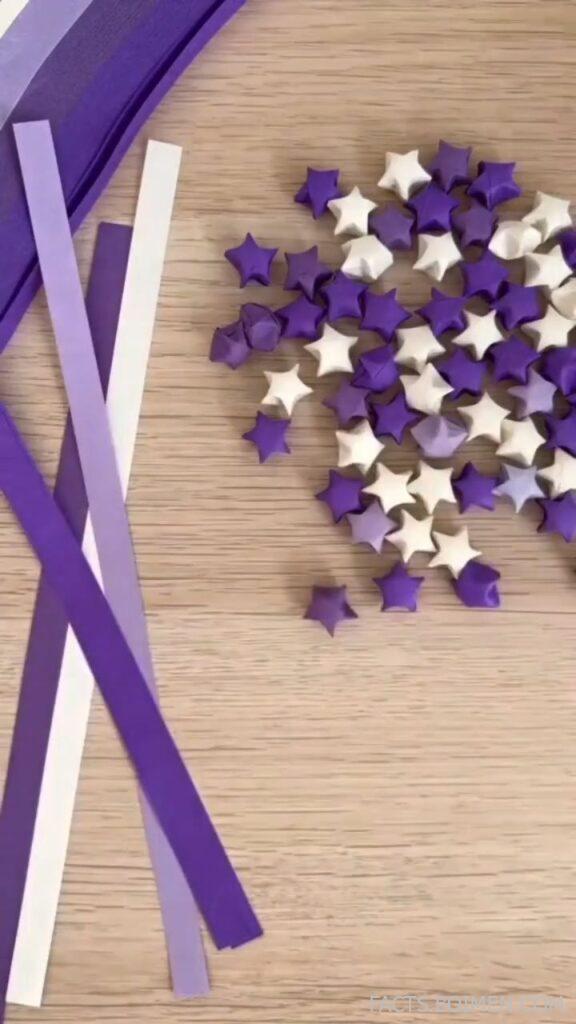
There is something quietly satisfying about folding a tiny paper star. It takes seconds, costs almost nothing, and leaves you with a small glossy shape you can drop into a jar, string onto a bracelet, or tape to a birthday card. Mini origami stars sit at the sweet spot where a craft is simple enough for a beginner but pretty enough to feel like a real project. Below you will find 18 genuinely useful places to learn, fold, and show off cute mini paper stars, from one-strip lucky stars to five-pointed modular designs and even a few folding apps and calculators that take the guesswork out of sizing your paper.
Table of Contents(Click to Toggle)
- Why Mini Origami Stars Are the Perfect Tiny Craft
- 18 Cute Mini Origami Stars to Fold Today
- 1. Origami.me
- 2. Origami Guide
- 3. Origami Way
- 4. Origami-Fun
- 5. Paper Kawaii
- 6. Origami Instructions
- 7. Origami Resource Center
- 8. Gilad’s Origami Page
- 9. Origami Spirit
- 10. Origami Plus
- 11. Red Ted Art
- 12. Easy Peasy and Fun
- 13. My Kids’ Adventures
- 14. Craftsy Hacks
- 15. The Spruce Crafts
- 16. Instructables
- 17. Pinterest Origami Star Boards
- 18. YouTube Origami Star Tutorials
- Bonus Mentions
- Tiny Folds, Big Charm
Why Mini Origami Stars Are the Perfect Tiny Craft
Mini stars are the rare craft that works at almost any skill level. The classic lucky star, folded from a single long paper strip, needs no glue, no scissors, and no cutting mat. You can make one while waiting for a bus, and by the end of a week you can have a jar holding a hundred. That low barrier is exactly why paper stars keep resurfacing in classrooms, bullet journals, and gift shops.
They are also unusually versatile. A five-pointed modular star can hang from a thread as a minimalist ornament; a flat star can become a bookmark, a gift topper, or a piece of wall art. The same basic folds scale from a 5 mm strip to a full sheet of wrapping paper.
The tricky part is not the folding, it is finding clear instructions. Many tutorials bury the steps in long videos, skip the paper sizing, or assume you already know terms like “valley fold” and “reverse fold.” The sites below solve that. Each one offers something specific, whether it is printable diagrams, step photos, or a printable strip template you can cut in seconds.
18 Cute Mini Origami Stars to Fold Today
1. Origami.me : Clean step-by-step star diagrams for total beginners
What it is: A large, well-organized origami instruction library with diagrams and short videos for dozens of star and flower models.
Category: Tutorial library
Why it stands out: Each model page lists the difficulty level and the exact paper size you need, so you can pick a project that actually fits the paper you have. The lucky star and five-pointed star pages are especially clear, with numbered steps that read like a recipe.
Best for: First-time folders who want a diagram they can follow without pausing a video.
2. Origami Guide : Photo-heavy instructions with a difficulty rating on every page
What it is: A tutorial site that pairs written steps with close-up photographs of each fold.
Category: Tutorial library
Why it stands out: The photo sequences make it easy to check your fold against the model before moving on, which is the single biggest cause of failed stars. Star models are grouped by difficulty, from easy to intermediate, so you can progress without guesswork.
Best for: Visual learners who learn better from photos than from diagrams.
3. Origami Way : Fast, no-fuss star tutorials you can finish in minutes
What it is: A beginner-focused site with short, direct tutorials for stars, cranes, and other small models.
Category: Tutorial library
Why it stands out: The instructions are deliberately brief, which suits mini stars that only need eight or ten folds. Pages often include a short tips section about creasing firmly, a small detail that makes the difference between a crisp star and a mushy one.
Best for: Quick after-school or lunch-break folding sessions.
4. Origami-Fun : Printable diagram sets and a star-specific section
What it is: A long-running origami site with printable PDF diagrams and a dedicated section for star models.
Category: Tutorial library with printables
Why it stands out: The printable diagrams are genuinely useful for classrooms, since you can hand out a sheet to each student instead of projecting a screen. The site also explains the difference between modular and single-sheet stars, which helps you choose the right project.
Best for: Teachers and group craft leaders who need handouts.
5. Paper Kawaii : Cute, kawaii-style stars with printable paper patterns
What it is: A craft blog known for adorable paper projects, including star boxes, star ornaments, and tiny lucky stars.
Category: Craft blog with video tutorials
Why it stands out: The aesthetic is the point here. Paper Kawaii pairs folding instructions with printable patterned paper, so your finished stars look styled rather than plain. Many tutorials include a downloadable template sized for mini stars.
Best for: Crafters who care as much about the look of the finished star as the folding process.
6. Origami Instructions : A searchable index when you know the star you want
What it is: A straightforward index of origami models organized by type and difficulty.
Category: Tutorial directory
Why it stands out: If you already know you want a five-pointed star or a star box, the index gets you there in one click instead of scrolling a feed. Each entry links to a full tutorial, and the site covers both traditional and modern star designs.
Best for: Folders who want to jump straight to a specific star shape.
7. Origami Resource Center : Background, history, and star lore in one place
What it is: A reference site that mixes tutorials with articles on origami history, symbolism, and paper types.
Category: Reference and tutorials
Why it stands out: It explains where lucky stars and modular stars come from and why they carry meaning in different cultures, which makes a simple craft feel richer. Tutorials are clear, and the paper-buying guidance is practical for beginners.
Best for: Readers who like context alongside instructions.
8. Gilad’s Origami Page : A deep archive for folders who want to go further
What it is: One of the oldest and most thorough origami archives online, with model databases, book reviews, and creator profiles.
Category: Archive and database
Why it stands out: You can search for star models by designer, which is a rare feature and a treat if you want to explore beyond the standard designs. It is less of a step-by-step tutorial site and more of a map of the whole origami world.
Best for: Intermediate folders ready to explore designers and books.
9. Origami Spirit : Thoughtful tutorials with a focus on technique
What it is: A tutorial site run by an experienced folder, with clear videos and written explanations of core techniques.
Category: Tutorial blog
Why it stands out: The site slows down to explain why a fold works, not just how to do it. That teaching style pays off with modular stars, where a single sloppy crease can throw off the whole assembly. Articles also cover paper choice and how to fix common mistakes.
Best for: Crafters who want to build real folding skills, not just copy steps.
10. Origami Plus : Modern designs and modular star projects
What it is: A tutorial site featuring contemporary origami models, including modular and geometric stars.
Category: Tutorial library
Why it stands out: Modular stars, where you fold several identical units and slot them together, look impressive but are beginner-friendly once you learn the unit. Origami Plus covers these in detail, and the finished stars make excellent hanging ornaments.
Best for: Folders who want a star that looks more advanced than it is.
11. Red Ted Art : Family-friendly star crafts with printable strip templates
What it is: A kids’ craft site with a large collection of paper projects, including lucky stars and star garlands.
Category: Kids’ craft blog
Why it stands out: The lucky star tutorials include printable strip templates, so you do not have to measure and cut strips by hand. Instructions are written for adults crafting with children, with clear notes on which steps need help.
Best for: Parents and anyone crafting with younger kids.
12. Easy Peasy and Fun : Simple star crafts with step photos and free printables
What it is: A craft blog with a steady stream of easy paper projects, many aimed at kids and beginners.
Category: Craft blog
Why it stands out: The star projects often combine origami with other materials, like straws, string, or card, which makes them feel like finished decorations rather than practice folds. Free printable templates appear regularly.
Best for: Crafters who want a complete project, not just a folded shape.
13. My Kids’ Adventures : Activity-style star tutorials with clear supply lists
What it is: A family activity site that presents origami stars as a guided project with supplies, steps, and variations.
Category: Family activity blog
Why it stands out: Each post starts with a short supply list and an estimated time, which is genuinely helpful when planning a craft session. The lucky star tutorial includes tips for folding with smaller hands.
Best for: Planning a screen-free afternoon activity.
14. Craftsy Hacks : Star crafts that double as gifts and decor
What it is: A craft ideas site covering paper, yarn, and home decor projects, with a solid paper star section.
Category: Craft ideas blog
Why it stands out: The focus is on what to do with your stars once they are folded, from filling a glass jar to stringing a garland. That makes it a good companion to a tutorial site, since it answers the “now what” question.
Best for: Turning a pile of folded stars into a finished decoration or gift.
15. The Spruce Crafts : Well-edited origami guides with reliable paper advice
What it is: A general craft resource with edited, consistently formatted origami tutorials.
Category: Craft reference site
Why it stands out: The editing quality is high, so instructions are consistent and easy to skim. It also has practical articles on choosing origami paper, including why thin paper behaves better for mini stars than thick cardstock.
Best for: Readers who want trustworthy, well-structured instructions.
16. Instructables : Community star projects with photos and variations
What it is: A large community platform where makers post step-by-step projects with photos and sometimes video.
Category: Community project platform
Why it stands out: Because anyone can post, you get unusual variations you will not find on traditional origami sites, such as stars folded from recycled wrapping paper or woven into wall art. Comments often contain useful troubleshooting from other makers.
Best for: Exploring creative variations and remixes.
17. Pinterest Origami Star Boards : Visual inspiration and color-palette ideas
What it is: A visual discovery platform where crafters collect star tutorials, photos, and styling ideas onto boards.
Category: Visual inspiration platform
Why it stands out: It is the fastest way to see how finished mini stars look in different colors, sizes, and arrangements, which helps you plan a project before you fold a single strip. Search for lucky stars or origami star garlands to find boards.
Best for: Gathering ideas and choosing a color scheme.
18. YouTube Origami Star Tutorials : Real-time folding you can pause and replay
What it is: The largest collection of video origami tutorials, from thirty-second shorts to full-length beginner lessons.
Category: Video tutorial platform
Why it stands out: For folds that are hard to read on paper, such as the final shaping of a lucky star, video is unbeatable. You can slow playback speed and rewatch a single step, which is far easier than re-reading a diagram. Look for tutorials that show the paper size on screen.
Best for: Tricky steps and anyone who prefers watching over reading.
Bonus Mentions
Origami Paper Size Calculator : Work out strip dimensions before you cut
Several origami sites and apps include a simple ratio guide for cutting strips. A common starting point is a strip roughly 1 cm wide and 20 to 30 cm long for a mini lucky star, but the ratio matters more than the exact numbers. Checking the ratio first saves wasted paper.
Printable Lucky Star Strip Template : Cut consistent strips in seconds
Free printable templates let you run a sheet through a printer and cut identical strips, which keeps your finished stars uniform. This is especially handy for garlands and jar-filling projects where mismatched sizes look messy.
Patterned Origami Paper Packs : Give mini stars a polished finish
Thin patterned paper, often sold in coordinated packs, folds more crisply than thick card and gives tiny stars a neat, deliberate look. Look for paper around 60 to 80 gsm for the best results.
Star Jar and Garland Projects : Turn folded stars into decor
Once you have a pile of stars, simple projects like a glass jar display or a threaded garland give them a purpose. These take minutes and make the folding feel worthwhile.
Origami Community Forums : Ask questions when a fold will not cooperate
Folding communities on Reddit and hobby forums are useful when a step refuses to work. Posting a photo of your half-folded star usually gets a helpful answer within a day.
Tiny Folds, Big Charm
Mini origami stars are proof that a craft does not need expensive tools or a big workspace to be satisfying. A single strip of paper, a few minutes, and one clear tutorial are enough to make something small and genuinely charming. Start with the lucky star if you are new, since it needs no glue and forgives imperfect creases, then move on to modular and five-pointed designs once your fingers know the rhythm.
The sites above cover the full range, from diagram-based libraries for beginners to deep archives for folders who want to explore designers and techniques. Pick one, fold a few stars, and see how quickly a small jar starts to fill up. Which of these star tutorials did you try first, and what did you make with the results? Share your favorite find in the comments.