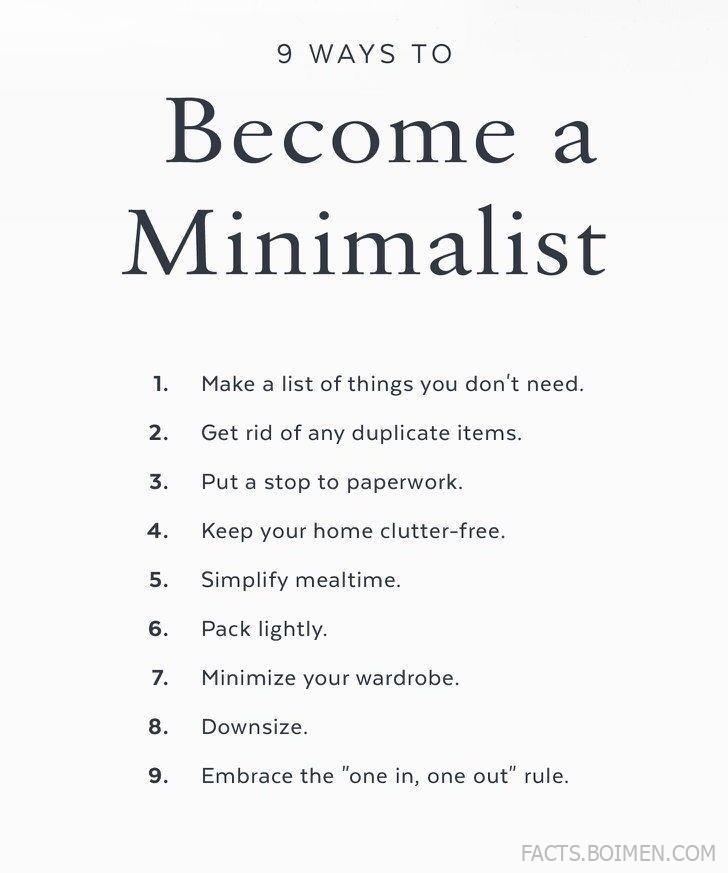
Minimalism is not about owning nothing. It is about owning only what you actually use, love, and need. The nine steps below are the exact ones people use when they want to stop managing stuff and start living with more room to breathe. Each one is small enough to start today, and together they cover the whole journey: the first purge, the daily habits, and the long-term rules that keep clutter from creeping back.
Table of Contents(Click to Toggle)
Why Becoming a Minimalist Changes More Than Your Home
Most people start decluttering because a room feels crowded. What they discover is that the clutter was never really the problem. Every object in a home asks for something: attention, cleaning, storage, insurance, and a small slice of your mental bandwidth. Researchers who study household decision fatigue have long noted that the sheer number of items in a space quietly taxes the brain, which is why a messy counter can feel exhausting even when nothing is actually wrong.
Becoming a minimalist flips that equation. When you reduce what you own, you reduce the number of decisions you make each day. You spend less time looking for things and more time using them. You buy less, repair more, and notice what you already have. The nine steps below are not a personality type or an aesthetic. They are a practical sequence, and you can start with whichever one feels easiest today.
The 9 Ways to Become a Minimalist
1. Make a List of Things You Don’t Need
What it is: A written inventory of the items you can name as unnecessary, room by room, before you touch a single box.
Category: Mindset and planning
Why it stands out:
- Writing the list forces you to name the item, which makes it much harder to keep it out of vague guilt.
- It turns a huge job into a finite checklist you can work through over a weekend or a month.
- It works best when you walk the room with a notepad rather than trying to remember from memory.
Best for: Anyone who feels overwhelmed by the idea of decluttering and needs a starting point that costs nothing.
2. Get Rid of Any Duplicate Items
What it is: A sweep for the second and third copies of things you only ever use one of.
Category: Decluttering
Why it stands out:
- Duplicates are the easiest wins in a home: three spatulas, four phone chargers, six identical mugs.
- Keeping one and donating the rest frees drawer space immediately without any emotional negotiation.
- A useful test is the “last time I used it” question. If you cannot remember, the spare can go.
Best for: Kitchens, bathrooms, and junk drawers, where duplicates multiply fastest.
3. Put a Stop to Paperwork
What it is: Moving bills, statements, receipts, and manuals out of paper piles and into a simple digital or single-folder system.
Category: Digital minimalism
Why it stands out:
- Paper is the clutter that regenerates, so it needs a system rather than a one-time clean.
- Opting into paperless billing and scanning the few documents you must keep removes most of the incoming flow.
- One labeled folder for “keep” and one shredder session a month is enough for most households.
Best for: People whose kitchen table has become a permanent mail station.
4. Keep Your Home Clutter-Free
What it is: A short daily reset that returns surfaces to empty before the day ends.
Category: Daily habits
Why it stands out:
- Ten minutes of putting things back beats a three-hour deep clean every weekend.
- Flat surfaces are the tell. If the counter, coffee table, and entryway are clear, the whole room reads as calm.
- The rule is simple: nothing lives on the counter that does not get used there daily.
Best for: Anyone who declutters successfully and then watches everything drift back within a fortnight.
5. Simplify Mealtime
What it is: Reducing the tools, recipes, and grocery decisions that surround cooking.
Category: Kitchen minimalism
Why it stands out:
- A small set of versatile tools, such as one good knife, one pan, and one sheet tray, covers most meals.
- A repeating weekly menu removes the daily “what’s for dinner” decision entirely.
- Fewer pantry items means less food waste, which is one of the most measurable wins in a minimalist kitchen.
Best for: Busy households that eat at home most nights but feel drained by the planning.
6. Pack Lightly
What it is: Traveling with one carry-on bag and a short, reusable packing list.
Category: Travel minimalism
Why it stands out:
- Carry-on only travel skips baggage claim, lost-luggage risk, and most airport waiting.
- A fixed list of clothing in neutral colors means every trip packs the same way in minutes.
- It is also the fastest way to test whether you really need the things you keep at home.
Best for: Frequent flyers and anyone who wants a low-stress weekend trip.
7. Minimize Your Wardrobe
What it is: Building a smaller closet of clothes that fit, match, and get worn regularly.
Category: Personal minimalism
Why it stands out:
- The classic approach is a capsule wardrobe of roughly 30 to 40 pieces per season, chosen for fit rather than trend.
- Turning every hanger backward and flipping it forward only when worn shows exactly what you never touch.
- Fewer, better pieces usually cost less over time because they last and never sit unworn.
Best for: People who own a full closet but still feel they have nothing to wear.
8. Downsize
What it is: Deliberately choosing a smaller space, or using less of the space you already have.
Category: Lifestyle change
Why it stands out:
- A smaller home means lower rent or mortgage, smaller utility bills, and far less to clean.
- You do not have to move to downsize. Closing off one room and living in the rest changes habits quickly.
- The honest trade-off is that downsizing forces hard choices, so it works best after steps one and two.
Best for: Empty nesters, renters, and anyone paying for space they do not use.
9. Embrace the “One In, One Out” Rule
What it is: A maintenance rule: for every new item that enters your home, one similar item leaves.
Category: Long-term maintenance
Why it stands out:
- It stops the slow re-accumulation that undoes every decluttering effort.
- It creates a small pause before buying, which is often enough to decide you do not need the item at all.
- The rule is easiest to keep in categories with clear limits, such as mugs, shoes, or tote bags.
Best for: Anyone who has decluttered once and wants to never do a full reset again.
Bonus Mentions
Digital Declutter: The Minimalists : Essays and a podcast that keep the habit going
What it is: A long-running blog and podcast by Joshua Fields Millburn and Ryan Nicodemus about living with less.
Category: Inspiration and community
Why it stands out:
- Their free writing covers the emotional side of letting go, not just the practical sorting.
- The podcast works well as a companion while you sort a closet or a garage.
Best for: Readers who want steady motivation rather than a one-time checklist.
Decluttering Method: KonMari : The category-by-category method
What it is: Marie Kondo’s tidying method, which sorts by category instead of by room.
Category: Decluttering framework
Why it stands out:
- Tackling all clothing at once gives a far clearer picture than cleaning one drawer at a time.
- The “does it spark joy” question is a fast filter for items you keep out of habit.
Best for: People who want a structured, single-pass approach to a whole home.
Local Giving: Freecycle : Rehome usable items in your own town
What it is: A network of local groups where members give away and request items for free.
Category: Donation and reuse
Why it stands out:
- Items go to a neighbor instead of a landfill, which makes letting go much easier.
- Pickup is arranged directly, so bulky items leave without a trip to the donation center.
Best for: Furniture, garden tools, and anything too large to carry to a charity shop.
Secondhand Selling: eBay : Turn unused items into a small fund
What it is: The long-established marketplace for selling used goods to buyers worldwide.
Category: Selling and resale
Why it stands out:
- It handles categories that local buyers often ignore, including electronics and collectibles.
- A single listing can clear several similar items, which speeds up the whole process.
Best for: Higher-value items that deserve a wider audience than a neighborhood group.
Free Planning: Notion : One page to track every decluttering task
What it is: A flexible workspace where you can build a simple decluttering checklist or inventory.
Category: Planning and tracking
Why it stands out:
- The free plan is enough for a personal list of rooms, items, and donation drop-offs.
- A shared page lets a household split the work and see what is already done.
Best for: Anyone who wants step one’s list to live somewhere they will actually revisit.
The Quiet Power of Owning Less
None of these nine steps requires a dramatic life change. Making a list, removing duplicates, and setting a one-in-one-out rule can all happen this week. The bigger shifts, like simplifying mealtime or downsizing, tend to follow naturally once the first few steps show you how good an uncluttered room feels. The goal is not a perfectly empty house. It is a home where everything present has a reason to be there, and where your time goes to people and projects instead of maintenance.
Start with the step that feels easiest, finish it completely, and let the momentum carry you to the next. Which of these nine steps are you planning to try first?