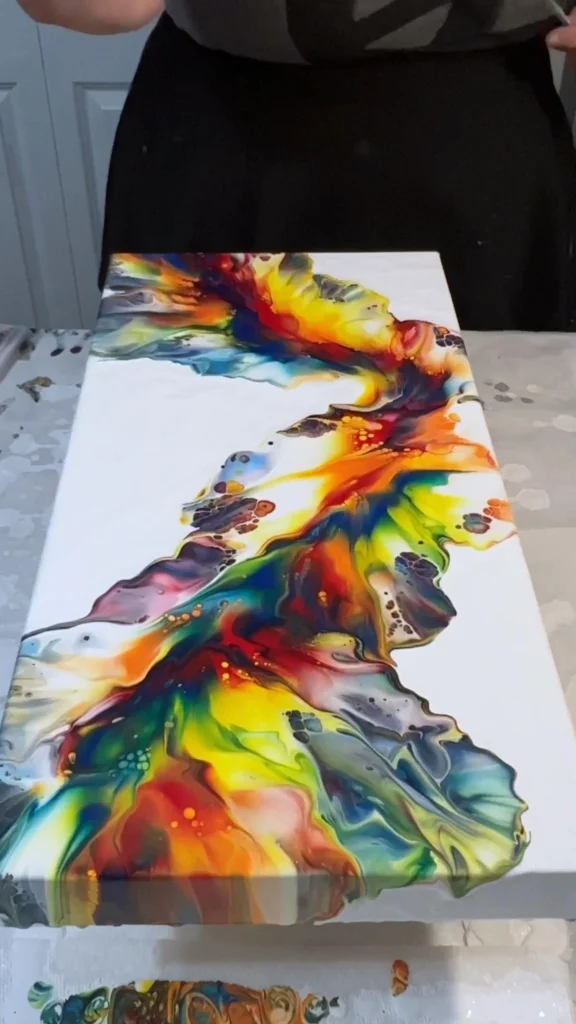
A Dutch pour turns a plain canvas into a blooming, colorful explosion with nothing more than fluid acrylics and a hairdryer. If you clicked for that full video and the promise of vibrant color, this list is your next stop: 18 tools, tutorials, and supply sources that make the technique easier, cleaner, and more dramatic. From the exact paint consistency that lets a bloom spread to the artists worth following for step-by-step pours, everything here is aimed at people who want bold color on canvas without guesswork.
Table of Contents(Click to Toggle)
- Why Dutch Pour Painting Deserves a Spot on Your Studio Table
- 18 Vibrant Dutch Pour Painting Resources and Tools
- 1. Left Brained Artist
- 2. Acrylic Pouring
- 3. DecoArt Fluid Art Ready-to-Pour Acrylics
- 4. Floetrol by Flood
- 5. Arteza Pre-Stretched Canvas Pack
- 6. Liquitex Basics Acrylic Paint Set
- 7. Silicone Oil for Cell-Making
- 8. Plastic Squeeze Bottles with Caps
- 9. Artist’s Loft Flow Acrylics
- 10. Molotow One4All Acrylic Marker
- 11. Olga Soby Art
- 12. Pouring Medium by Golden
- 13. Plastic Drop Cloths and Painter’s Tape
- 14. Rubbing Alcohol Spray Bottle
- 15. Cradled Wood Painting Panels
- 16. Hairdryer with Cool-Setting Control
- 17. Resin Topcoat Kits for Fluid Art
- 18. Fluid Art Coating and Varnish Sprays
- Bonus Mentions
- The Colorful Shortcut to Your First Dutch Pour
Why Dutch Pour Painting Deserves a Spot on Your Studio Table
The Dutch pour is one of the few fluid-art techniques where you can see a finished composition in under ten minutes. You lay down a base color, pool a few contrasting puddles, and blow them outward with a hairdryer so the paint blooms into ribbons and feathery edges. The catch is that the result depends heavily on consistency: paint too thick and it stalls, too thin and it muddies. That is why the right pouring medium, the right canvas priming, and a reliable heat source matter more here than in almost any other acrylic technique.
This list groups the resources that solve those specific problems. Some are free tutorials that show the exact blow-dryer angle and timing. Others are supplies that remove the trial-and-error phase, like pre-mixed fluid acrylics and pre-stretched canvas multipacks. A few are niche extras, such as silicone oil for cell formation and resin topcoats that make the colors look wet and glassy. Read it as a starter kit plus a viewing list, and you can go from inspiration to a finished, vibrant canvas this weekend.
18 Vibrant Dutch Pour Painting Resources and Tools
1. Left Brained Artist : Step-by-Step Dutch Pour Tutorials and Color Guidance
What it is: A fluid-art education site with written tutorials, paint-mixing ratios, and technique breakdowns for pours, blooms, and blow-dryer work.
Category: Tutorials and technique reference
Why it stands out:
- Explains the paint-to-medium ratio in plain numbers, which is the single biggest variable in a Dutch pour.
- Covers troubleshooting for muddy colors and stalled blooms, two problems beginners hit immediately.
- Written format means you can follow along at the canvas without pausing a video.
Best for: First-time pourers who want to understand why a bloom spreads before they waste paint.
2. Acrylic Pouring : The Largest Free Library of Pour Technique Articles
What it is: A long-running community site packed with technique articles, artist interviews, and supply reviews dedicated to acrylic pouring.
Category: Community and reference hub
Why it stands out:
- Deep archive covering Dutch pours, ring pours, swipe techniques, and cell creation side by side.
- Supply reviews often compare brands on the same canvas, which saves real money on experiments.
- Artist features show finished work in many palettes, useful for planning a color scheme.
Best for: Pourers who learn by reading comparisons and want context before buying supplies.
3. DecoArt Fluid Art Ready-to-Pour Acrylics : Pre-Mixed Paint That Pours Straight From the Bottle
What it is: A line of acrylics already formulated at pouring consistency, so no medium mixing is required.
Category: Paint and pouring medium
Why it stands out:
- Removes the mixing step entirely, which is ideal when you want to test a Dutch pour tonight.
- Colors stay vivid and consistent between bottles, so a repeat pour looks like the first one.
- Works well for the pooled puddles in a Dutch pour because the consistency is already fluid.
Best for: Beginners and anyone who dislikes measuring medium by eye.
4. Floetrol by Flood : The Budget Pouring Medium That Keeps Colors Bright
What it is: A paint conditioner originally made for latex wall paint, widely used as a pouring medium in fluid art.
Category: Pouring medium
Why it stands out:
- Costs far less per ounce than artist-grade mediums, which matters when a large canvas drinks paint.
- Extends open time so a Dutch pour bloom can be adjusted before it sets.
- Mixes with standard acrylics and keeps colors from turning chalky at high ratios.
Best for: High-volume pourers and anyone practicing on cheap canvas before a final piece.
5. Arteza Pre-Stretched Canvas Pack : Affordable Multipacks for Practicing Bloom After Bloom
What it is: Multipacks of pre-stretched, primed cotton canvas in common sizes.
Category: Surfaces
Why it stands out:
- Buying in bulk lowers the cost per attempt, and Dutch pours reward repetition.
- Pre-primed surface means paint flows instead of soaking in unevenly.
- Consistent sizing makes it easy to compare two pours side by side.
Best for: Practice sessions and artists building a small series in one color palette.
6. Liquitex Basics Acrylic Paint Set : Reliable Pigment for Predictable Pours
What it is: A student-grade acrylic set with strong pigment load and consistent viscosity.
Category: Paint
Why it stands out:
- Consistent thickness across colors means your mixing ratio stays the same from tube to tube.
- Strong pigment means you need less paint to get saturated, vibrant results.
- Widely available, so replacing a favorite color mid-project is easy.
Best for: Artists who mix their own pouring medium and want dependable behavior.
7. Silicone Oil for Cell-Making : Creates the Signature Bubbled Cells in Fluid Art
What it is: A few drops of silicone oil added to colored paint to create cell formation during a pour.
Category: Additive
Why it stands out:
- Even a small amount produces distinct round cells that lift through the top layer.
- Works especially well when a heat gun or hairdryer passes over the surface.
- Only a drop or two per color is needed, so a small bottle lasts many canvases.
Best for: Pourers who want visible cells rather than smooth ribbons.
8. Plastic Squeeze Bottles with Caps : Control Where Each Color Lands
What it is: Small squeezy bottles used to dispense mixed paint in precise lines and puddles.
Category: Tools
Why it stands out:
- Precise control matters in a Dutch pour, where puddle placement decides the whole composition.
- Caps let you store pre-mixed colors for a day without them skinning over.
- Cheap enough to keep one bottle per color in a dedicated palette.
Best for: Anyone who wants clean, deliberate color placement instead of free pouring.
9. Artist’s Loft Flow Acrylics : An Easy In-Store Way to Start Pouring Today
What it is: A craft-store line of pre-mixed flow acrylics sold in individual bottles.
Category: Paint
Why it stands out:
- Available in physical stores, so you can start a pour the same day you decide to try it.
- Sold individually, letting you build a palette around two or three bold colors.
- Ready consistency removes the guesswork for a first Dutch pour attempt.
Best for: Beginners who prefer to see and buy supplies in person.
10. Molotow One4All Acrylic Marker : Add Crisp Details Over a Dried Pour
What it is: A refillable acrylic paint marker designed for mixed-media work.
Category: Detailing tool
Why it stands out:
- Lets you add fine lines or accents on top of a dried pour without mixing paint.
- Refillable, so a single body works across many colors.
- Opaque enough to sit visibly on top of saturated pour colors.
Best for: Artists who want a graphic element layered over a fluid background.
11. Olga Soby Art : A Fluid-Art Artist Known for Elegant Bloom Compositions
What it is: The studio site and resource hub of a fluid-art artist known for refined, colorful pours.
Category: Artist inspiration and courses
Why it stands out:
- Work examples show how a limited palette can look more sophisticated than many colors combined.
- Offers structured learning paths for pour techniques beyond the basic blow-dryer method.
- Useful for studying composition, especially where the bloom sits on the canvas.
Best for: Pourers ready to move from experiments to intentional, gallery-style pieces.
12. Pouring Medium by Golden : Professional-Grade Flow Without Thinning the Binder
What it is: A dedicated acrylic pouring medium from a well-known professional paint brand.
Category: Pouring medium
Why it stands out:
- Maintains film integrity, which matters for archival pieces sold or gifted.
- Produces a smooth, level surface that reduces cracking on larger canvases.
- Mixes predictably with heavy-body acrylics, so you can use premium pigments.
Best for: Artists making pieces intended to last and be displayed long term.
13. Plastic Drop Cloths and Painter’s Tape : Protect the Studio From Runoff
What it is: Basic protection supplies that keep excess paint off tables, floors, and canvas edges.
Category: Studio protection
Why it stands out:
- Dutch pours send paint off the canvas edges, so a drop cloth saves cleanup time.
- Taping the back edge gives a clean border if you want a framed look.
- Inexpensive enough to replace after a heavy session rather than scrub.
Best for: Anyone pouring indoors, especially on a shared table.
14. Rubbing Alcohol Spray Bottle : Pop Surface Bubbles Instantly
What it is: A fine-mist spray of isopropyl alcohol used to break surface bubbles in wet paint.
Category: Finishing tool
Why it stands out:
- A light mist pops trapped bubbles without disturbing the bloom you just created.
- Also helps paint level out slightly for a smoother final surface.
- Costs almost nothing and lasts for dozens of canvases.
Best for: Every pourer, since bubbles appear in nearly every wet pour.
15. Cradled Wood Painting Panels : A Rigid Surface That Resists Warping
What it is: Wood panels with a raised cradle backing, primed and ready for paint.
Category: Surfaces
Why it stands out:
- Rigid surface stays flat even when heavy wet paint is applied.
- The cradle depth gives a finished, frameless look when hung.
- Takes resin topcoats well, which is common in fluid art finishing.
Best for: Pourers who want a modern, frame-free finished piece.
16. Hairdryer with Cool-Setting Control : The Core Tool Behind Every Dutch Pour Bloom
What it is: A standard hairdryer with adjustable heat and speed, used to push paint across the canvas.
Category: Core tool
Why it stands out:
- The cool setting gives more control and reduces fast skinning on the surface.
- Variable speed lets you start gentle, then push harder for longer ribbons.
- An inexpensive dedicated dryer keeps paint out of your everyday one.
Best for: Absolutely every Dutch pour, since the blow-dryer is the defining tool.
17. Resin Topcoat Kits for Fluid Art : Glassy, Wet-Looking Color That Lasts
What it is: Two-part epoxy resin kits formulated for coating artwork.
Category: Finishing
Why it stands out:
- Deepens color saturation, making a vibrant pour look even more vivid.
- Creates a smooth, level surface that hides minor canvas texture.
- Adds a protective layer that resists moisture and dust over time.
Best for: Finished pieces headed for display or sale.
18. Fluid Art Coating and Varnish Sprays : A Fast, Brush-Free Protective Finish
What it is: Aerosol varnishes and clear coatings designed for acrylic artwork.
Category: Finishing
Why it stands out:
- Applies in minutes with no brush marks on a delicate pour surface.
- Available in matte, satin, and gloss, letting you choose how reflective the piece looks.
- A practical alternative for anyone not ready to work with two-part resin.
Best for: Quick protection on practice pieces and small canvases.
Bonus Mentions
r/PourPainting : A Community for Feedback and Color Ideas
A subreddit where pourers share results, ask about ratios, and troubleshoot failed blooms. Great for honest feedback before you commit to a large canvas.
YouTube Fluid Art Channels : Watch the Full Pour Before You Try It
Searching “Dutch pour tutorial” returns hundreds of real-time pours. Watching the blow-dryer angle and timing in motion is often faster than reading about it.
Jerry’s Artarama : Discount Art Supplies and Bundles
A retailer with frequent sales on canvas multipacks and pouring mediums, useful for restocking after a heavy practice run.
Blick Art Materials : Broad Selection of Pouring Supplies
Carries professional mediums, panels, and pigments in one place, with detailed product specs that help you compare before buying.
The Colorful Shortcut to Your First Dutch Pour
What makes the Dutch pour so appealing is how quickly a blank canvas turns into something dramatic, and how much of that drama comes down to a handful of choices: paint consistency, puddle placement, and the angle of a hairdryer. The resources above cover all three. Start with a pre-mixed paint and a cheap canvas pack, watch one full tutorial, and you will learn more in a single pour than in hours of reading.
Once the basics click, the extras on this list open up new directions: silicone oil for cells, resin for a glassy finish, wood panels for a frameless look. None of it requires a full studio. A table, a drop cloth, and one good hairdryer will do. Which of these are you trying first, or do you have a favorite pour supply that belongs on this list? Share it in the comments.