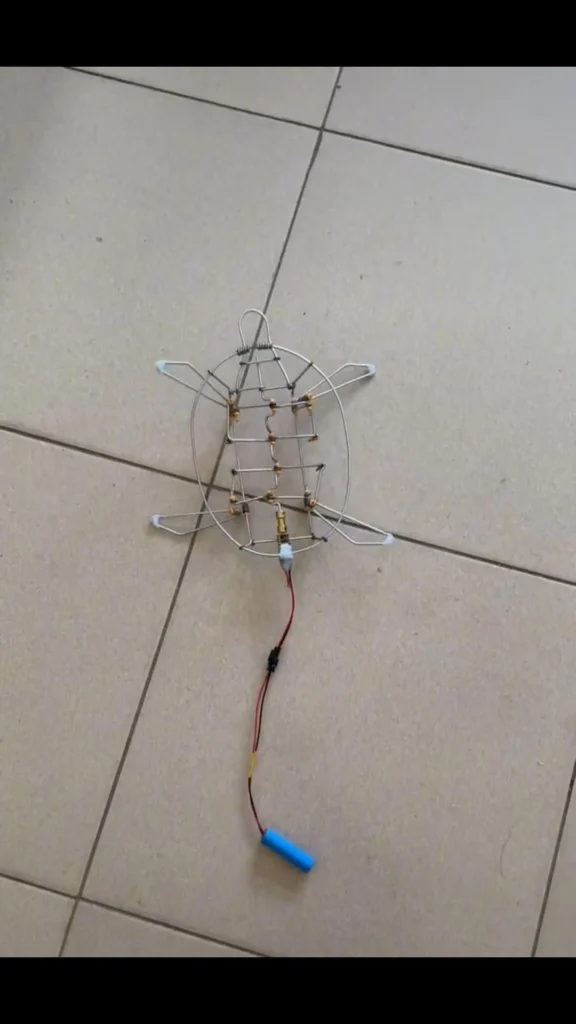
A tiny motor, a length of wire, and a battery can turn into something that actually moves across the table. That is the quiet magic behind the walking DIY turtle: a handful of cheap parts that suddenly behave like a creature. The projects below all share that same spark — simple materials, clever mechanics, and a finished object that walks, waddles, or scuttles on its own. Some are beginner-friendly afternoon builds; others stretch into real engineering lessons. Every one of them rewards curiosity with motion you can see.
Table of Contents(Click to Toggle)
- Why Simple Walking Robots Are Worth Building
- 19 DIY Walking Robot Projects
- 1. Instructables
- 2. Science Buddies
- 3. Arduino Project Hub
- 4. Hackaday
- 5. Adafruit Learning System
- 6. SparkFun Tutorials
- 7. Make: Magazine
- 8. Thingiverse
- 9. Printables
- 10. Tinkercad
- 11. LEGO Education
- 12. littleBits
- 13. Raspberry Pi Foundation
- 14. Rob Ives
- 15. Exploratorium
- 16. NASA STEM Engagement
- 17. HowToMechatronics
- 18. Jameco Electronics
- 19. Wokwi
- Bonus Mentions
- The Best-Kept Secrets in Motion
Why Simple Walking Robots Are Worth Building
Most people assume robotics starts with expensive kits and a coding bootcamp. In reality, the most memorable builds are the cheap ones: a motor hot-glued to a cardboard body, legs bent from wire, and a battery taped on top. These projects teach the fundamentals of balance, torque, and gait — the same ideas that govern real walking machines — without a single line of advanced code. They also build the habit of prototyping: bend, test, adjust, repeat.
For craft lovers, walking robots blend hands-on making with a visible payoff. For STEM learners, they turn abstract physics into something that trips over the rug. And for anyone who simply enjoys clever handmade things, there is a genuine thrill in watching a pile of scraps suddenly take steps. The resources below range from full step-by-step tutorials to free design files and simulators, so you can start wherever your skill level sits.
19 DIY Walking Robot Projects
1. Instructables : The largest library of step-by-step walking robot builds
What it is: A community platform where makers publish photo-by-photo project guides, including dozens of walking robots built from motors, wire, and scrap materials.
Category: Tutorial community
Why it stands out:
- Search “walking robot” and you get everything from a single-motor bristlebot to multi-legged Arduino walkers with full parts lists.
- Comments and “I made it” photos let you see how real builders adapted each design.
- Most guides list exact tools, so you can match the build to what you already own.
Best for: Beginners who want a proven build with photos at every stage.
2. Science Buddies : Structured STEM projects with clear mechanics explanations
What it is: A nonprofit education site offering free project guides, including walking and crawling robot builds tied to real science concepts.
Category: STEM education
Why it stands out:
- Each project includes a materials list, procedure, and a plain-language explanation of the physics behind the motion.
- Difficulty levels are labeled, so a parent can pick a build that fits a child’s age.
- Great for turning a craft into a science-fair-ready demonstration.
Best for: Parents, teachers, and students who want learning baked into the build.
3. Arduino Project Hub : Where motor-driven walkers get real code
What it is: The official project showcase for the Arduino platform, packed with documented builds that include full source code and wiring diagrams.
Category: Microcontroller projects
Why it stands out:
- You can find quadruped and hexapod walkers with servo timing code you can copy and tweak.
- Wiring diagrams are drawn in the standard Arduino style, which is easy to follow.
- It is a natural next step once a battery-and-motor turtle feels too simple.
Best for: Makers ready to add a microcontroller to their walking creations.
4. Hackaday : Deep-dive build logs from serious hobbyists
What it is: A project-logging site where engineers and hobbyists document builds in progress, including many legged and walking robots.
Category: Maker community
Why it stands out:
- Build logs show failures and fixes, which is far more instructive than a polished final tutorial.
- Commenters often suggest mechanical improvements, so the discussion is as useful as the post.
- You will find unusual gaits and linkage designs you will not see in beginner guides.
Best for: Tinkerers who want to understand why a design works, not just how to copy it.
5. Adafruit Learning System : Beautifully written electronics guides for motion projects
What it is: A free tutorial library from Adafruit covering motors, servos, sensors, and microcontroller builds.
Category: Electronics tutorials
Why it stands out:
- Guides are consistently clear, with high-quality photos and careful explanations of each component.
- Motor and servo primer pages explain torque and gearing in beginner-friendly terms.
- Parts are linked directly, which saves time hunting for the right motor.
Best for: Anyone who wants to actually understand the electronics before building.
6. SparkFun Tutorials : Practical component knowledge for moving builds
What it is: An education-focused tutorial section from electronics retailer SparkFun, covering motors, batteries, and wiring basics.
Category: Electronics education
Why it stands out:
- Concept pages on motors and power are concise and diagram-heavy, ideal for quick reference.
- Battery and voltage guidance helps you avoid the classic mistake of underpowering a motor.
- Content is written for classrooms as well as solo makers.
Best for: Builders who keep burning out motors and want to fix that.
7. Make: Magazine : A curated feed of clever mechanical builds
What it is: The online home of Make: magazine, publishing project roundups, tutorials, and maker culture stories.
Category: Maker media
Why it stands out:
- Regular roundups surface unusual walking and crawling contraptions you would not find by searching.
- Articles often link to the original builder’s documentation, so you can dig deeper.
- Strong coverage of cardboard-and-hot-glue engineering, the same spirit as a wire turtle.
Best for: Readers who want inspiration delivered rather than searched for.
8. Thingiverse : Free 3D-printable walking robot files
What it is: A massive repository of free 3D-printable models, including many walking robots and mechanical linkages.
Category: 3D printing files
Why it stands out:
- Search for “walking robot” and you will find printable bodies designed around common motors and servos.
- Many models include the original designer’s build notes in the description.
- Free downloads mean you can experiment without committing to a paid kit.
Best for: Anyone with access to a 3D printer who wants precise parts.
9. Printables : A cleaner, modern home for printable mechanisms
What it is: A 3D model platform from Prusa Research with a strong collection of mechanical and robotic designs.
Category: 3D printing files
Why it stands out:
- The interface makes it easy to filter by print difficulty and required hardware.
- Community ratings help you pick models that actually print well.
- Many walking designs include optional motor mounts for common hobby servos.
Best for: Printers who want well-documented, tested mechanical models.
10. Tinkercad : Free browser-based 3D design and circuit simulation
What it is: A free, beginner-friendly design tool from Autodesk that includes both 3D modeling and simple circuit simulation.
Category: Design and simulation
Why it stands out:
- You can model a turtle shell or leg linkage in the browser with no software install.
- The circuits mode lets you test a motor-and-battery setup virtually before buying parts.
- Drag-and-drop interface means kids can use it with minimal guidance.
Best for: Designers who want to prototype a body shape before cutting materials.
11. LEGO Education : Snap-together mechanisms with classroom-tested lessons
What it is: LEGO’s education arm, offering building systems and free lesson plans that cover simple machines and robotics.
Category: Hands-on learning kits
Why it stands out:
- Lessons on gears, levers, and linkages translate directly to walking mechanisms.
- Reusable parts make iteration fast — rebuild a leg in seconds.
- Free educator resources are available even without a full kit purchase.
Best for: Families and classrooms that want reusable, low-mess building.
12. littleBits : Magnetic electronic modules for instant motion
What it is: A system of color-coded, magnetically connecting electronic modules, including motors and power blocks.
Category: Modular electronics
Why it stands out:
- No soldering or wiring — modules snap together, so a motorized creature can be built in minutes.
- Great for very young makers who cannot handle a soldering iron.
- Modules can be reused across dozens of different projects.
Best for: Young builders and anyone who wants motion without wiring.
13. Raspberry Pi Foundation : Free coding projects that can drive real movement
What it is: The foundation behind the Raspberry Pi, offering free project guides that connect coding to physical hardware.
Category: Coding and hardware education
Why it stands out:
- Projects progress from simple LED blinking to motor control and sensor-driven behavior.
- Guides are written for learners, with clear step-by-step code explanations.
- Everything is free and browser-accessible.
Best for: Coders who want their programs to move something physical.
14. Rob Ives : Printable paper automata and walking mechanisms
What it is: The site of paper engineer Rob Ives, offering downloadable paper automata and mechanical models that move.
Category: Paper engineering
Why it stands out:
- Walking and crawling paper creatures demonstrate linkages and cams with zero electronics.
- Free samples let you test the concept before buying a template.
- A perfect bridge between craft and mechanics for people who avoid wiring.
Best for: Crafters who want motion from scissors and glue, not motors.
15. Exploratorium : Museum-grade activities about motion and balance
What it is: The website of San Francisco’s hands-on science museum, with free activity guides and exhibit explainers.
Category: Science activities
Why it stands out:
- Activities on balance, center of mass, and motion explain why a walking toy stays upright.
- Instructions use household materials and are tested with real visitors.
- Explainer articles dig into the science without feeling like a textbook.
Best for: Curious minds who want the “why” behind the wobble.
16. NASA STEM Engagement : Space-agency resources on rovers and locomotion
What it is: NASA’s official STEM education hub, offering free activities and explainers on robotics and planetary rovers.
Category: STEM education
Why it stands out:
- Rover design challenges show how engineers solve locomotion on rough terrain.
- Materials are free, printable, and grouped by grade level.
- Real mission imagery makes the mechanics feel connected to something bigger.
Best for: Students who want their walking robot to feel like a rover prototype.
17. HowToMechatronics : Detailed walkthroughs of legged robot design
What it is: A tutorial site focused on mechatronics, with in-depth written and video guides on building robots.
Category: Engineering tutorials
Why it stands out:
- Guides cover servo-driven legged robots with full code and 3D-printed part files.
- Explanations of inverse kinematics help you understand how legs actually step.
- Each project includes a video so you can see the final motion before committing.
Best for: Makers stepping up from a simple motor toy to a real walker.
18. Jameco Electronics : A reliable source for the exact motor and wire you need
What it is: A long-running electronics component retailer with a deep catalog of motors, batteries, wire, and switches.
Category: Components and supplies
Why it stands out:
- Small DC motors and gearmotors are easy to filter by voltage and speed.
- Bulk wire and connectors are inexpensive, which matters for repeated prototypes.
- Detailed datasheets are listed alongside most parts.
Best for: Builders who need specific parts rather than a full kit.
19. Wokwi : Simulate your robot’s code before you build it
What it is: A free browser-based electronics simulator supporting popular microcontrollers and components.
Category: Simulation tools
Why it stands out:
- You can test motor-control logic virtually, catching bugs before hardware is involved.
- No installation — it runs entirely in the browser.
- Ideal for planning a walking sequence when you only have one motor to spare.
Best for: Coders who want to debug before soldering.
Bonus Mentions
Pinterest : Visual idea boards for craft robot inspiration
A quick way to collect build ideas and see finished walking crafts from other makers.
r/robotics : Community feedback on your walking design
Post a short clip of your build and get practical suggestions from hobbyists.
YouTube : Video walkthroughs of motor-and-wire builds
Seeing a mechanism move in real time often explains more than a written guide.
KiwiCo : Subscription crates with hands-on mechanics projects
Pre-packaged builds for families who want guided, mess-free making.
The Best-Kept Secrets in Motion
What makes a walking DIY turtle so satisfying is not the complexity — it is the surprise. A motor, a battery, and some bent wire should not be able to move like a living thing, yet they do. The resources above all protect that same sense of discovery, whether you are folding paper cams, simulating code in a browser, or bending your first leg linkage. Start with one build, then let the mechanics pull you deeper.
Which walking robot project are you planning to try first — and did you find a hidden gem we missed? Share it in the comments so other makers can add it to their list.