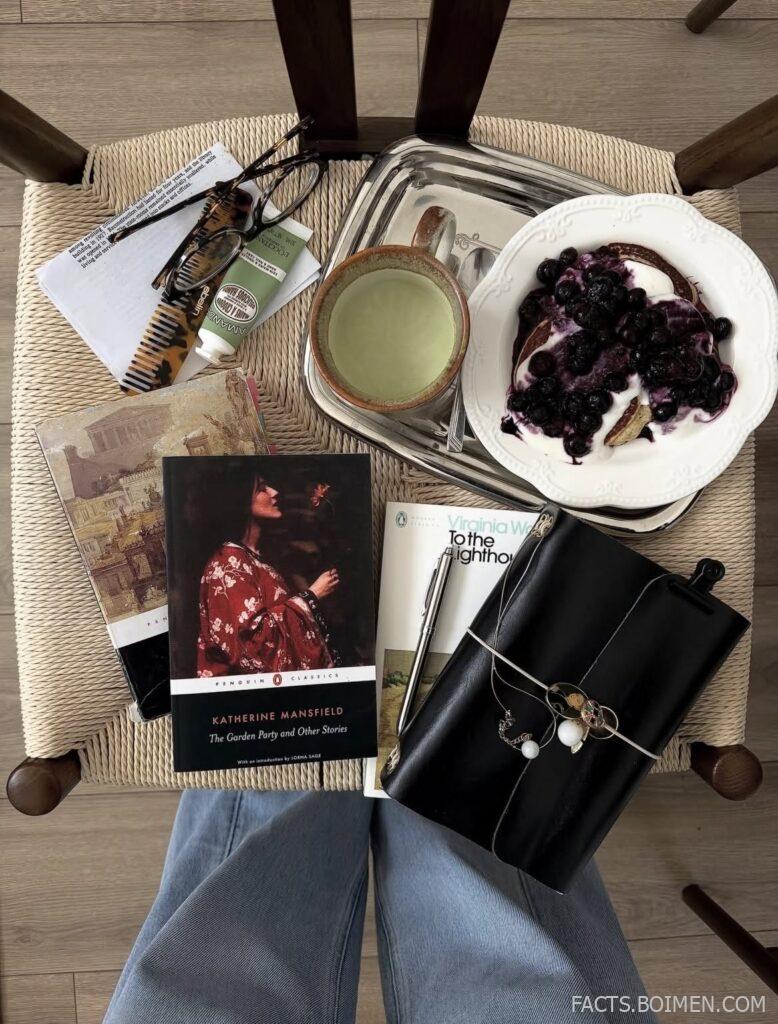
There is a particular kind of quiet thrill in holding a book whose cover was designed decades before you were born. The Penguin Classics line, and the wider Penguin paperback tradition that began in 1935, produced some of the most recognizable and quietly radical book design of the twentieth century. The image that brought you here — a 1927 building, a rain-soaked street, the words “The Garden Party and Other Stories” by Katherine Mansfield set against that unmistakable Penguin orange — is a perfect doorway into a whole world of covers worth hunting down.
Below are fifteen places to explore, collect, and simply admire vintage Penguin Classics and the design legacy around them. Each entry is a real resource you can open in a browser today, from official archives to secondhand bookshops and design histories. Whether you are a reader, a collector, or someone who just likes beautiful old paperbacks, there is something here for you.
Table of Contents(Click to Toggle)
- Why Vintage Penguin Classics Covers Still Matter
- 15 Resources for Vintage Penguin Classics and Book Cover Design
- 1. Penguin Classics
- 2. Penguin Books UK
- 3. The Penguin Collectors Society
- 4. AbeBooks
- 5. Internet Archive
- 6. Project Gutenberg
- 7. V&A Museum
- 8. Design Museum
- 9. The Folio Society
- 10. Persephone Books
- 11. The Book Cover Archive
- 12. Letterform Archive
- 13. LibraryThing
- 14. Open Library
- 15. Biblio
- Bonus Mentions
- Where to Start Your Vintage Book Hunt
Why Vintage Penguin Classics Covers Still Matter
When Allen Lane launched Penguin Books in 1935, the idea was almost scandalous: quality writing, printed cheaply, sold for the price of a pack of cigarettes. The design that carried that idea — the horizontal band, the clean sans-serif type, the color coding by genre (orange for fiction, green for crime, blue for biography) — became a template that graphic designers still study today. The 1927 building and the moody street scene you saw on the pin are part of a later wave of Penguin covers that leaned into atmosphere and illustration rather than pure typography.
What makes these covers worth seeking out now is that many of them are quietly disappearing. Mid-century paperbacks were printed on cheap paper and were never meant to last. The copies that survive are often in the hands of collectors, charity shops, and secondhand dealers who do not always know what they have. That gap between scarcity and low awareness is exactly where discovery happens. The resources below help you find, identify, and appreciate these covers — and in some cases, own one for the price of a coffee.
15 Resources for Vintage Penguin Classics and Book Cover Design
1. Penguin Classics : The official home of the series you clicked for
What it is: The official Penguin Classics website, covering the full modern catalogue from Katherine Mansfield to Homer.
Category: Publisher archive
Why it stands out:
- Browse by author, period, or genre to find editions of The Garden Party and Other Stories and its peers.
- Editor introductions and reading guides give context that secondhand listings rarely provide.
- Useful for matching a modern reissue to the older cover you remember.
Best for: Readers who want the story first and the design history second.
2. Penguin Books UK : The wider Penguin universe and its design heritage
What it is: Penguin’s main UK site, spanning fiction, non-fiction, children’s books, and the company’s own history.
Category: Publisher
Why it stands out:
- Articles and anniversary features occasionally dig into the history of the orange spine and the early paperback era.
- Seasonal collections help you spot which classics are being reissued with new cover art.
- A good starting point before you dive into specialist collector forums.
Best for: Anyone who wants to understand the brand behind the cover.
3. The Penguin Collectors Society : A dedicated society for Penguin paperback obsessives
What it is: A UK-based society founded for people who collect Penguin and Pelican paperbacks, with journals and member resources.
Category: Collector community
Why it stands out:
- Detailed articles on print runs, cover artists, and the numbering systems used across decades.
- Membership connects you with people who can date an edition from a single photo.
- One of the few places where the design history is treated as seriously as the literature.
Best for: Serious collectors who want to identify and date specific printings.
4. AbeBooks : The largest secondhand marketplace for finding specific editions
What it is: A global marketplace of independent booksellers listing millions of used and rare books.
Category: Secondhand marketplace
Why it stands out:
- Search by publisher, year, and binding to narrow down to a particular Penguin printing.
- Seller photos often show the actual cover, which matters enormously when design is the point.
- Prices range from a few dollars to serious collector money, so you can start small.
Best for: Hunters who want a specific cover, not just any copy of the book.
5. Internet Archive : Free scans of vintage editions and cover art
What it is: A non-profit digital library with millions of scanned books, magazines, and ephemera.
Category: Digital archive
Why it stands out:
- Many mid-century paperbacks are scanned cover-first, so you can study the artwork up close.
- Full-text search lets you check whether a particular story appeared in a specific collection.
- Completely free, with no account needed to browse.
Best for: Designers and researchers who want reference images without buying the book.
6. Project Gutenberg : Read the stories behind the covers for free
What it is: The original free ebook library, with tens of thousands of public-domain texts.
Category: Free ebook library
Why it stands out:
- Katherine Mansfield, and most classic authors on Penguin lists, are available to read instantly.
- Plain-text and EPUB formats work on almost any device.
- A practical way to decide whether a cover is worth chasing before you spend money.
Best for: Readers who want to sample the contents before collecting the object.
7. V&A Museum : Design history collections you can search online
What it is: The Victoria and Albert Museum in London, with an online catalogue covering graphic design, print, and book art.
Category: Museum archive
Why it stands out:
- Searchable collections include twentieth-century book jackets and publisher ephemera.
- High-resolution images are available for many objects, useful for study.
- Contextual essays explain how paperback design fit into wider print culture.
Best for: Anyone who treats book covers as design objects rather than packaging.
8. Design Museum : Where Penguin’s design legacy gets its due
What it is: London’s Design Museum, with exhibitions and online stories on graphic design and publishing.
Category: Design institution
Why it stands out:
- Penguin’s typographic system is regularly cited in features about twentieth-century design.
- Online articles are free to read and often include archive imagery.
- Good for understanding why the cover grid still looks modern nearly ninety years on.
Best for: Design-curious readers who want the bigger picture.
9. The Folio Society : Modern collector editions with serious design ambition
What it is: A publisher of illustrated, slipcased collector editions of classic literature.
Category: Collector publisher
Why it stands out:
- Each title is newly illustrated and bound, often with a design essay on the process.
- If you love vintage covers but want something that will survive another century, this is the modern answer.
- Editions sell out, so the catalogue changes regularly.
Best for: Collectors who want beauty and durability in the same volume.
10. Persephone Books : A small press famous for its endpaper designs
What it is: An independent London publisher reissuing neglected twentieth-century writing, mostly by women.
Category: Independent publisher
Why it stands out:
- Every title uses a distinctive grey jacket with a period fabric endpaper — a design signature collectors adore.
- The catalogue overlaps with the Mansfield-era short story world you came for.
- A reminder that cover design can be a quiet act of curation.
Best for: Readers who want the Penguin spirit in a contemporary small press.
11. The Book Cover Archive : A curated library of outstanding cover design
What it is: A browsable archive of book covers chosen for their design quality.
Category: Design reference
Why it stands out:
- Filter by designer, publisher, or genre to see how a house style evolves.
- Each entry credits the designer and illustrator, which is rare and valuable.
- Useful for training your eye before you go hunting in the wild.
Best for: Designers and illustrators looking for reference and inspiration.
12. Letterform Archive : Typography and print history up close
What it is: A San Francisco-based archive of lettering, typography, and graphic design.
Category: Design archive
Why it stands out:
- Online collections include printed ephemera and book work from the paperback era.
- Deep dives into typefaces and layout systems explain why Penguin’s grid works.
- Some content is member-only, but the public galleries are generous.
Best for: Type nerds who want to understand the letterforms on the spine.
13. LibraryThing : Catalogue your finds and compare editions
What it is: A social cataloguing site for personal book collections.
Category: Community catalogue
Why it stands out:
- Members upload cover images, so different printings of the same title become visible side by side.
- Legacy libraries and member collections reveal obscure editions you would never find by search alone.
- Free for up to 200 books, which is plenty for a starting shelf.
Best for: Collectors who want to track what they own and spot gaps.
14. Open Library : A wiki-style record of editions and covers
What it is: An Internet Archive project aiming to catalogue every published book.
Category: Open catalogue
Why it stands out:
- Edition records often list publisher, year, and cover art separately — ideal for dating a copy.
- Anyone can contribute corrections, so the records improve over time.
- Links through to borrowable scans when available.
Best for: Identifying an edition when the title page is missing.
15. Biblio : A smaller marketplace with serious rare-book sellers
What it is: An online marketplace for used, rare, and out-of-print books.
Category: Secondhand marketplace
Why it stands out:
- Often lists mid-century paperbacks that larger sites miss.
- Seller descriptions tend to be detailed about condition and printing.
- A good second stop after AbeBooks when you are chasing a specific jacket.
Best for: Buyers who want a second opinion on availability and price.
Bonus Mentions
Goodreads : Reader photos often show the exact cover you are hunting
Community reviews frequently include photos of older editions, which is surprisingly useful when a listing has no image. Search the title, then filter reviews for images.
Etsy : Vintage book bundles and framed cover art
Sellers list curated sets of mid-century paperbacks and even framed cover prints. Quality varies, so check seller reviews and ask for spine photos before buying.
WorldCat : Find which libraries hold a specific printing
If you want to see a cover in person before committing, WorldCat shows which libraries near you hold a given edition. A quiet but powerful research tool.
PRINT Magazine : Long-form coverage of publishing design
Its archives include articles on paperback design history and the designers behind iconic series. Worth a browse if you want the stories behind the spines.
Where to Start Your Vintage Book Hunt
The covers that catch your eye on a rainy street scene or a 1927 building are not just nostalgia. They are a record of how publishers once took design seriously enough to make cheap books beautiful. Start with the official Penguin Classics site to reacquaint yourself with the stories, then use AbeBooks or Biblio to hunt a specific printing, and keep LibraryThing or Open Library open to identify what arrives in the post. The joy is in the chase as much as the shelf.
Have you ever found a vintage Penguin cover in a charity shop or a box of books at a car boot sale? Tell me about your best find in the comments — I am always looking for the next hidden gem.