Coloring pages are one of the most enjoyable and beneficial activities for children. In a world full of fast videos, short reels, and constant screen time, many kids are spending less time doing creative hands-on activities. Coloring pages offer a simple and healthy alternative. They help children stay focused, relaxed, and creative without needing any digital devices. Parents and teachers can use coloring pages as a positive tool to guide children away from excessive screen use and toward more productive and calming habits.
This article explains why coloring is important, how it helps children grow, and a simple step-by-step guide on how to start coloring from the beginning.
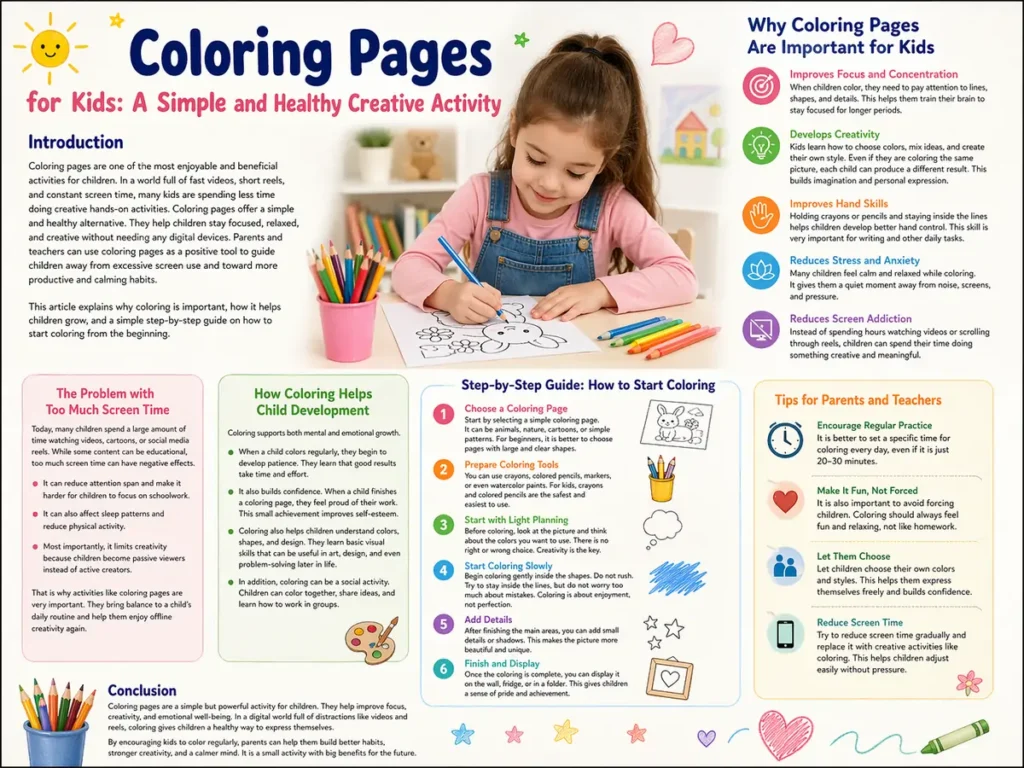
Why Coloring Pages Are Important for Kids
Coloring is more than just filling shapes with colors. It is a learning activity that supports many areas of a child’s development.
First, coloring improves focus and concentration. When children color, they need to pay attention to lines, shapes, and details. This helps them train their brain to stay focused for longer periods.
Second, coloring develops creativity. Kids learn how to choose colors, mix ideas, and create their own style. Even if they are coloring the same picture, each child can produce a different result. This builds imagination and personal expression.
Third, coloring improves hand skills. Holding crayons or pencils and staying inside the lines helps children develop better hand control. This skill is very important for writing and other daily tasks.
Fourth, coloring reduces stress and anxiety. Many children feel calm and relaxed while coloring. It gives them a quiet moment away from noise, screens, and pressure.
Finally, coloring helps reduce screen addiction. Instead of spending hours watching videos or scrolling through reels, children can spend their time doing something creative and meaningful.
The Problem with Too Much Screen Time
Today, many children spend a large amount of time watching videos, cartoons, or social media reels. While some content can be educational, too much screen time can have negative effects.
It can reduce attention span and make it harder for children to focus on schoolwork. It can also affect sleep patterns and reduce physical activity. Most importantly, it limits creativity because children become passive viewers instead of active creators.
That is why activities like coloring pages are very important. They bring balance to a child’s daily routine and help them enjoy offline creativity again.
How Coloring Helps Child Development
Coloring supports both mental and emotional growth. When a child colors regularly, they begin to develop patience. They learn that good results take time and effort.
It also builds confidence. When a child finishes a coloring page, they feel proud of their work. This small achievement improves self-esteem.
Coloring also helps children understand colors, shapes, and design. They learn basic visual skills that can be useful in art, design, and even problem-solving later in life.
In addition, coloring can be a social activity. Children can color together, share ideas, and learn how to work in groups.
Step-by-Step Guide: How to Start Coloring
Interactive Coloring Book


Starting coloring is very easy. No special skills are needed. Here is a simple guide for beginners:
1. Choose a Coloring Page
Start by selecting a simple coloring page. It can be animals, nature, cartoons, or simple patterns. For beginners, it is better to choose pages with large and clear shapes.

2. Prepare Coloring Tools
You can use crayons, colored pencils, markers, or even watercolor paints. For kids, crayons and colored pencils are the safest and easiest to use.
3. Start with Light Planning
Before coloring, look at the picture and think about the colors you want to use. There is no right or wrong choice. Creativity is the key.
4. Start Coloring Slowly
Begin coloring gently inside the shapes. Do not rush. Try to stay inside the lines, but do not worry too much about mistakes. Coloring is about enjoyment, not perfection.

5. Add Details
After finishing the main areas, you can add small details or shadows. This makes the picture more beautiful and unique.
6. Finish and Display
Once the coloring is complete, you can display it on the wall, fridge, or in a folder. This gives children a sense of pride and achievement.
Tips for Parents and Teachers
Parents and teachers can make coloring more effective by encouraging regular practice. It is better to set a specific time for coloring every day, even if it is just 20–30 minutes.
It is also important to avoid forcing children. Coloring should always feel fun and relaxing, not like homework. Let children choose their own colors and styles.
Try to reduce screen time gradually and replace it with creative activities like coloring. This helps children adjust easily without pressure.
Conclusion
Coloring pages are a simple but powerful activity for children. They help improve focus, creativity, and emotional well-being. In a digital world full of distractions like videos and reels, coloring gives children a healthy way to express themselves.
By encouraging kids to color regularly, parents can help them build better habits, stronger creativity, and a calmer mind. It is a small activity with big benefits for the future.