
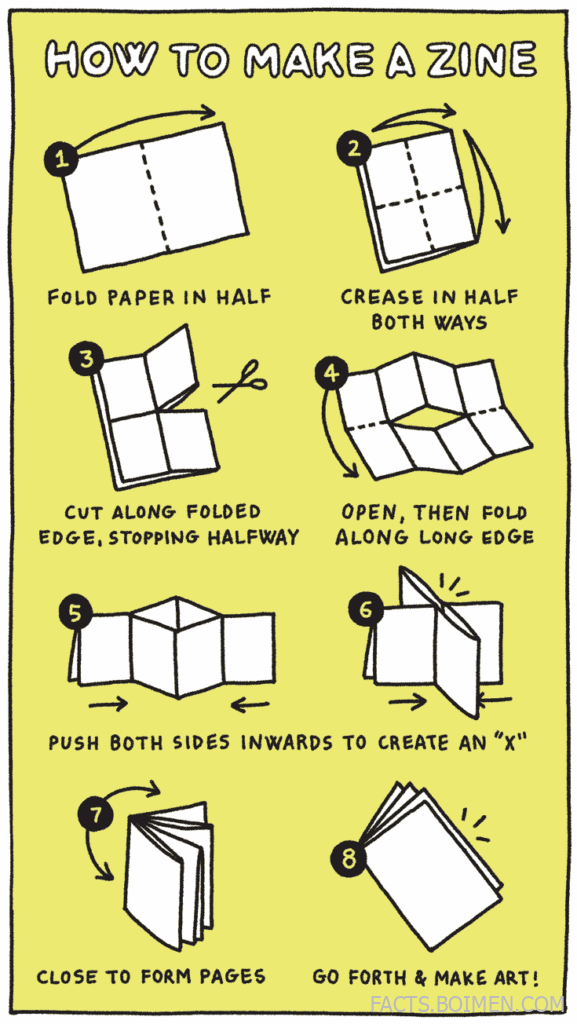
There is a particular kind of magic in taking one ordinary sheet of paper, folding it twice, making a single cut, and pulling it open into a real eight-page book. That is the promise behind the classic one-sheet zine fold — fold in half, crease in half both ways, cut along the folded edge stopping halfway, open, then fold along the long edge and push both sides inward to create an “X” before closing it into pages. Below are 21 resources, guides, and tools that help you master that fold and every variation of it, from beginner tutorials to printable templates and design software for filling your finished booklet with art.
Table of Contents(Click to Toggle)
- Why the One-Sheet Zine Fold Is Worth Learning
- 21 Paper Zine Folding Resources and Tools
- 1. WikiHow
- 2. Instructables
- 3. YouTube
- 4. Canon Creative Park
- 5. StumbleUpon Archive via Mix
- 6. Canva
- 7. Book Creator
- 8. The Mini Zine Library
- 9. Origami.me
- 10. Papercraft Inspirations
- 11. Pinterest
- 12. Reddit r/zines
- 13. Stencil
- 14. Folded and Stitched
- 15. Chicago Zine Fest
- 16. Peecho
- 17. Adobe Express
- 18. Paper Source Blog
- 19. Instructables Paper Crafts Class
- 20. Etsy
- 21. The Paper Studio
- Bonus: Origami Club
- Bonus: Pinterest Zine Templates
- Bonus: Local Library Makerspaces
- The Internet’s Best-Kept Zine Secrets (So Far)
Why the One-Sheet Zine Fold Is Worth Learning
The eight-page one-sheet zine is one of the few truly universal creative skills left. It needs no software, no glue, no staples, and no budget — just a sheet of paper and one scissor cut. That makes it the perfect entry point for kids learning sequencing, for teachers who need a quick classroom project, and for artists who want to publish a small run of work without a printer’s quote. Learning the fold also unlocks a whole family of variations: the sixteen-page version, the accordion fold, the dos-à-dos flip book, and the mini comic format used by indie cartoonists for decades. The resources below cover the exact fold described in the classic “fold, crease, cut, push inward, close” sequence, plus the design tools and communities that help you fill those pages with something worth reading.
21 Paper Zine Folding Resources and Tools
1. WikiHow : The clearest step-by-step photo guide to the classic fold
What it is: A community-written how-to site with illustrated guides for hundreds of paper crafts, including the one-sheet zine.
Category: Tutorial
Why it stands out:
- Each step is paired with a photo showing exactly where to crease and cut.
- The articles often include a video version at the top for visual learners.
- Editors frequently add tips like “use a bone folder for sharper creases.”
Best for: Absolute beginners who want the fold explained in plain language before trying it.
2. Instructables : Community projects with variations and printable templates
What it is: A maker-focused site where users upload step-by-step project instructions, including dozens of zine and mini-book builds.
Category: Tutorial community
Why it stands out:
- Many zine projects include free downloadable PDF templates you can print and fold.
- Comment sections frequently contain troubleshooting tips from people who already made the fold.
- You can filter by difficulty, so a first-timer can skip the advanced bookbinding projects.
Best for: Makers who want to try several fold variations in one sitting.
3. YouTube : Real-time video walkthroughs of the cut-and-push fold
What it is: The largest video library on the internet, with hundreds of zine-folding tutorials ranging from 60 seconds to 20 minutes.
Category: Video tutorials
Why it stands out:
- Watching someone physically push both sides inward to form the “X” is far easier than reading it.
- Search “one sheet zine” and you’ll find slow-motion close-ups of the cut step.
- Many creators show the finished eight pages in order so you can check your fold is correct.
Best for: Anyone who got stuck at the “push inward” step and needs to see it happen.
4. Canon Creative Park : Free printable paper craft templates from a major brand
What it is: Canon’s official library of free downloadable paper craft designs, including booklets, cards, and folded paper toys.
Category: Printable templates
Why it stands out:
- All templates are free and print-ready, with cut and fold lines already marked.
- Designs are professionally illustrated, so your finished zine looks polished.
- The site organizes projects by difficulty and by season, which helps for classroom planning.
Best for: Teachers and parents who want a ready-made template instead of drawing their own.
5. Mix : A discovery feed for curating paper-craft inspiration
What it is: A bookmarking and discovery platform where you save and organize links into themed collections.
Category: Discovery and curation
Why it stands out:
- You can build a private “zine folds” collection and return to it whenever you want to make a new book.
- The recommendation engine surfaces related paper-craft articles you might never search for.
- Collections are shareable, which is handy for a classroom or craft club.
Best for: People who want to collect folding tutorials in one place before starting a project.
6. Canva : Design your zine pages before you fold them
What it is: A browser-based design tool with free templates for booklets, brochures, and small publications.
Category: Design software
Why it stands out:
- The free tier includes hundreds of booklet layouts sized for a single-sheet fold.
- You can export to PDF and print at home, then fold along the exact lines described in the classic method.
- Drag-and-drop editing means no design experience is required.
Best for: Anyone who wants a tidy, typed zine rather than a handwritten one.
7. Book Creator : Turn a digital draft into a printable booklet
What it is: An education-focused tool for making digital books, widely used in schools.
Category: Publishing tool
Why it stands out:
- Students can add text, drawings, and audio, then export a print-ready PDF.
- The page layout tools map neatly onto an eight-page zine structure.
- Free accounts exist for individual teachers, making it accessible for classrooms.
Best for: Educators running a zine project with a full class.
8. The Zine Libraries Directory : Find real zines to study and copy
What it is: A directory of zine libraries and collections around the world, run by the Zine Librarians Interest Group.
Category: Community directory
Why it stands out:
- Lists physical collections where you can handle real one-sheet zines and see how they fold.
- Many entries link to digital archives you can browse from home.
- It connects you to the long history of the format, from punk zines to modern art books.
Best for: Anyone curious about the culture behind the fold, not just the mechanics.
9. Origami.me : Diagram-based folding fundamentals
What it is: A large origami diagram library with clear line drawings for hundreds of folds.
Category: Folding reference
Why it stands out:
- Teaches the crease vocabulary — valley fold, mountain fold, squash fold — that makes zine instructions easier to read.
- Diagrams are drawn in the standard international origami notation.
- Free to browse, with beginner sections that build confidence quickly.
Best for: Folders who want to understand why creases behave the way they do.
10. Gathered : Craft magazine tutorials with printable patterns
What it is: The online home of several UK craft magazines, packed with free paper-craft tutorials.
Category: Craft magazine
Why it stands out:
- Articles are written by working craft editors and include downloadable pattern sheets.
- Paper-craft sections cover booklets, cards, and folded gifts in the same style.
- Photography is high quality, which helps when you’re checking your fold against a reference.
Best for: Crafters who like magazine-style instructions with polished photos.
11. Pinterest : Visual idea boards for zine layouts and covers
What it is: A visual discovery platform where users pin and organize images by theme.
Category: Visual inspiration
Why it stands out:
- Search “one page zine” and you’ll find finished examples laid flat so you can see the page order.
- Boards let you collect cover designs, layout ideas, and fold diagrams side by side.
- Many pins link back to full tutorials, so inspiration leads straight to instructions.
Best for: Visual thinkers who need to see the finished object before starting.
12. Reddit r/zines : A friendly community for fold questions and feedback
What it is: A subreddit dedicated to zine making, sharing, and trading.
Category: Community forum
Why it stands out:
- Beginners regularly post photos asking “did I fold this right?” and get quick answers.
- Members share free templates and swap physical zines by mail.
- The wiki includes a beginner’s guide covering the one-sheet fold and printing tips.
Best for: People who want feedback on their first attempt from experienced makers.
13. Stencil : A simple wiki-style reference for paper sizes and folds
What it is: A lightweight collaborative wiki covering craft techniques and paper standards.
Category: Reference wiki
Why it stands out:
- Explains how A4 and US Letter behave differently when folded into eight pages.
- Pages are short and skimmable, with no video or ads to slow you down.
- Useful for checking page dimensions before designing a layout.
Best for: Designers who need exact measurements before printing.
14. Folded and Stitched : Bookbinding guidance for sturdier zines
What it is: A bookbinding blog with tutorials on folding, stitching, and finishing small books.
Category: Bookbinding blog
Why it stands out:
- Covers the next step after the basic fold, like adding a stitched spine for durability.
- Explains paper grain direction, which affects how cleanly your creases form.
- Includes supply recommendations for bone folders and awls.
Best for: Makers ready to move beyond a single folded sheet.
15. Chicago Zine Fest : A real-world event for zine makers
What it is: An annual independent zine festival with exhibitions, workshops, and a zine-making day.
Category: Event and community
Why it stands out:
- Runs free workshops where you can fold your first zine with materials provided.
- Connects you with local printers and artists who publish small runs.
- The website archives past programming, including beginner fold demos.
Best for: Anyone who wants to meet other zine makers in person.
16. Peecho : Print your folded zine on demand
What it is: A print-on-demand service that turns PDFs into physical booklets and magazines.
Category: Printing service
Why it stands out:
- You can order a single copy, which suits a small zine run perfectly.
- Supports saddle-stitch and folded formats that match the one-sheet layout.
- No minimum order means you can test a design before committing to a batch.
Best for: Makers who want a professional-looking print without a big order.
17. Adobe Express : Quick booklet layouts with free templates
What it is: Adobe’s browser-based design app with templates for print and social media.
Category: Design software
Why it stands out:
- Free booklet templates are sized for folded pages and export cleanly to PDF.
- Adobe Fonts integration gives you typography that looks professional.
- Works in a browser, so no install is needed on school or library computers.
Best for: Designers who want Adobe-quality output without a subscription.
18. Paper Source : Specialty paper that folds beautifully
What it is: A paper and craft retailer with a large selection of decorative and text-weight sheets.
Category: Supplies
Why it stands out:
- Carries text-weight papers thin enough to fold into eight clean pages without cracking.
- The blog includes free project tutorials, including mini-book folds.
- Color-coordinated paper packs make multi-zine projects easy to plan.
Best for: Makers whose home printer paper keeps cracking at the crease.
19. Instructables Paper Channel : A focused feed of paper projects
What it is: The paper-craft section of Instructables, filtered to folding, cutting, and book projects.
Category: Tutorial collection
Why it stands out:
- Keeps you inside one category, so you’re not scrolling past electronics builds.
- Entries range from five-minute folds to elaborate pop-up books.
- Each project lists the exact tools and paper weight used.
Best for: Browsers who want a steady stream of paper project ideas.
20. Etsy : Buy handmade zines and printable fold templates
What it is: A marketplace for handmade and vintage goods, including a large zine and paper-craft section.
Category: Marketplace
Why it stands out:
- Sellers offer printable zine templates you can download instantly.
- You can buy finished handmade zines to study the fold and layout in person.
- Many listings include photos of the zine opened flat, showing page order clearly.
Best for: People who want a template or a finished example without designing from scratch.
21. The Paper Studio : A small-shop source for folding tools
What it is: An independent paper-craft supplier stocking bone folders, scoring boards, and specialty paper.
Category: Supplies and tools
Why it stands out:
- A bone folder makes the “crease in half both ways” step dramatically sharper.
- Scoring boards help you mark fold lines before folding, reducing crooked pages.
- Small-shop service means advice on which paper weight suits an eight-page fold.
Best for: Repeat zine makers who want cleaner creases and fewer torn edges.
Bonus: Origami Club : Animated fold diagrams
What it is: A Japanese origami site with animated diagrams that show each fold in motion.
Category: Folding reference
Why it stands out:
- Animations make the direction of each crease unmistakable.
- Free and organized by difficulty, with a large beginner section.
Best for: Learners who find static diagrams hard to follow.
Bonus: Pinterest Zine Template Boards
What it is: Curated Pinterest boards dedicated to printable zine templates and layout grids.
Category: Template collection
Why it stands out:
- Many boards collect dozens of free printable layouts in one scroll.
- Pins often link directly to the original designer’s download page.
Best for: Quick template hunting before a weekend craft session.
Bonus: Local Library Makerspaces
What it is: Public libraries that offer free access to paper trimmers, scoring boards, and sometimes printing.
Category: Community resource
Why it stands out:
- You can use a proper paper trimmer for the halfway cut, which is far cleaner than scissors.
- Staff often run free paper-craft workshops for all ages.
Best for: Anyone without craft tools at home who wants a precise cut.
The Internet’s Best-Kept Zine Secrets (So Far)
The one-sheet zine fold is proof that the best creative tools are often the simplest. One sheet, two creases, one cut, and a push inward — that’s the whole machine. What makes it worth returning to is how many directions it opens: printable templates from Canon Creative Park, design layouts from Canva, real-world community through Chicago Zine Fest, and sturdier builds from bookbinding blogs. Start with a single sheet and the exact sequence — fold in half, crease both ways, cut along the folded edge stopping halfway, open, fold along the long edge, push both sides inward to form the “X”, then close — and you’ll have a finished book in under two minutes. Go forth and make art. Which of these folding resources ended up being your favorite, and did you discover a paper-craft site the rest of us should know about?