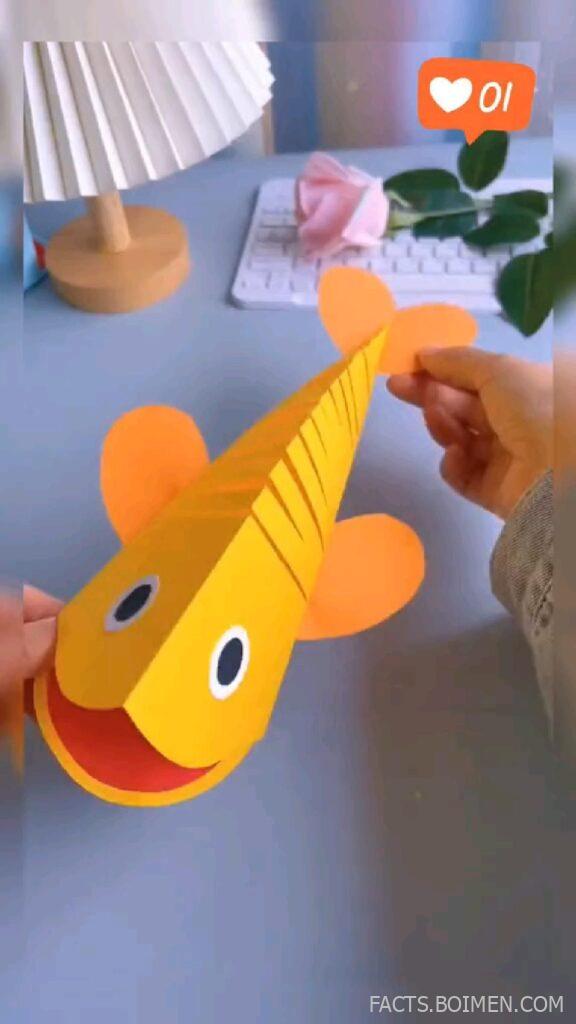
There is something quietly satisfying about folding a sheet of paper into a fish that actually looks like a fish. No glue gun, no expensive kit, no trip to a craft store. Just paper, a few folds, and a couple of minutes. The paper fish in that pin is the perfect example: simple enough to make while waiting for dinner to cook, clever enough that you want to make a whole school of them. Below are 15 paper fish toy projects and the sites that teach them best, from one-fold beginner fish to articulated swimmers that wiggle when you pull a string.
Table of Contents(Click to Toggle)
Why Paper Fish Toys Are Having a Moment
Paper fish sit in a sweet spot that few crafts occupy. They cost effectively nothing, they take under five minutes, and the finished object has real play value, because a paper fish can be pulled on a string, floated in a bowl of water, or hung from a mobile. That combination is why the paper fish in the pin got saved thousands of times: it is a toy, not a decoration.
There is also a practical angle. Paper folding builds fine motor control and spatial reasoning in kids, and it gives adults a screen-free reset that fits inside a coffee break. The sites below are the ones that teach it clearly, with real diagrams, printable templates, and step photos rather than vague instructions. Every one of them is free to browse, and most work fine on a phone propped up next to your paper.
15 Paper Fish Toy Projects Worth Folding
1. Origami.me : The clearest starting point for a first paper fish
What it is: A dedicated origami instruction site with illustrated, step-by-step diagrams for dozens of models, including several fish and koi designs.
Category: Origami instruction library
Why it stands out:
- Diagrams are drawn rather than photographed, so fold lines stay visible instead of disappearing into paper glare.
- Models are sorted by difficulty, so you can start with a four-step fish and work up to a koi with fins.
- Each guide lists the paper size and shape you need before you start, which saves wasted sheets.
Best for: Complete beginners who want one reliable fish fold they can repeat from memory.
2. Origami Guide : Photo-based tutorials that show what the fold should actually look like
What it is: A tutorial site where every step is photographed from above, with a short written instruction underneath.
Category: Step-by-step photo tutorials
Why it stands out:
- Photos show the paper mid-fold, which is exactly where most written instructions lose people.
- The fish and sea-creature section includes a simple angelfish that works well as a hanging toy.
- Instructions note when to flip the model over, a detail many guides skip.
Best for: Visual learners who find drawn diagrams harder to follow than real photos.
3. Paper Kawaii : Cute fish with personality, plus printable patterned paper
What it is: A long-running origami blog known for kawaii-style models, with video tutorials and free printable paper patterns.
Category: Origami blog and video channel
Why it stands out:
- The printable patterned paper means your finished fish looks decorated without any drawing or painting.
- Video tutorials let you pause at the exact fold that is giving you trouble.
- Several models are designed as small gift boxes or envelopes, so the fish doubles as packaging.
Best for: Crafters who want a polished, giftable fish rather than a rough practice fold.
4. Red Ted Art : Paper fish that move, flap, and get played with
What it is: A kids’ craft site with a large paper section covering folding, cutting, and simple mechanics.
Category: Kids’ craft tutorials
Why it stands out:
- Includes moving fish designs where a pulled tab makes the tail swish, which is the closest thing to a real toy on this list.
- Instructions are written for adults crafting alongside children, with age suitability noted.
- Most projects use printer paper or scrap paper you already have, not specialist origami sheets.
Best for: Parents and teachers who need a fish that survives being played with.
5. Easy Peasy and Fun : Printable fish templates you cut and assemble
What it is: A craft site with a big library of free printable templates, including fish shapes for cutting and gluing.
Category: Printable craft templates
Why it stands out:
- The templates remove the hardest part of folding, so younger children can finish a fish independently.
- Many projects combine paper with a paper plate or cardboard tube for a sturdier toy.
- Templates are offered in both colour and outline versions, so kids can decorate their own.
Best for: Classrooms and rainy afternoons with a mixed-age group.
6. Craftsuprint : Downloadable fish card models with printed scales
What it is: A large archive of downloadable paper craft sheets, including 3D fish and sea-life models you print, cut, and fold.
Category: Printable paper craft sheets
Why it stands out:
- Scale and fin patterns are pre-printed, so the finished fish looks far more detailed than plain paper allows.
- The archive is enormous and searchable, which makes it easy to match a fish to a specific colour scheme.
- Models range from flat cut-outs to full 3D bodies, giving you a difficulty dial.
Best for: Crafters who want a detailed-looking fish without painting or drawing skills.
7. Krokotak : Simple paper fish for the youngest folders
What it is: A children’s craft site with short, photo-illustrated projects, many using just one or two sheets of paper.
Category: Early-years craft projects
Why it stands out:
- Projects are deliberately short, often three or four steps, so attention spans survive.
- The fish designs use basic folds like triangles and accordion pleats, no complex reverse folds.
- Photos are bright and uncluttered, which makes them easy to follow on a tablet screen.
Best for: Preschool and early primary children folding with a grown-up.
8. First Palette : Fish crafts organised by age and skill level
What it is: A craft resource site where projects are tagged by age range and by the skills they practise.
Category: Age-graded craft library
Why it stands out:
- The age tags mean you can pick a fish fold that a five-year-old can genuinely complete.
- Printable templates and colouring pages sit alongside the folding projects in one place.
- Each project lists the materials up front, so there are no mid-craft surprises.
Best for: Anyone planning a craft session and matching it to a specific child’s ability.
9. Origami-Fun : Printable diagram sheets you can take offline
What it is: A clean origami site offering both animated and printable diagram versions of each model.
Category: Origami diagrams and printables
Why it stands out:
- The printable PDF diagrams are ideal for a craft table where nobody wants a screen nearby.
- Animated steps show the motion of a fold, which is hard to convey in a still image.
- The fish section includes a classic carp that looks good folded from patterned paper.
Best for: Offline crafting, clubs, and anyone who prefers paper instructions to a screen.
10. Activity Village : Fish origami plus matching puzzles and colouring pages
What it is: A long-established activity site with origami instructions, printables, and themed activity sets.
Category: Family activity resource
Why it stands out:
- You can build a whole fish-themed session from one site: fold, colour, then solve a puzzle.
- Instructions are written in plain language with a clear materials list at the top.
- The site is well organised by topic, so sea-life resources sit together.
Best for: Home educators and anyone filling a longer stretch of time.
11. Twinkl : Teacher-made fish templates and step cards
What it is: An education resource platform with downloadable craft instructions, templates, and step cards used in schools.
Category: Educational printables
Why it stands out:
- Step cards break a fish fold into numbered visual stages, which works well for group teaching.
- Templates come in multiple sizes, useful when you want a shoal of matching fish.
- Resources are written by teachers, so the language suits classroom instructions.
Best for: Teachers and teaching assistants running a structured craft lesson. Note that many resources sit behind a subscription.
12. Kids Activities Blog : Fast fish projects with everyday materials
What it is: A large activity blog covering paper crafts, printables, and simple science-adjacent projects.
Category: Activity and craft blog
Why it stands out:
- Projects are written to use what is already in a kitchen drawer, including scrap paper and cardboard.
- Several fish ideas combine folding with a straw or string to add movement.
- Posts usually include a short troubleshooting note about where the fold commonly goes wrong.
Best for: Last-minute crafting when you have paper and not much else.
13. AllFreePaperCrafts : A searchable index of paper fish projects
What it is: A curated collection site that gathers paper craft tutorials from across the web into browsable categories.
Category: Craft tutorial directory
Why it stands out:
- Useful when you want to compare five different fish designs side by side before committing.
- Projects are tagged by occasion and difficulty, which speeds up browsing.
- Each listing links straight to the original tutorial, so you always get the full instructions.
Best for: Browsers who like options and want to pick a design by look rather than by name.
14. Instructables : Engineered paper fish, including ones that swim
What it is: A community project site where makers document builds step by step, with photos, materials, and comment threads.
Category: Maker project community
Why it stands out:
- Includes more ambitious builds, such as articulated fish that move when you pull a hidden string.
- The comments often contain the fixes and improvements the original author missed.
- Every project lists real materials and tools, so you know before you start whether you can make it.
Best for: Older kids and adults who want a paper fish with actual mechanical movement.
15. The Spruce Crafts : Well-edited tutorials with clear supply lists
What it is: A general craft site with professionally edited tutorials covering origami, paper crafts, and kids’ projects.
Category: Edited craft tutorials
Why it stands out:
- Tutorials are cleaned up and fact-checked, so steps are consistent and rarely missing a stage.
- Supply lists are specific about paper weight, which matters for folds that need to hold a crease.
- Articles often explain the why behind a fold, which helps you remember it next time.
Best for: Readers who want a tidy, reliable tutorial without wading through a forum thread.
Bonus Mentions
YouTube : Slow-motion fold-along videos
What it is: The largest video library for origami, including many fish tutorials filmed from directly overhead.
Category: Video platform
Why it stands out:
- Playback speed controls let you slow a tricky fold right down and replay it.
- Searching for a specific model name usually returns several camera angles to compare.
Best for: Anyone stuck on a single step that diagrams cannot explain.
Pinterest : Visual idea boards for paper fish variations
What it is: A visual discovery platform where craft ideas are saved onto themed boards.
Category: Visual idea discovery
Why it stands out:
- Great for spotting colour and pattern variations before you choose a design.
- Boards often group a whole fish theme, from folding to decorating.
Best for: Planning a themed craft afternoon and gathering ideas in one board.
wikiHow : Written fish folds with illustrated steps
What it is: A collaborative how-to site with illustrated guides, including basic origami fish.
Category: How-to reference
Why it stands out:
- Instructions are text-first, which suits readers who prefer to scan rather than watch.
- Illustrations are simple line drawings that stay legible on small screens.
Best for: Quick reference when you just need the order of folds.
Origami Instructions : A plain, fast-loading diagram archive
What it is: A straightforward origami site with a large set of diagram-based model instructions.
Category: Origami diagram archive
Why it stands out:
- Pages load quickly and stay readable on older devices.
- The archive covers a wide range of sea creatures beyond fish.
Best for: Making a whole shoal of different sea creatures from one site.
Origami Way : Beginner-friendly folds with difficulty ratings
What it is: An origami tutorial site that labels each model with a clear difficulty level.
Category: Beginner origami tutorials
Why it stands out:
- Difficulty labels make it easy to avoid starting with something too advanced.
- Tutorials include a short list of tips for getting crisp creases.
Best for: Building confidence with a few easy models before attempting a detailed fish.
The Best Paper Fish Are the Ones You Actually Fold
What makes the paper fish in that pin so appealing is not complexity. It is that someone made it in a minute, from a single sheet, and it worked. That is the whole point of this list. You do not need a specialist shop or a perfect crease to end up with something worth keeping on the table.
Start with the simplest fold on whichever site looks clearest to you, make three of them, and let the third one be the one you keep. If you want to go further, try the articulated designs on Instructables or the printable patterned paper from Paper Kawaii, which turn a plain fold into something that looks deliberately designed. The materials cost is close to zero, so experimenting is free.
Which paper fish did you end up making, and did you fold it or print it?