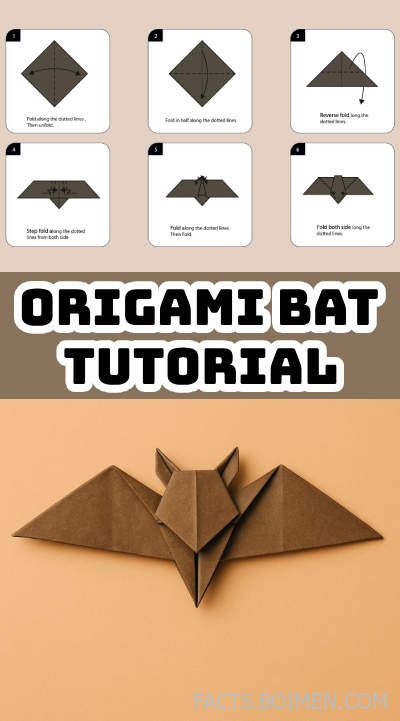
There is something quietly satisfying about folding a single square of paper into a bat with wings that actually hold their shape. Whether you want a spooky decoration for Halloween, a quick craft to keep kids busy, or a calm ten-minute screen-free break, an origami bat is one of the most rewarding beginner-to-intermediate folds out there. The best part: almost everything you need is already in your recycling bin.
Below are 20 genuinely useful resources for learning origami bats and the paper-folding skills around them, starting with the exact tutorial that inspired this list. Every entry links to a real, free homepage you can bookmark today.
Table of Contents(Click to Toggle)
- Why Origami Bats Are the Perfect First Fold
- 20 Origami Bat Tutorials and Paper Folding Guides
- 1. Origami.me
- 2. Origami Guide
- 3. Origami Way
- 4. Origami-Fun
- 5. Origami Instructions
- 6. Paper Kawaii
- 7. Origami Spirit
- 8. Jo Nakashima
- 9. Origami Plus
- 10. Red Ted Art
- 11. Origami Tutorials
- 12. Gilad’s Origami Page
- 13. Origami Resource Center
- 14. British Origami Society
- 15. OrigamiUSA
- 16. Tavin’s Origami
- 17. Origami Kids
- 18. Craft Passion
- 19. Instructables
- 20. Creative Bloq
- Bonus Mentions
- The Paper-Folding Corners Worth Bookmarking
Why Origami Bats Are the Perfect First Fold
A bat sits in a sweet spot no other origami animal quite occupies. It is more interesting than the classic crane, but it does not demand the wet-folding patience of a dragon. Most bat models use a single square of paper, rely on two or three well-known folds (the waterbomb base, the squash fold, and a reverse fold), and finish in under fifteen minutes once you’ve practiced twice.
That makes bats ideal for three kinds of people: parents looking for a screen-free afternoon activity, teachers building a Halloween or nocturnal-animals lesson, and hobbyists who want a low-stakes way to practice precision folds before tackling complex models. Bats also scale beautifully — fold them small from six-inch squares for garlands, or large from twelve-inch sheets to hang from a ceiling.
The resources below cover every angle: step-by-step photo tutorials, video walkthroughs, printable diagram sets, and communities where you can ask why your wing keeps collapsing. Start with the first one if you want the fastest possible win.
20 Origami Bat Tutorials and Paper Folding Guides
1. Origami.me : Clean photo tutorials with a dedicated bat walkthrough
What it is: A long-running origami tutorial site with hundreds of models, each presented as a numbered photo sequence with short written steps.
Category: Step-by-step photo tutorials
Why it stands out:
- Its bat tutorial uses a single square and clearly labels each fold, including the tricky reverse fold that forms the head.
- Pages load fast and are ad-light, so you can follow along on a phone propped on the table.
- Beginner models are grouped separately from intermediate ones, so you won’t accidentally start with a 40-step dragon.
Best for: First-timers who want a complete bat from one sheet of paper with no video pausing.
2. Origami Guide : Difficulty-rated tutorials you can filter by skill level
What it is: A tutorial library where every model is tagged easy, intermediate, or advanced, with clear photo steps.
Category: Filterable tutorial library
Why it stands out:
- You can jump straight to “easy” bats if you’re folding with children, or push into intermediate versions with layered wings.
- Each guide lists the recommended paper size, which matters more than most beginners realize.
- Related models are suggested at the bottom, so you can build a themed Halloween set in one sitting.
Best for: Crafters who want to match the model difficulty to the person folding it.
3. Origami Way : Simple diagrams with printable instructions
What it is: A beginner-focused site offering both photo tutorials and classic line diagrams, including a printable bat.
Category: Diagrams and printables
Why it stands out:
- The printable PDF format is genuinely useful for classrooms where you want one sheet per student.
- Line diagrams train you to read origami notation, a skill that unlocks thousands of older books.
- Instructions avoid jargon where possible, defining terms like “valley fold” the first time they appear.
Best for: Teachers and group leaders who need handouts rather than screens.
4. Origami-Fun : Animated diagrams that show each fold in motion
What it is: A tutorial site that pairs written steps with animated GIF-style diagrams showing the paper moving.
Category: Animated diagrams
Why it stands out:
- The animation resolves the single biggest beginner confusion: which way the paper actually rotates on a squash fold.
- Diagrams are high contrast, so they print legibly in black and white.
- A dedicated Halloween section collects bats, ghosts, and pumpkins into one browsing session.
Best for: Visual learners who find static photos ambiguous.
5. Origami Instructions : Traditional models explained from the ground up
What it is: A reference site covering classic folds, bases, and animals with patient written explanations.
Category: Reference and fundamentals
Why it stands out:
- It teaches the base folds (bird base, waterbomb base) that bat models are built from, so you understand why a step exists.
- Pages note where a model traditionally comes from, adding a little cultural context to your folding.
- Text-heavy pages are easy to search with Ctrl+F when you’re stuck mid-fold.
Best for: Folders who want to understand the structure, not just copy the steps.
6. Paper Kawaii : Cute, giftable paper crafts with video support
What it is: A craft blog and YouTube channel specializing in small, charming paper projects including bats and boxes to hold them.
Category: Video tutorials and craft projects
Why it stands out:
- Videos are filmed from directly above with steady hands, so you can fold along in real time.
- Projects often pair a bat with a matching gift box or garland, turning one fold into a finished decoration.
- Free printable patterned paper is offered on the site, which solves the “I only have printer paper” problem.
Best for: Crafters who want a polished, giftable result rather than a practice model.
7. Origami Spirit : Thoughtful tutorials with folding philosophy
What it is: A well-regarded blog by an experienced folder, mixing tutorials with reflections on the craft.
Category: Blog and tutorials
Why it stands out:
- Tutorials come with troubleshooting notes that explain what to do when a fold won’t lie flat.
- The writing treats origami as a meditative practice, which is exactly the mood most people want from a bat fold.
- It regularly features guest designers, so you encounter models you won’t find on generic tutorial farms.
Best for: Adults who want a calm, well-explained folding session.
8. Jo Nakashima : Some of the clearest origami videos on the internet
What it is: The official site of a prolific origami designer and YouTuber known for meticulous video tutorials.
Category: Video tutorials
Why it stands out:
- His videos show the paper at a consistent angle with no hands blocking the view, which is rarer than it sounds.
- He includes the crease pattern for many models, useful once you want to fold from diagrams alone.
- Models range from simple to genuinely complex, so the same channel can grow with you for years.
Best for: Anyone who learns best by watching a calm, expert demonstration.
9. Origami Plus : A modern tutorial hub with apps and diagrams
What it is: A polished tutorial platform offering step-by-step guides, diagrams, and companion apps.
Category: Tutorial platform
Why it stands out:
- The interface is clean and mobile-friendly, so following steps on a phone doesn’t require pinch-zooming.
- Models are organized by theme, making it easy to assemble a full Halloween display.
- It mixes free and premium content, so you can evaluate the quality before spending anything.
Best for: Mobile folders who want a tidy, app-like experience.
10. Red Ted Art : Kid-friendly paper crafts with printable templates
What it is: A family craft site with a huge library of paper projects, including bat crafts and simple origami.
Category: Family and kids crafts
Why it stands out:
- Instructions are written for adults supervising children, with realistic time estimates per project.
- Printable templates remove the measuring step, which is where young folders usually lose patience.
- Projects often use materials you already own, like cereal boxes and scrap paper.
Best for: Parents and teachers folding with kids aged five to ten.
11. Origami Tutorials : A broad index of models and difficulty levels
What it is: A categorized collection of origami tutorials spanning animals, flowers, and geometric forms.
Category: Tutorial index
Why it stands out:
- The category structure makes it easy to find a bat, then find a second model that uses the same base fold.
- Each listing notes approximate difficulty, so you can plan a session that ends in success.
- It links out to video and diagram sources, acting as a starting point rather than a dead end.
Best for: Browsers who like to see the full menu before choosing.
12. Gilad’s Origami Page : A deep archive for serious folders
What it is: One of the oldest and most comprehensive origami reference sites, with book reviews and model galleries.
Category: Archive and reference
Why it stands out:
- Its book reviews tell you which origami books actually contain usable bat diagrams before you buy.
- The gallery shows finished models by difficulty, giving you a realistic sense of what’s achievable.
- It documents the history of the craft, which is a rabbit hole worth falling into once.
Best for: Hobbyists ready to move beyond free tutorials into books and design.
13. Origami Resource Center : Diagrams, history, and teaching resources
What it is: A long-standing resource hub covering diagrams, paper recommendations, and educational material.
Category: Educational resource
Why it stands out:
- It explains how origami supports spatial reasoning, useful language if you’re pitching a classroom activity.
- Paper-type guides clarify when to use foil, washi, or plain copy paper for a model like a bat.
- Diagrams are organized by base fold, which speeds up learning related models.
Best for: Educators and anyone who wants the theory alongside the steps.
14. British Origami Society : A community with diagrams and events
What it is: The UK’s origami society, offering member diagrams, a magazine, and in-person meetings.
Category: Community and society
Why it stands out:
- Members get access to a large diagram library that includes seasonal models like bats.
- Local meetings let you watch experienced folders handle paper in person, which teaches more than video.
- It has been running for decades, so its archives are unusually deep.
Best for: Folders who want a real community rather than a solo hobby.
15. OrigamiUSA : The largest origami organization, with diagrams and conventions
What it is: A nonprofit dedicated to origami education, publishing diagrams and hosting an annual convention.
Category: Organization and community
Why it stands out:
- Its diagram collection is searchable by designer and model, which is how you find the good bat designs.
- The annual convention includes beginner classes, so you can learn in a room full of helpful people.
- It publishes a quarterly magazine with new crease patterns and folding techniques.
Best for: Anyone who wants structured learning and access to expert designers.
16. Tavin’s Origami : Friendly video lessons for all ages
What it is: A YouTube channel focused on approachable origami tutorials, including seasonal and animal models.
Category: Video tutorials
Why it stands out:
- The pacing is slower than most channels, giving you time to pause and catch up mid-fold.
- Models are chosen for visual payoff, so a bat looks convincingly bat-like when finished.
- Comments are actively answered, which helps when a specific step confuses you.
Best for: Beginners who need a patient pace and a friendly tone.
17. Origami Kids : Simple models designed for small hands
What it is: A site of straightforward origami projects chosen for children and absolute beginners.
Category: Beginner and kids
Why it stands out:
- Models use few folds and forgiving paper, so a wobbly result still looks like the intended animal.
- Diagrams are large and uncluttered, which reduces the “which line do I fold?” problem.
- Projects are short enough to finish in one sitting, which matters for young attention spans.
Best for: Young children and adults folding alongside them.
18. Craft Passion : Detailed craft tutorials with printable patterns
What it is: A craft blog with thorough tutorials, printable templates, and step photography.
Category: Craft tutorials
Why it stands out:
- Tutorials include material lists and finished-size measurements, so you can plan a garland accurately.
- Printable patterns are provided as PDFs, avoiding the guesswork of scaling images.
- It covers paper, felt, and fabric versions of similar shapes, useful if you want a sturdier bat.
Best for: Crafters who want a pattern they can print and reuse.
19. Instructables : Community projects with photos and reader tips
What it is: A large DIY community where makers post step-by-step projects, including paper crafts.
Category: Community DIY
Why it stands out:
- Comments often contain fixes for steps that confused other readers, which is like having a study group.
- Projects vary widely, so you can find a bat garland, a bat bookmark, or a hanging mobile.
- Authors usually list exact materials and time needed, so there are no surprises.
Best for: Makers who like to see variations and reader feedback before starting.
20. Creative Bloq : Paper craft ideas with design context
What it is: A design and craft publication covering paper art, techniques, and inspiration.
Category: Inspiration and design
Why it stands out:
- Its paper craft features show how professional artists use folding in installations and packaging.
- Articles recommend specific papers and tools, which helps you upgrade from printer paper.
- It’s a good place to find display ideas once you’ve folded more bats than you know what to do with.
Best for: Folders who want inspiration and a design-world perspective.
Bonus Mentions
YouTube : Search “origami bat tutorial” for hundreds of free walkthroughs
The single largest free library of origami instruction lives here. Filter by upload date for newer camera quality, and slow playback to 0.75x when a fold gets fiddly. Many creators include timestamps for each step, which turns a video into a navigable reference.
Pinterest : Visual idea boards for bat garlands and displays
Useful less for instructions and more for staging. Search “origami bat garland” to see how people string finished bats into decorations, then reverse-engineer the spacing and thread choice from the photos.
r/origami : A subreddit for feedback and troubleshooting
Post a photo of your collapsed wing and someone will usually explain which fold went wrong. It’s also a reliable place to discover designers whose work hasn’t reached the big tutorial sites yet.
Etsy : Handmade paper and finished origami bats
If you’d rather buy than fold, or want specialty paper like double-sided washi, this is the fastest route. Many sellers list the exact paper weight they use, which is a useful clue when your folds keep cracking.
The Paper-Folding Corners Worth Bookmarking
Origami bats are a small project with an outsized payoff. In fifteen minutes you turn a flat square into something with wings, ears, and a silhouette that reads instantly as a bat. The resources above cover the whole journey: photo guides for your first attempt, video channels for when a fold won’t cooperate, societies and forums for when you want to go deeper, and design sites for when you’re ready to display what you’ve made.
Start with one tutorial, fold it twice, and keep the second attempt. The first is always a rough draft. Once the base folds click, you’ll find that bats, cranes, and frogs all share the same underlying logic — and that’s the moment origami stops being a craft and becomes a skill.
Which of these did you try first, and did your bat’s wings actually hold their shape? Share your result or your own favorite paper-folding find in the comments.