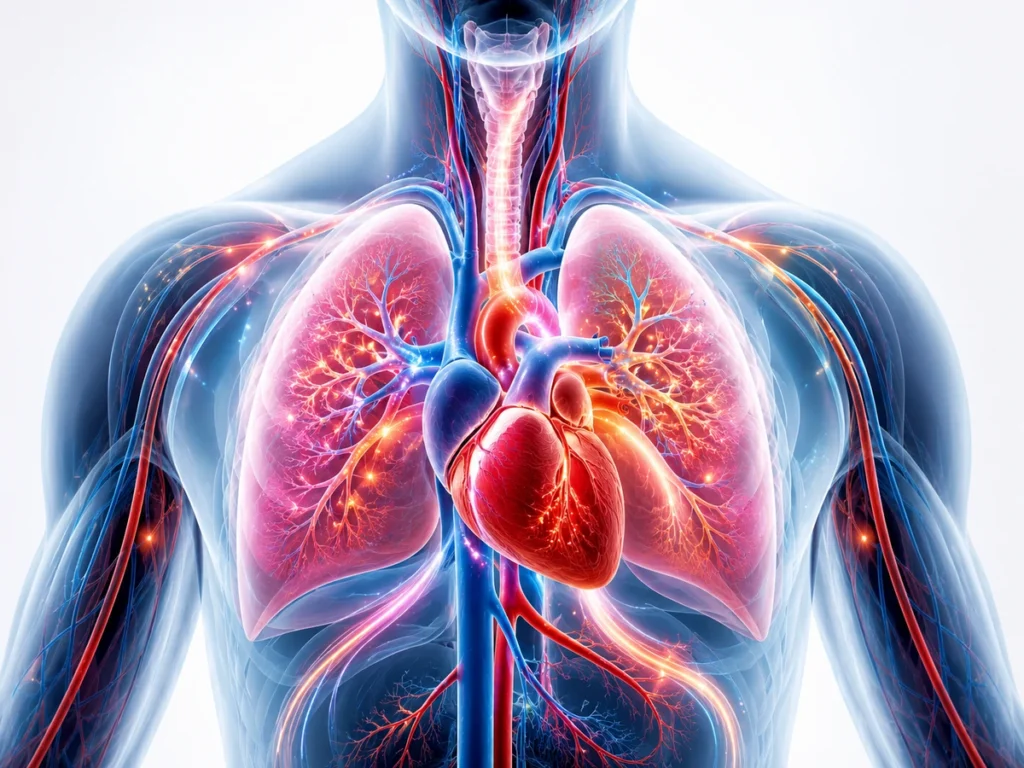
Learn how the human heart and respiratory system work with easy-to-understand diagrams, simple explanations, and key facts. A beginner-friendly educational guide for students and curious readers.
Understanding the Human Heart and Respiratory System Through Simple Diagrams
Have you ever wondered how your body keeps you alive every second of the day without you even thinking about it?
Two of the most important systems working behind the scenes are the heart and the respiratory system. Together, they form a powerful partnership that delivers oxygen to every cell and removes waste gases from the body.
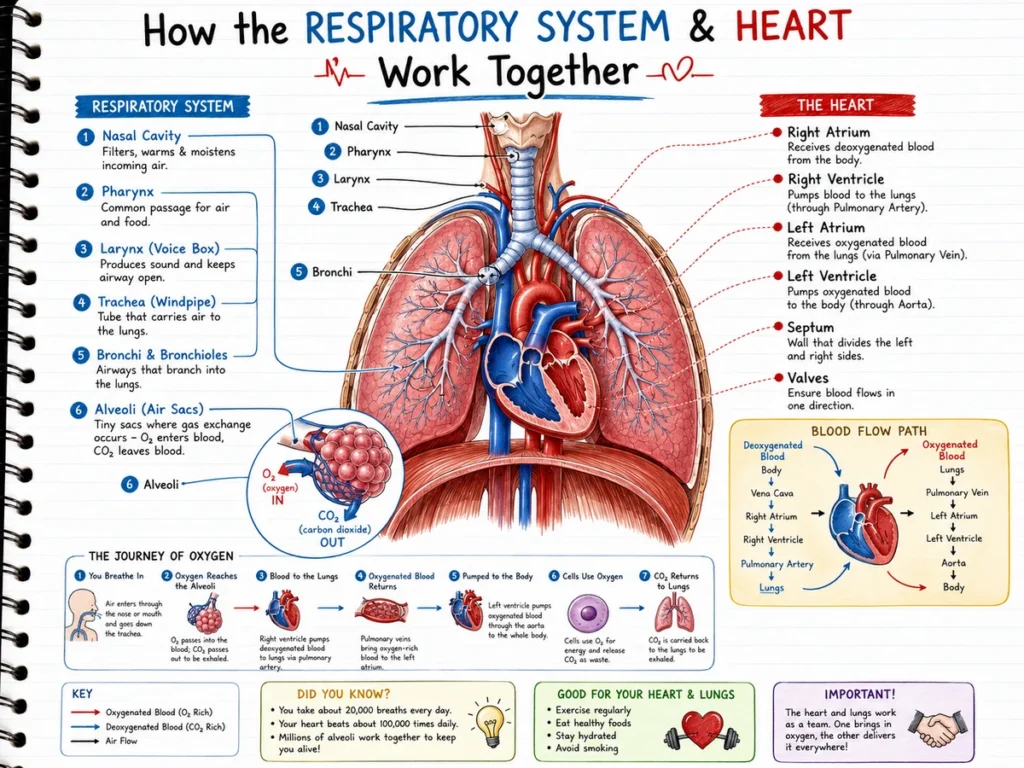
The educational diagrams shown in this article make these complex biological systems easier to understand. Whether you’re a student, a parent helping with homework, or simply curious about how the human body works, these illustrations provide a clear visual guide to some of our most important organs.
Why Visual Learning Makes Science Easier
Many people find biology easier to understand when information is presented visually.
Instead of memorizing long definitions, diagrams allow learners to see how different body parts connect and work together. Labels, arrows, and color-coded sections help transform complicated concepts into something much more approachable.
The heart and lungs are excellent examples because they constantly interact to keep the body supplied with oxygen.
The Human Respiratory System: How We Breathe
The respiratory system is responsible for bringing oxygen into the body and removing carbon dioxide.
Main Parts of the Respiratory System
The diagram highlights several important structures:
- Nasal cavity – Filters, warms, and moistens incoming air.
- Pharynx – A common passageway for air and food.
- Larynx – Often called the voice box.
- Trachea – The windpipe that carries air toward the lungs.
- Bronchi and bronchioles – Branching airways inside the lungs.
- Alveoli – Tiny air sacs where gas exchange occurs.
- Diaphragm – The main muscle involved in breathing.
How Breathing Works
Breathing happens in two main stages:
Inhalation
During inhalation:
- The diaphragm contracts and moves downward.
- The chest cavity expands.
- Air pressure inside the lungs decreases.
- Fresh air enters the lungs.
Exhalation
During exhalation:
- The diaphragm relaxes and moves upward.
- The chest cavity becomes smaller.
- Pressure inside the lungs increases.
- Air containing carbon dioxide leaves the body.
The Importance of Alveoli
The alveoli are among the most important structures in the respiratory system.
These tiny air sacs are where oxygen moves into the bloodstream while carbon dioxide moves out. This process is known as gas exchange, and it occurs millions of times every day throughout your lungs.
The Human Heart: The Body’s Powerful Pump
While the lungs bring oxygen into the body, the heart ensures that oxygen reaches every organ and tissue.
The heart beats continuously throughout a person’s life, moving blood through an extensive network of blood vessels.
Major Parts of the Heart
The diagram identifies several important structures:
- Right Atrium
- Right Ventricle
- Left Atrium
- Left Ventricle
- Aorta
- Pulmonary Artery
- Pulmonary Vein
- Valves
- Septum
- Vena Cava
Each part plays a specific role in directing blood flow through the body.
Understanding Blood Flow
The heart follows a continuous circulation pathway:
Step 1: Blood Returns from the Body
Blood that has delivered oxygen to tissues returns to the heart through the vena cava.
This blood contains more carbon dioxide and less oxygen.
Step 2: Blood Travels to the Lungs
The right side of the heart pumps blood to the lungs through the pulmonary artery.
In the lungs, carbon dioxide is released and oxygen is absorbed.
Step 3: Oxygen-Rich Blood Returns
Freshly oxygenated blood returns to the left side of the heart through the pulmonary veins.
Step 4: Blood Is Pumped Throughout the Body
The left ventricle sends oxygen-rich blood through the aorta, allowing it to reach organs, muscles, and tissues throughout the body.
How the Heart and Lungs Work Together
The heart and lungs are constantly communicating through circulation and respiration.
Without the lungs, the blood would not receive oxygen.
Without the heart, oxygen-rich blood could not reach the body’s cells.
This partnership ensures that every organ receives the oxygen it needs to function properly.
A simple way to think about it is:
- The lungs load oxygen into the blood.
- The heart delivers that oxygen everywhere it is needed.
Why These Diagrams Are Helpful for Students
Educational diagrams simplify difficult concepts by combining text and visuals.
Students often use these illustrations to:
- Review biology lessons.
- Prepare for exams.
- Understand anatomy more quickly.
- Remember scientific terms.
- Visualize processes that cannot be seen directly.
Because the information is organized clearly, diagrams can improve both understanding and memory retention.
Interesting Facts About the Heart and Lungs
The Heart Never Stops Working
The average human heart beats more than 100,000 times every day.
Your Lungs Have Millions of Alveoli
These tiny air sacs create a huge surface area for gas exchange.
Oxygen Is Essential for Every Cell
Cells use oxygen to produce the energy needed for daily activities.
The Heart and Lungs Form a Team
Neither system could effectively support life without the other.
Frequently Asked Questions
What is the main function of the respiratory system?
The respiratory system brings oxygen into the body and removes carbon dioxide through breathing.
What is the main function of the heart?
The heart pumps blood throughout the body, delivering oxygen and nutrients to tissues.
Where does gas exchange occur?
Gas exchange occurs in the alveoli, tiny air sacs located inside the lungs.
Why is the left ventricle important?
The left ventricle pumps oxygen-rich blood to the entire body through the aorta.
How do the heart and lungs work together?
The lungs oxygenate the blood, and the heart pumps that oxygen-rich blood to every part of the body.
Conclusion
The human heart and respiratory system are remarkable examples of biological teamwork. Every breath you take and every heartbeat you experience contribute to a process that keeps your body supplied with oxygen and functioning properly.
Educational diagrams like these transform complex anatomy into something easier to understand, making science more accessible for learners of all ages. By studying the structure of the heart and lungs together, students gain a clearer picture of how the human body maintains life every moment of every day.