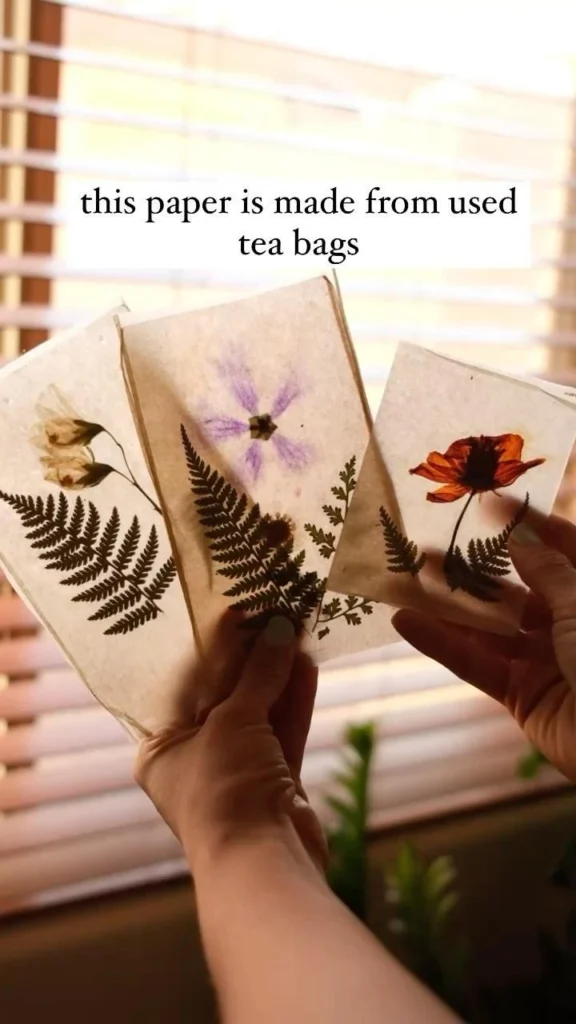
There is something quietly satisfying about turning something you were about to throw away into a sheet of paper you actually want to keep. Used tea bags are one of the most underrated raw materials for this: the bags are already thin, fibrous, and beautifully stained, and the loose leaves inside add texture that no store-bought paper can imitate. The idea sounds fiddly until you try it — most of the work is soaking, blending, and pressing, and the results look like something from a small stationery studio. Below are sixteen resources, tools, and inspiration sources for anyone who wants to make paper from used tea bags, coffee grounds, and other everyday paper scraps. Each one is a real, working site you can explore today.
Table of Contents(Click to Toggle)
- Why Tea Bag Paper Deserves a Place on Your Craft Table
- 16 Resources for Making Paper From Used Tea Bags
- 1. Arnold Grummer’s Papermill
- 2. Instructables
- 3. Reddit r/papermaking
- 4. Pinterest
- 5. YouTube
- 6. Paper Slurry on Etsy
- 7. Wikipedia: Papermaking
- 8. The Paper Maker’s Companion (via Archive.org)
- 9. Craftsy / Bluprint Archive Tutorials
- 10. Botanical PaperWorks
- 11. Amazon: Hand-Held Blender
- 12. Blick Art Materials
- 13. Facebook Groups: Papermaking & Recycled Paper
- 14. Hobby Lobby
- 15. The Spoonflower Blog
- 16. Local Library Makerspaces
- Bonus Mentions
- The Quiet Joy of Making Paper From Nothing
Why Tea Bag Paper Deserves a Place on Your Craft Table
Most people steep a tea bag, toss it, and never think about it again. But those bags are made of abaca, wood pulp, or a blend of natural fibers that break down beautifully in water. Add the tannin stains from the tea itself and the leftover leaves, and you get a raw material that produces speckled, warm-toned sheets with almost no effort. The process is genuinely simple once you get the hang of it: dry the bags, soak them, blend them into a pulp, pour the pulp onto a screen, press out the water, and let it dry. The catch is knowing where to find good instructions, the right tools, and people who have already solved the problems you are about to hit. That is exactly what this list covers — from dedicated papermaking suppliers to free tutorials and communities where you can ask questions. Whether you want to make a single sheet for a handmade card or build a small home studio, these resources will get you there faster.
16 Resources for Making Paper From Used Tea Bags
1. Arnold Grummer’s Papermill : The classic home papermaking supplier and instruction hub
What it is: A long-running papermaking company that sells beginner kits, molds, deckles, and pulp, plus a library of free how-to articles.
Category: Supplies and tutorials
Why it stands out:
- Their starter kits include a blender, screen, and couching sheets, which is exactly the setup you need for tea bag pulp.
- The site explains how to blend different fibers together, which matters when you mix thin tea bag material with thicker scrap paper.
Best for: Absolute beginners who want one box that covers everything.
2. Instructables : Step-by-step photo tutorials from real makers
What it is: A community platform where hobbyists post detailed project guides with photos and material lists.
Category: Tutorials
Why it stands out:
- Searching “tea bag paper” surfaces several walkthroughs that show the exact drying and pressing stages, including what happens when the pulp is too wet.
- Comments sections are often more useful than the guide itself, with readers reporting drying times and screen alternatives.
Best for: Visual learners who want to see each stage before trying it.
3. Reddit r/papermaking : A small, friendly community of home papermakers
What it is: A subreddit dedicated to making paper by hand, from pulp blending to drying setups.
Category: Community
Why it stands out:
- Members regularly post photos of tea bag and botanical paper experiments with honest notes on what failed.
- It is small enough that questions usually get real answers within a day, unlike larger craft forums.
Best for: Troubleshooting when your sheets keep tearing or drying unevenly.
4. Pinterest : The best visual index of tea bag paper ideas
What it is: A visual bookmarking site where crafters save tutorials, finished projects, and supply lists.
Category: Inspiration
Why it stands out:
- Searching “tea bag paper” returns hundreds of finished sheets, cards, and journals, which is useful for deciding what texture you want before you start.
- Many pins link back to full blog tutorials, so it works as a discovery layer rather than a dead end.
Best for: Collecting ideas and color palettes before your first batch.
5. YouTube : Watch the entire process in real time
What it is: The largest video library on the internet, with a surprisingly deep papermaking niche.
Category: Video tutorials
Why it stands out:
- Video is the only way to see how wet pulp should look on the screen and how much pressure to apply when pressing.
- Several creators film the full tea bag process from drying the bags to peeling the finished sheet, which removes most of the guesswork.
Best for: Anyone who learns better by watching than reading.
6. Etsy : Buy handmade paper or sell your own experiments
What it is: A marketplace for handmade and vintage goods, including a healthy selection of handmade paper sellers.
Category: Marketplace
Why it stands out:
- Buying a few sheets from an established maker is a fast way to feel the texture you are aiming for before investing in tools.
- Many sellers list their exact fiber blends, which is genuinely useful reference information for your own recipes.
Best for: Comparing your results to professional handmade paper.
7. Wikipedia: Papermaking : The technical background that makes everything click
What it is: A detailed encyclopedia article on the history and chemistry of papermaking.
Category: Reference
Why it stands out:
- It explains sizing, fiber length, and why some pulps bind better than others, which helps you understand why tea bag paper behaves the way it does.
- Free, ad-light, and surprisingly readable for a technical topic.
Best for: Makers who want to understand the why, not just the steps.
8. Internet Archive : Free access to out-of-print papermaking books
What it is: A digital library with scanned books, including vintage craft manuals on papermaking.
Category: Reference
Why it stands out:
- Older papermaking books describe methods that predate modern blenders, which is useful if you want to work without electricity.
- You can borrow titles for free with a registered account, no purchase required.
Best for: Deep dives into traditional techniques.
9. Bluprint : Structured craft classes with professional instructors
What it is: A craft and hobby class platform with video courses on paper crafts and mixed media.
Category: Online courses
Why it stands out:
- Courses are organized into lessons, so you get a complete method rather than scattered tips.
- Instructors often cover finishing techniques like embossing and stitching that turn a rough sheet into a finished card.
Best for: Makers who prefer a guided curriculum.
10. Botanical PaperWorks : Plantable paper that takes the idea one step further
What it is: A company specializing in seed paper — handmade paper embedded with seeds that can be planted after use.
Category: Inspiration and supplies
Why it stands out:
- Their product line shows what is possible when you embed botanicals into pulp, a natural extension of tea leaf paper.
- They publish guides on embedding seeds without damaging them, which is a real technical challenge.
Best for: Anyone wanting to turn paper into gifts or wedding favors.
11. Amazon : The cheapest route to a dedicated blender
What it is: The general marketplace, useful here for one specific purchase: a cheap blender you will never use for food again.
Category: Tools
Why it stands out:
- Papermaking pulp ruins blender blades for kitchen use, so a budget second blender is the standard solution.
- Reviews let you filter for models that handle thick pulp without burning out the motor.
Best for: Setting up your first pulp station on a budget.
12. Blick Art Materials : Proper molds, deckles, and couching felt
What it is: A large art supply retailer with a real papermaking section.
Category: Supplies
Why it stands out:
- They stock reusable couching felt and screen mesh, which are the two items most beginners improvise badly.
- Prices are transparent and the catalog is detailed enough to compare mold sizes before buying.
Best for: Upgrading from improvised screens to proper equipment.
13. Facebook Groups : Papermaking and recycled craft communities
What it is: Private and public groups where papermakers share photos, recipes, and problem-solving threads.
Category: Community
Why it stands out:
- Search “handmade paper” or “recycled paper” and you will find active groups with thousands of members.
- Members often share local supplier recommendations, which saves real money on shipping.
Best for: Ongoing feedback once you have made your first few batches.
14. Hobby Lobby : Walk-in access to basic paper craft tools
What it is: A national craft chain carrying screens, felt, and paper craft supplies.
Category: Supplies
Why it stands out:
- Useful when you want to start today and do not want to wait for shipping.
- Their clearance aisles occasionally carry frame screens and felt squares at very low prices.
Best for: Last-minute supply runs before a weekend project.
15. The Spoonflower Blog : Where handmade paper meets surface design
What it is: The blog of a custom fabric and wallpaper printing company, covering texture, color, and surface design.
Category: Inspiration
Why it stands out:
- Their articles on texture and natural dyes pair well with tea-stained paper, which has a similar earthy palette.
- It is a good source for ideas on turning your handmade sheets into printed or stitched finished goods.
Best for: Designers who want to use handmade paper in a product.
16. Local Library Makerspaces : Free equipment you probably did not know you had access to
What it is: Many public libraries now run makerspaces with craft tools, presses, and workshop space.
Category: Community resource
Why it stands out:
- Some branches host papermaking workshops or lend out equipment, which removes the cost barrier entirely.
- Librarians are excellent at finding local craft groups and free classes that never appear in online searches.
Best for: Trying the hobby before spending anything.
Bonus Mentions
Etsy Papermaking Kits : Small-batch starter kits from independent sellers
Independent sellers offer compact kits with a mold, deckle, and instructions, often cheaper than large retailers and easier to customize.
TikTok : Fast visual demos of the tea bag process
Short-form videos show the satisfying peel-and-dry moment in under a minute, which is a great confidence booster before your first attempt.
Goodreads : Find papermaking books worth buying
Reader reviews help you separate genuinely useful papermaking manuals from dated craft books with thin instructions.
Seed Paper Listings on Etsy : Inspiration for embedding botanicals
Seeing how makers embed seeds and petals into pulp gives you a template for adding dried tea leaves as a decorative element.
The Quiet Joy of Making Paper From Nothing
The best thing about tea bag paper is that it costs almost nothing and requires no special talent — just a little patience and a willingness to experiment. Start with a single batch, keep notes on your fiber ratios, and let the first imperfect sheets teach you what to adjust. The resources above cover the full range: supplies, tutorials, communities, and reference material, so you are never stuck guessing. Once you have made your first sheet, you will start seeing potential paper everywhere — junk mail, paper bags, receipts, and of course, every tea bag you were about to throw away. What is the strangest material you have ever turned into paper?