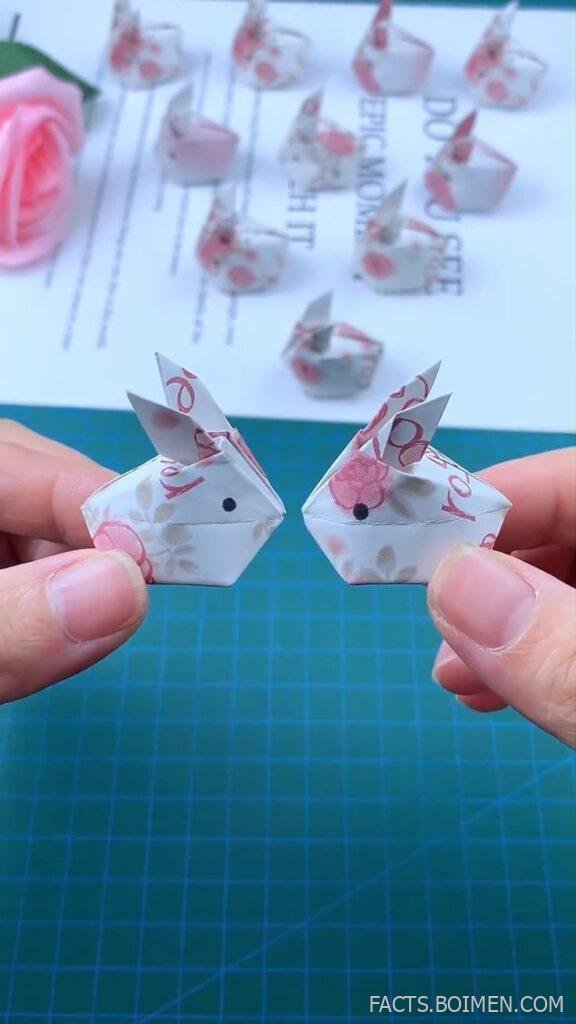
There is something quietly satisfying about turning a flat square of paper into a small rabbit that stands on your desk. Origami bunnies are one of the friendliest entry points into paper folding: they need no glue, no scissors, and no special supplies beyond a square of paper and a few minutes of patience. The projects below range from a first-grade-friendly rabbit that takes ninety seconds to a layered rabbit with ears that hold their shape, so whether you are folding with a child, decorating an Easter table, or just want a screen-free break, you will find a rabbit here that matches your skill level. Every entry links to a real, free resource with diagrams or video so you can start folding immediately.
Table of Contents(Click to Toggle)
- Why Origami Rabbits Are the Perfect First Fold
- 15 Easy Origami Rabbit Projects
- 1. Origami.me Rabbit
- 2. Origami Way Easy Origami Rabbit
- 3. Origami Guide Rabbit
- 4. Origami-Fun Rabbit
- 5. Origami Resource Center
- 6. Paper Kawaii Rabbit
- 7. Origami Instructions Rabbit
- 8. Red Ted Art Paper Bunny
- 9. Easy Peasy and Fun Paper Rabbit
- 10. Origami Spirit Rabbit
- 11. Gilad’s Origami Page
- 12. Happy Folding Rabbit
- 13. Origami Plus Rabbit
- 14. Origami Tutorials Rabbit
- 15. Jo Nakashima Rabbit
- Bonus Mentions
- Paper, Patience, and Where to Go Next
Why Origami Rabbits Are the Perfect First Fold
Most origami animals demand precise angle bisectors and inside reverse folds that frustrate beginners. Rabbits are different. Their defining features, long ears and a rounded body, are forgiving: a slightly crooked ear still reads as an ear, and a body that is not perfectly symmetrical still looks like a bunny. That tolerance is why teachers use rabbit models in classrooms and why rabbit diagrams dominate the beginner sections of nearly every origami library.
Rabbits also scale well. The same base fold works in a two-inch sticky note for a tiny charm or a twelve-inch sheet for a shelf display. And because rabbits appear in spring and Easter traditions, a finished fold doubles as a gift topper, a greeting card insert, or a place-setting decoration. In short, it is the rare paper craft that rewards a five-minute attempt and a five-hour one equally.
15 Easy Origami Rabbit Projects
1. Origami.me Rabbit : The clearest starting diagram for a classic sitting bunny
What it is: A step-by-step photo diagram for a simple rabbit with upright ears, hosted on one of the best-known free origami libraries.
Category: Beginner diagram with photos
Why it stands out: Each step is photographed from the folder’s point of view with the crease highlighted, so you can see exactly where the paper should bend. The model uses only valley and mountain folds, no reverse folds, which keeps the first attempt under five minutes.
Best for: Absolute beginners and anyone folding with a child who needs visual cues rather than text.
2. Origami Way Easy Origami Rabbit : A fast rabbit you can finish before your tea cools
What it is: A short diagram sequence for a compact rabbit body with two triangular ears.
Category: Quick beginner project
Why it stands out: The whole model is roughly six folds, and the site keeps the instructions on a single scrolling page so you never lose your place. It is also one of the few beginner rabbits that stands upright on its own without a support fold.
Best for: Classroom demos, party favors, and anyone who wants a finished rabbit in under two minutes.
3. Origami Guide Rabbit : A tidy hub of rabbit variations in one place
What it is: A collection page gathering several rabbit designs of increasing difficulty, from simple heads to full bodies.
Category: Curated diagram collection
Why it stands out: Instead of one model, you get a progression. Start with the rabbit head, then move to the full body, then try the version with folded front paws. The site labels each design with a difficulty rating so you can pick your next challenge without guessing.
Best for: Folders who want a single bookmark that grows with their skill.
4. Origami-Fun Rabbit : Printable instructions you can hand out offline
What it is: A clean rabbit diagram designed to be printed and shared, with a companion video walkthrough.
Category: Printable diagram plus video
Why it stands out: The diagram is drawn in high-contrast line art, which prints legibly in black and white, so a single page can serve a whole table of kids. The video uses a slow, narrated pace that matches the printed steps.
Best for: Teachers, scout leaders, and anyone running a group folding session without screens.
5. Origami Resource Center : A deep archive of rabbit diagrams and history
What it is: A long-running reference site that catalogs rabbit models from multiple designers alongside background on paper folding.
Category: Reference archive
Why it stands out: Beyond diagrams, it explains terminology such as the bird base and the waterbomb base, so you learn the vocabulary behind the folds. That context makes later, harder models far less intimidating.
Best for: Curious beginners who want to understand why a fold works, not just copy it.
6. Paper Kawaii Rabbit : Cute, rounded bunnies with a kawaii finish
What it is: A rabbit design with a soft, chubby silhouette typical of the kawaii paper-craft style, taught through video.
Category: Video tutorial, decorative style
Why it stands out: The model deliberately rounds the corners and shortens the ears to create a plush-toy look. The video shows how to shape the final fold with a fingernail to get that soft curve, a small trick that makes a big visual difference.
Best for: Crafters who want a display piece rather than a geometric study.
7. Origami Instructions Rabbit : Text-first steps for folders without video
What it is: A written, numbered instruction set for a traditional rabbit, paired with simple diagrams.
Category: Written tutorial
Why it stands out: The text describes each fold in plain language, which is genuinely useful when you are folding in a quiet room or on a slow connection. It also names each fold type, so you build fluency with origami terms as you go.
Best for: Readers who prefer instructions they can skim and re-read at their own pace.
8. Red Ted Art Paper Bunny : A hybrid craft that welcomes glue and scissors
What it is: A paper bunny project that combines folding with cutting and gluing, aimed at young crafters.
Category: Kids’ paper craft
Why it stands out: Because it is not strict origami, it removes the pressure of perfect folds. Children can decorate the finished bunny with drawn eyes, cotton tails, or patterned paper, which keeps them engaged long after the folding is done.
Best for: Parents and caregivers crafting with children aged four to eight.
9. Easy Peasy and Fun Paper Rabbit : A printable template that removes the measuring
What it is: A downloadable bunny template you print, cut, and assemble into a standing rabbit.
Category: Printable template craft
Why it stands out: The template includes fold lines and tabs already marked, so there is no guesswork about proportions. You can print it on colored card stock and get a sturdy rabbit that survives being handled by small hands.
Best for: Crafters who want a guaranteed-cute result without learning origami bases first.
10. Origami Spirit Rabbit : Thoughtful tutorials with cultural context
What it is: A tutorial site by a longtime origami teacher, offering rabbit models with notes on their origins and design.
Category: Tutorial with commentary
Why it stands out: Each post explains the design choices behind the model and often credits the original creator, which is a refreshing change from anonymous diagram dumps. The photography is clear and the pacing suits adult learners.
Best for: Adults who want to fold with intention and learn a little history along the way.
11. Gilad’s Origami Page : The librarian’s index of rabbit models
What it is: A vast personal archive cataloging origami books, creators, and model indexes, including rabbit designs.
Category: Research database
Why it stands out: If you want to find a specific rabbit by a specific designer, this is where you look. Entries list the book, the difficulty, and often a photo, which saves hours of searching forums. It is a reference tool rather than a tutorial, and that is exactly its value.
Best for: Enthusiasts hunting for a particular model or building a paper-folding library.
12. Happy Folding Rabbit : High-quality videos with printable crease patterns
What it is: A video-focused origami site with clear overhead filming and downloadable diagrams for many models.
Category: Video library
Why it stands out: The camera angle stays directly above the paper, so you always see the fold from the same orientation. Many tutorials also include a crease pattern, which is a great next step once you are comfortable following diagrams.
Best for: Visual learners moving from simple rabbits toward intermediate models.
13. Origami Plus Rabbit : Modular and decorative rabbit options
What it is: A tutorial channel and site featuring modular and decorative paper projects, including rabbit-themed builds.
Category: Modular and decorative origami
Why it stands out: If you enjoy repetition, modular folding lets you make many identical units and join them into a larger rabbit or rabbit-shaped decoration. It is a meditative process and produces a piece with real presence on a shelf.
Best for: Folders who like assembly projects and want something bigger than a palm-sized bunny.
14. Origami Tutorials Rabbit : A steady stream of new animal models
What it is: A regularly updated tutorial site covering animals, boxes, and beginner projects.
Category: Ongoing tutorial blog
Why it stands out: Because new posts appear often, it is a good site to check back on rather than visit once. Rabbit and bunny models appear alongside seasonal projects, so you can fold a matching set for spring.
Best for: Hobbyists who want fresh models without searching every time.
15. Jo Nakashima Rabbit : The gold standard for clean, slow video folding
What it is: A widely respected origami video channel known for precise, well-lit tutorials, including rabbit and bunny designs.
Category: Professional video tutorials
Why it stands out: The filming is immaculate, the pace is calm, and there is no filler. Nakashima often folds the model twice, once at normal speed and once in slow motion, so you can catch the tricky squash folds that trip up beginners.
Best for: Anyone ready to level up from a five-fold rabbit to a model with real structure.
Bonus Mentions
Origami Club : Animated diagrams that show each fold in motion
What it is: A long-running site with animated step diagrams for hundreds of simple models, rabbits included.
Category: Animated diagrams
Why it stands out: Watching a fold animate is often clearer than reading about it, and the site works well on tablets.
Best for: Beginners who learn best from motion rather than still images.
Pinterest Paper Bunny Boards : Endless visual inspiration for rabbit crafts
What it is: A search surface where crafters collect rabbit folding photos, templates, and printables.
Category: Inspiration and idea collection
Why it stands out: It is excellent for seeing finished results before you commit to a model, and for spotting color and paper choices you had not considered.
Best for: Browsers who want to pick a rabbit design by look rather than by difficulty.
YouTube Origami Channels : Real-time folding you can pause and rewind
What it is: A broad pool of video tutorials covering every rabbit variation imaginable.
Category: Video search
Why it stands out: The ability to scrub back ten seconds and rewatch a single fold is the single biggest advantage video has over paper diagrams.
Best for: Anyone stuck on a step who needs to see it again immediately.
Origami Shop : Specialty papers that make finished rabbits look professional
What it is: A retailer of origami paper, including duo-color and washi-style sheets.
Category: Supplies
Why it stands out: Duo-color paper gives a rabbit a different color inside the ears automatically, a small upgrade that transforms a plain model into a display piece.
Best for: Folders who have mastered the basics and want their rabbits to look polished.
Paper, Patience, and Where to Go Next
The wonderful thing about rabbit origami is that it never really runs out. Once you can fold one rabbit, you can fold it in a different paper size, add a second color, or combine it with a folded carrot and a small paper basket for a seasonal scene. Many of the sites above also host foxes, birds, and flowers, so a single rabbit can become the start of a small paper menagerie.
Start with the simplest diagram, accept that your first bunny will look a little lopsided, and fold it a second time. The improvement between attempt one and attempt two is usually dramatic, and that quick visible progress is what makes paper folding so quietly addictive. Keep a stack of square paper near your desk, and you will always have a five-minute creative break within reach.
Which rabbit did you fold first, and did it end up standing on its own? Share your favorite paper-folding find in the comments, I am always looking for new diagrams to try.