
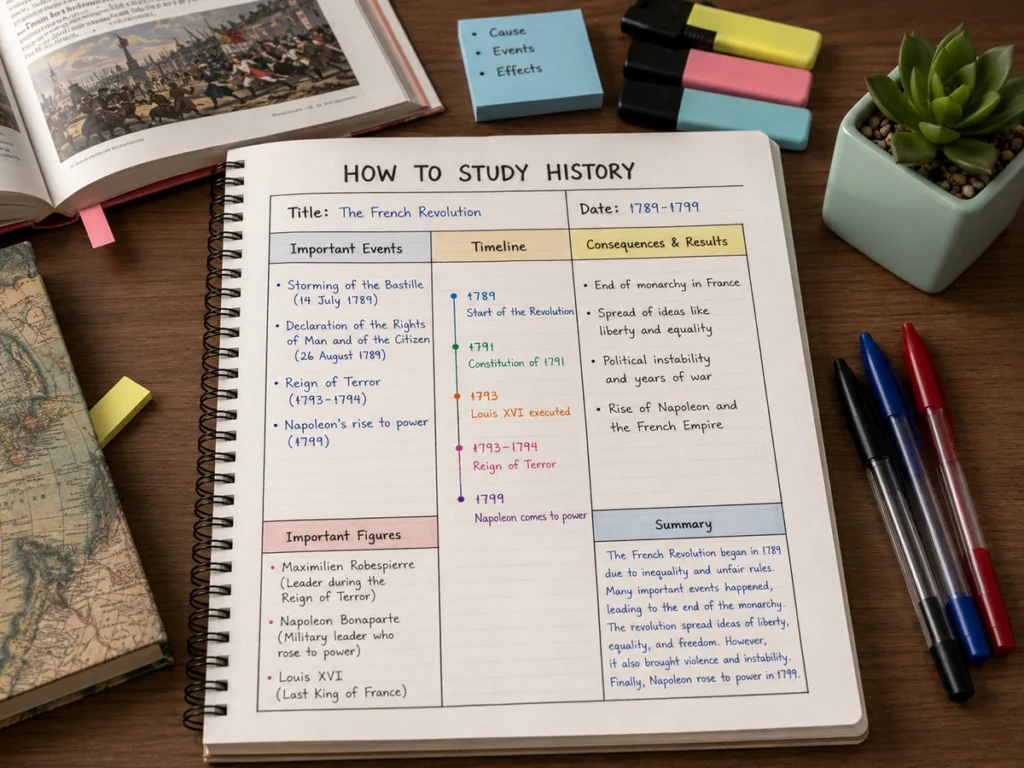
Many students think history is just about memorizing dates. In reality, history is about understanding what happened, why it happened, and what happened next.
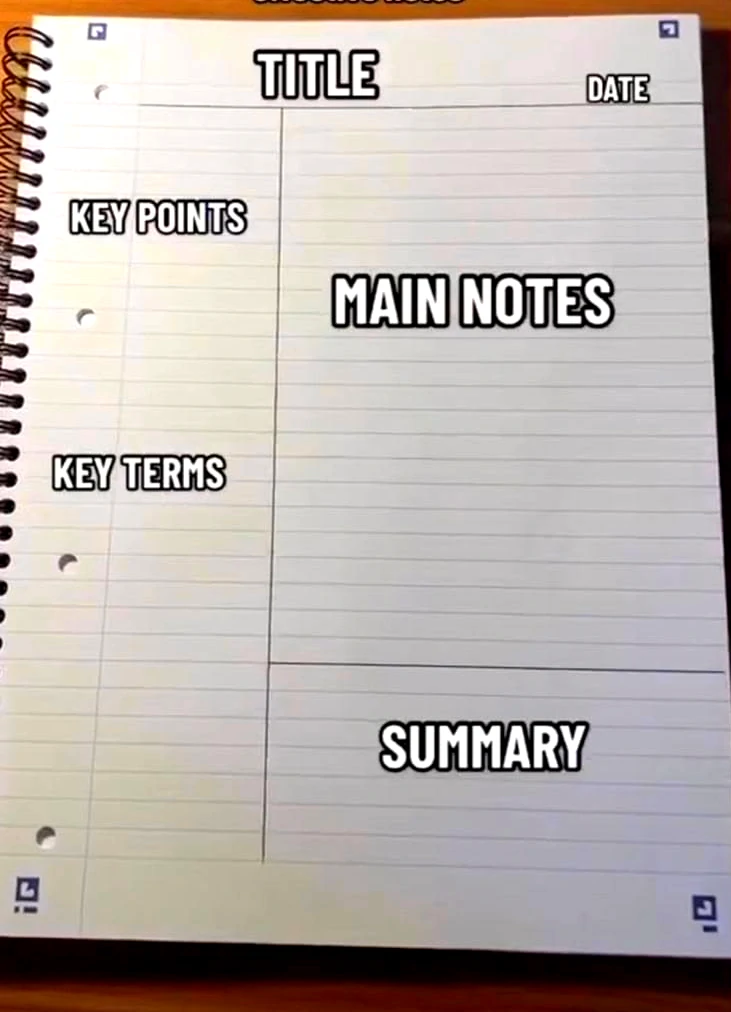
The note template in the image is a great way to organize information and remember it more easily.
1. Write the Title and Date
At the top of the page, write:
- Event name
- Time period or date
Example:
- Title: French Revolution
- Date: 1789–1799
2. List Important Events
Write the key events in short bullet points.
Example:
- Storming of the Bastille
- Declaration of the Rights of Man
- Reign of Terror
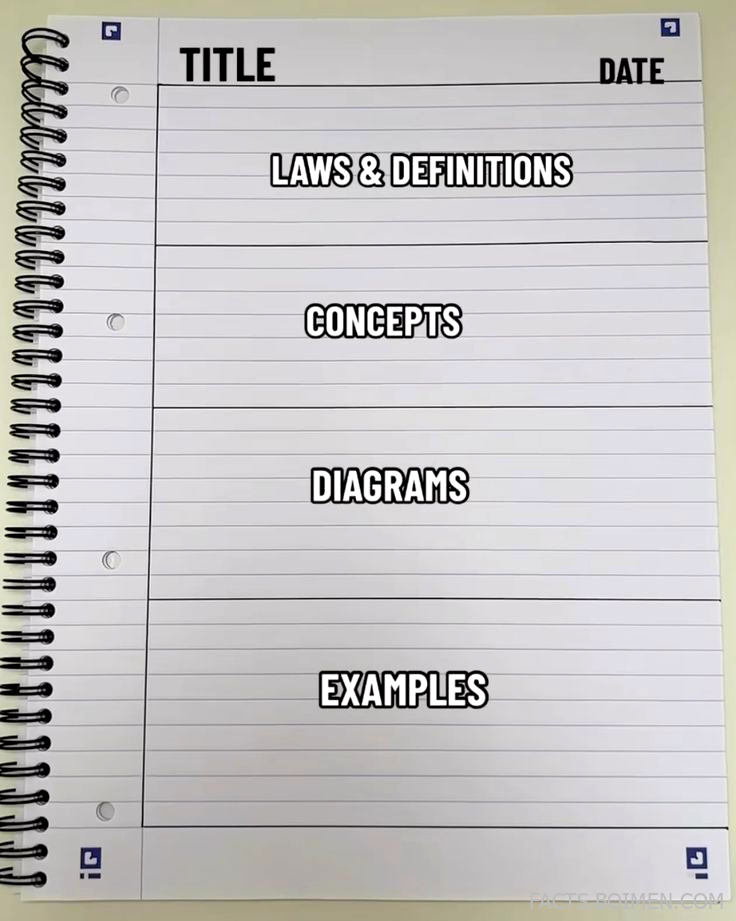
3. Create a Timeline
Put the events in chronological order.
This helps your brain see the story instead of random facts.
4. Note the Consequences & Results
Ask yourself:
- What changed?
- Who benefited?
- What problems followed?
This is often where exam questions come from.
5. Identify Important Figures
Write the main people involved and why they mattered.
Example:
- Napoleon Bonaparte
- Louis XVI
- Maximilien Robespierre
6. Write a Short Summary
At the bottom, explain the topic in 3–5 simple sentences as if teaching a friend.
If you can explain it simply, you understand it.
✨ The 5-Minute Review Method
After finishing your notes:
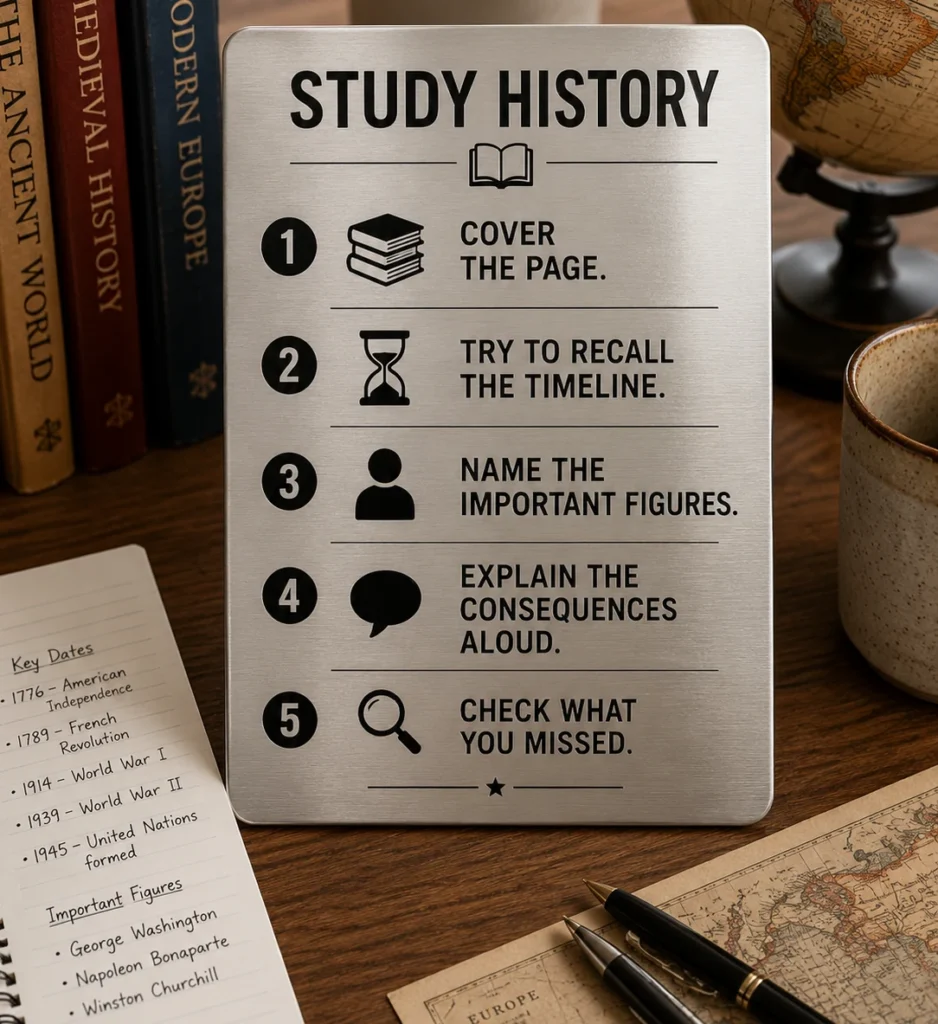
- Cover the page.
- Try to recall the timeline.
- Name the important figures.
- Explain the consequences aloud.
- Check what you missed.
Repeat the next day and one week later.
Why This Works
Instead of memorizing isolated facts, you learn history as a story with causes, events, people, and results. This makes information easier to remember for tests and essays.
Golden Rule: Don’t ask “What date was this?” first. Ask “What happened, why did it happen, and what changed because of it?” That’s how historians think. 📚✨