
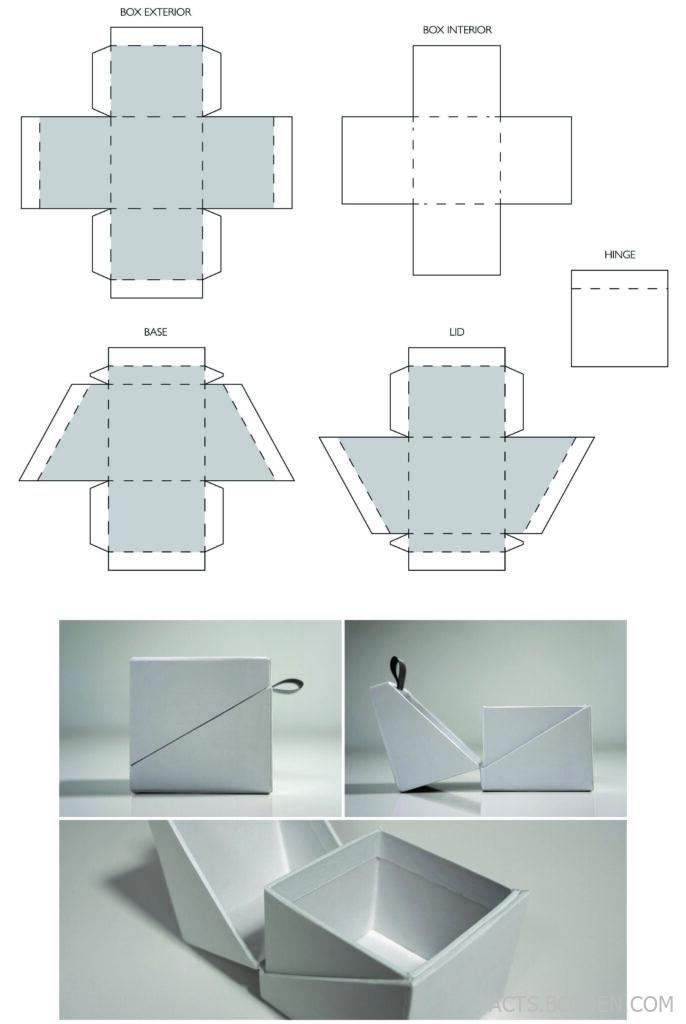
Folding a lidded origami box looks simple until you reach the part where the top has to grip the base — and that grip is decided long before you crease the last flap. The three words that unlock the whole structure are exterior, interior, and hinge. Get the exterior proportions right, understand which side of the paper becomes the interior lining, and place the hinge crease correctly, and your box snaps shut cleanly instead of collapsing sideways. This list gathers 19 genuinely useful origami box resources, from step-by-step diagram archives to video instructors who slow down exactly at the hinge, plus a few bonus tools worth bookmarking.
Table of Contents(Click to Toggle)
- Why Box Exterior, Interior and Hinge Details Decide Everything
- 19 Origami Box Guides Worth Folding
- 1. Origami.me
- 2. Origami Resource Center
- 3. Origami Instructions
- 4. Origami-Fun
- 5. Origami Way
- 6. Paper Kawaii
- 7. Origami Spirit
- 8. Gilad’s Origami Page
- 9. Origami Tanteidan
- 10. Happy Folding
- 11. Origami Plus
- 12. Red Ted Art
- 13. Origami Club
- 14. The Origami Forum
- 15. British Origami Society
- 16. Origami Kids
- 17. Instructables Origami
- 18. Origami Art
- 19. YouTube Origami Channels Aggregate
- Bonus Mentions
- The Box Is a Set of Three Decisions
Why Box Exterior, Interior and Hinge Details Decide Everything
Most failed origami boxes fail for one of three reasons, and none of them is “not being good at folding.” They fail because the exterior footprint was cut to the wrong ratio, because the folder lost track of which face would show as the interior lining, or because the hinge — the crease that lets the lid pivot and lock — was softened, reversed, or skipped entirely.
Once you understand the exterior as the finished silhouette, the interior as the visible inside surface (usually the reverse side of your paper), and the hinge as the tension point that keeps the lid attached, you can read almost any diagram with confidence. The resources below are chosen because they explain at least one of these three ideas clearly, rather than just showing a sequence of arrows.
19 Origami Box Guides Worth Folding
1. Origami.me : Clean diagram-first box tutorials with clear exterior proportions
What it is: A large diagram library with dedicated sections for boxes, including the classic Masu box and lidded variations.
Category: Diagram archive
Why it stands out: Each step is drawn on a grid so you can see the exterior footprint grow and shrink in real proportions, and the lidded box pages explicitly note that the lid should be folded from paper a few millimetres larger than the base.
Best for: Beginners who want to fold from paper diagrams without pausing a video.
2. Origami Resource Center : Deep box category with historical notes
What it is: A long-running reference site with hundreds of models, organised by shape and difficulty.
Category: Reference library
Why it stands out: The box section links multiple designers’ versions of the same structure, so you can compare how different folders solve the hinge problem — some fold a separate lid, others use a self-locking rim.
Best for: Folders who want options rather than a single “correct” box.
3. Origami Instructions : Simple photo steps for the first box you fold
What it is: Photo-based tutorials covering traditional models, with a friendly plain-language tone.
Category: Photo tutorial site
Why it stands out: The box tutorials use two-tone paper, which makes the interior lining instantly visible in every photo — a small choice that removes most of the confusion around which side faces in.
Best for: Visual learners folding their very first lidded box.
4. Origami-Fun : Printable diagrams with clear crease notation
What it is: A compact site offering downloadable and printable instruction sheets.
Category: Printable diagrams
Why it stands out: The printable sheets use consistent mountain and valley notation, so the hinge fold is never ambiguous. Sheets are sized for A4 printing, which is handy for classroom or club sessions.
Best for: Teachers and group workshops that need handouts.
5. Origami Way : Difficulty ratings that separate easy bases from tricky lids
What it is: A tutorial site with step photos and explicit difficulty labels.
Category: Tutorial site
Why it stands out: Box models are rated separately by base and lid difficulty, which is refreshingly honest — many “easy” boxes have a lid that requires a firmer hinge crease than the base does.
Best for: Folders who want to know what they are getting into before starting.
6. Paper Kawaii : Video tutorials that pause at the hinge
What it is: A YouTube-based origami channel with a matching blog of written steps.
Category: Video tutorials
Why it stands out: The presenter folds slowly and often repeats the hinge-forming step twice, once from each angle. Many box videos include a written companion post with paper size recommendations in both centimetres and inches.
Best for: Anyone who learns faster by watching hands than by reading diagrams.
7. Origami Spirit : Thoughtful tutorials with design context
What it is: A curated origami blog by Leyla Torres, mixing tutorials with reflections on folding practice.
Category: Tutorial blog
Why it stands out: Box tutorials here explain why a particular paper weight works, which matters because a stiff paper holds the exterior shape but can crack along a tight hinge. There is also guidance on choosing contrasting interior colours.
Best for: Folders who care about finish and material choice, not just steps.
8. Gilad’s Origami Page : A vast model database with book references
What it is: One of the oldest and most thorough origami databases online, cataloguing models, designers, and publications.
Category: Database
Why it stands out: If you have seen a box with an unusual interlocking hinge and want to know who designed it, this is where to look. Entries include diagrams sources and book citations rather than full instructions.
Best for: Research-minded folders tracking down a specific design.
9. Origami Tanteidan : The Japanese society behind rigorous folding standards
What it is: The official site of the Japan Origami Academic Society, publisher of the well-known convention books.
Category: Society / publisher
Why it stands out: Their published collections contain some of the most precise box designs in the craft, with crease patterns that show exactly where the hinge tension sits. The site also lists convention dates and publication releases.
Best for: Intermediate folders ready to move beyond traditional models.
10. Happy Folding : Crease patterns and paper reviews in one place
What it is: A site by Sara Adams featuring tutorials, crease patterns, and detailed paper reviews.
Category: Tutorial and review site
Why it stands out: The paper reviews are unusually specific about how different sheets behave when creased sharply, which directly affects how crisp your box exterior edges will be. Crease pattern pages help you see the hinge geometry before folding.
Best for: Folders choosing paper for a box they intend to keep.
11. Origami Plus : Short, well-lit box videos with no filler
What it is: A YouTube channel focused on practical, giftable origami projects.
Category: Video tutorials
Why it stands out: Videos are typically under ten minutes and filmed from directly overhead, so the exterior shape and interior folds are equally visible. Several box tutorials include a second segment showing how to resize the lid.
Best for: Quick evening projects with minimal setup.
12. Red Ted Art : Family-friendly box crafts with printable templates
What it is: A craft site with a substantial origami section aimed at parents, teachers, and kids.
Category: Craft blog
Why it stands out: Box projects come with printable patterned paper, so the exterior decoration is handled before you fold. Instructions are written for small hands, with simplified hinge steps that still produce a working lid.
Best for: Parents folding with children aged six and up.
13. Origami Club : Animated step sequences for visual folders
What it is: A Japanese site with animated GIF instructions for hundreds of models.
Category: Animated diagrams
Why it stands out: Animation is ideal for the hinge step, because you can watch the flap rotate through its arc rather than guessing from two static frames. The site is bilingual and loads quickly on mobile.
Best for: Folders who find static diagrams hard to interpret.
14. The Origami Forum : Ask a human when your hinge will not hold
What it is: A long-running discussion forum for folders of all levels.
Category: Community forum
Why it stands out: Threads on box bases and lids are full of troubleshooting advice you will not find in tutorials — for example, which paper weights resist the hinge crease relaxing over time. Search before posting; many questions are already answered.
Best for: Folders stuck on a specific step who want a real answer.
15. British Origami Society : Diagrams, events, and a folding community
What it is: The UK society for origami, offering member resources and public diagrams.
Category: Society
Why it stands out: The public diagram library includes traditional box bases with careful notation, and the society runs in-person meetings where you can watch someone fold a hinge in real time. Membership details and event listings are published on the site.
Best for: Folders who want to join a local or national community.
16. Origami Kids : Simple boxes with large, readable steps
What it is: A beginner site with big diagrams and short instructions.
Category: Beginner tutorials
Why it stands out: The diagrams are drawn large enough to follow on a tablet propped on a table, and the box pages avoid advanced folds entirely. A good confidence-builder before tackling a lidded version.
Best for: Absolute beginners and classroom use.
17. Instructables Origami : Community projects with real-world variations
What it is: A large DIY platform with a busy origami category.
Category: Community project site
Why it stands out: Because anyone can publish, you get unusual box variants — reinforced hinges, double-walled exteriors, and boxes sized for specific gifts. Quality varies, but the photos and comment threads often reveal fixes the original author did not mention.
Best for: Makers who like remixing and improving a design.
18. Origami Art : Gallery-style inspiration for finished boxes
What it is: A showcase site presenting finished models and design ideas.
Category: Inspiration gallery
Why it stands out: Seeing finished boxes photographed from above and from the side helps you judge what a well-formed exterior should look like — sharp corners, flush lid, no splayed hinge. Useful as a quality check before you commit to a design.
Best for: Folders who want a visual target to aim for.
19. YouTube Origami Channels Aggregate : Search any box variant and compare methods
What it is: YouTube itself, used deliberately as a comparison tool rather than a random feed.
Category: Video platform
Why it stands out: Searching a specific structure name plus “tutorial” returns several instructors folding the same box, which is the fastest way to spot where methods diverge — especially at the hinge. Watching two versions back to back resolves most confusion.
Best for: Folders comparing approaches before settling on one.
Bonus Mentions
Origami Shop : Papers and books for folders who want better materials
A specialist retailer stocking washi, tant, and duo-colour papers. Duo-colour sheets are especially useful for boxes because the exterior and interior read as two distinct colours, making the lining obvious at a glance.
Pinterest : Visual idea boards for box shapes and paper patterns
Useful for gathering finished-box photos and colour combinations before you fold. Treat it as inspiration rather than instruction — the diagrams are on the sites above.
Origami Paper Size Guide : Work out the right sheet for your box
A reference page explaining how finished model size relates to starting sheet size, which helps you plan a lid that fits its base on the first attempt.
The Box Is a Set of Three Decisions
Every origami box comes down to three choices: the exterior proportions you commit to at the start, the interior surface you choose by picking up the paper the right way, and the hinge crease you reinforce at the end. Get those right and the model behaves like a real container rather than a flat shape. The resources above cover all three from different angles — diagrams for precision, video for motion, forums for the problems no tutorial anticipates.
Start with one box, fold it twice with different paper, and you will feel the difference a firm hinge makes. Which of these did you end up folding first — and did you discover a box resource that deserves a place on this list?