

Training a dog is not just about teaching commands.
It is about building trust, respect, and a strong relationship between you and your dog.
A well-trained dog is happier, calmer, and safer in daily life.
It also makes life easier for the owner.
The good news is that dog training does not need to be complicated.
With patience and consistency, any dog can learn.
Understanding Your Dog’s Behavior
Before training starts, it is important to understand your dog.
Dogs do not think like humans. They learn through repetition, rewards, and emotions.
Common reasons for bad behavior include:
- Lack of training
- Too much energy
- Confusion or fear
- No clear rules
Understanding this helps you train more effectively.
Basic Principles of Dog Training
There are a few simple rules that make training successful:
1. Be Consistent
Use the same commands every time.
2. Use Positive Reinforcement
Reward good behavior with treats, praise, or play.
3. Keep Sessions Short
5–10 minutes is enough for each session.
4. Be Patient
Dogs learn at different speeds.
Step 1: Teach Basic Commands
Start with simple commands:
- Sit
- Stay
- Come
- Down
Use clear words and repeat them often.

Reward your dog immediately when they respond correctly.
Step 2: Leash Training
Walking calmly on a leash is very important.
Start in a quiet area.
Keep the leash loose.
Stop when the dog pulls and continue when it calms down.
This teaches control and patience.
Step 3: Socialization
Dogs need to learn how to behave around people and other animals.
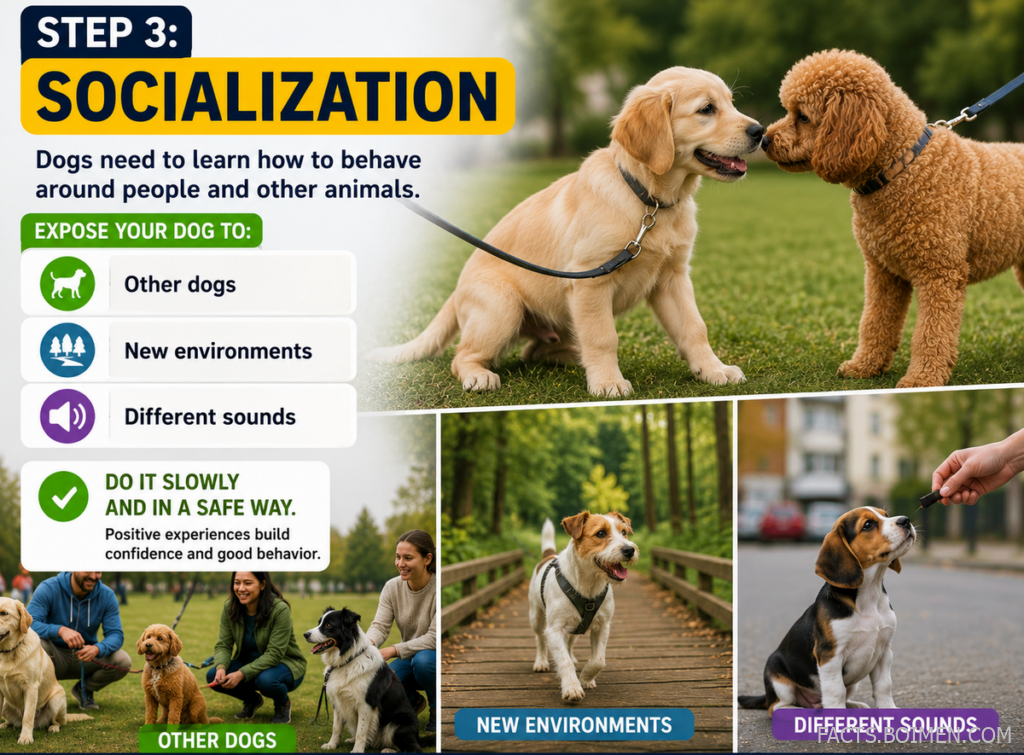
Expose your dog to:
- Other dogs
- New environments
- Different sounds
Do it slowly and in a safe way.
Step 4: Fixing Bad Behavior
Instead of punishment, focus on correction and redirection.
For example:
- If the dog bites furniture → give a toy instead
- If the dog jumps → ignore and reward calm behavior
Consistency is the key.
Step 5: Daily Routine
Dogs feel better with structure.
A good routine includes:
- Regular feeding times
- Daily walks
- Training sessions
- Play time
A stable routine reduces stress and improves behavior.
Common Mistakes in Dog Training
Many beginners make simple mistakes:
- Being inconsistent
- Using punishment instead of rewards
- Expecting fast results
- Not spending enough time
Avoiding these mistakes improves results quickly.
FAQ
How long does it take to train a dog?
It depends on the dog, but basic training can take a few weeks of consistency.
Can older dogs be trained?
Yes, dogs of any age can learn.
What is the best training method?
Positive reinforcement is the most effective method.
Conclusion
Training a dog is a journey, not a quick task.
With patience, consistency, and love, you can build a strong and positive relationship with your dog.
A trained dog is not just obedient—it is happier and more confident in life.