
Losing weight can feel overwhelming when there is so much conflicting advice online. Some people swear by intense workouts, while others focus only on diet. The truth is that sustainable weight loss usually comes from combining healthy eating habits with regular physical activity.
One of the most effective forms of exercise for many people is cardio. Not only can it help burn calories, but it also supports heart health, improves endurance, and boosts overall well-being.
If you’re looking for a practical and realistic approach to weight loss, understanding how cardio works can help you make smarter fitness decisions.
What Is Cardio?
Cardio, short for cardiovascular exercise, is any activity that increases your heart rate and keeps it elevated for a period of time.
Common examples include:
- Walking
- Running
- Cycling
- Swimming
- Jump rope
- Dancing
- Hiking
- Rowing
- Aerobic workouts
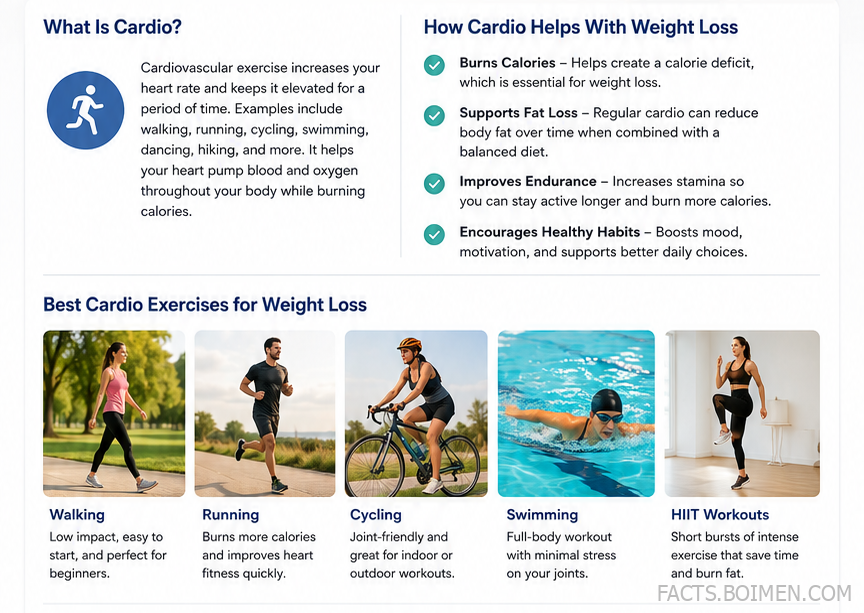
During cardio exercise, your heart pumps more blood and oxygen throughout your body. This process requires energy, which means your body burns calories.
How Cardio Helps With Weight Loss
Weight loss happens when your body uses more calories than it consumes. This is often called a calorie deficit.
Cardio can contribute to this process in several ways.
Burns Calories
The most obvious benefit of cardio is calorie expenditure. Activities such as brisk walking, jogging, and cycling can help increase the number of calories you burn throughout the day.
The exact amount depends on factors such as:
- Body weight
- Exercise intensity
- Workout duration
- Fitness level
- Age and metabolism
Supports Fat Loss
While cardio burns calories during exercise, consistent activity over time can help reduce body fat when combined with a balanced diet.
It’s important to remember that no exercise can target fat loss in a specific body area. Overall fat reduction occurs gradually across the body.
Improves Workout Capacity
Regular cardio strengthens your cardiovascular system, making daily activities feel easier. Better endurance often allows people to stay active longer and burn more calories throughout the week.
Encourages Healthy Habits
Many people find that consistent exercise improves motivation and encourages healthier lifestyle choices, including better sleep and improved nutrition.
Best Cardio Exercises for Weight Loss
There is no single “best” cardio workout for everyone. The most effective exercise is one you enjoy and can maintain consistently.
Walking
Walking is one of the most accessible forms of exercise.
Benefits include:
- Low impact on joints
- Suitable for beginners
- No special equipment required
- Easy to fit into a busy schedule
Even a 30-minute brisk walk can make a meaningful contribution to your weekly activity goals.
Running
Running burns more calories per minute than walking and can improve cardiovascular fitness quickly.
However, beginners should increase intensity gradually to reduce injury risk.
Cycling
Cycling is a joint-friendly option that can provide an effective cardio workout indoors or outdoors.
Many people find cycling easier to sustain for longer periods compared to running.
Swimming
Swimming provides a full-body workout while placing minimal stress on joints.
It can be particularly beneficial for older adults or those recovering from certain injuries.
High-Intensity Interval Training (HIIT)
HIIT alternates short bursts of intense activity with recovery periods.
For example:
- 30 seconds of fast movement
- 60 seconds of recovery
- Repeat for 15–20 minutes
HIIT can be time-efficient, but it may not be suitable for everyone, especially beginners.
How Much Cardio Should You Do?
The ideal amount of cardio varies based on individual goals, fitness level, and overall health.
A practical starting point for many adults is:
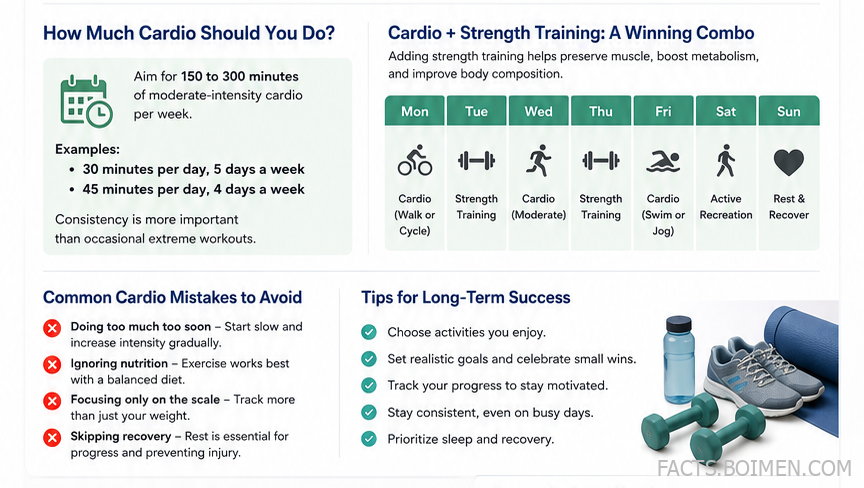
- 150 to 300 minutes of moderate-intensity cardio per week
This can be divided into manageable sessions such as:
- 30 minutes per day, 5 days per week
- 45 minutes per day, 4 days per week
Consistency is usually more important than occasional extreme workouts.
Cardio and Strength Training: A Powerful Combination
Many people focus only on cardio when trying to lose weight. However, adding strength training can improve long-term results.
Strength training helps:
- Preserve muscle mass
- Support metabolism
- Improve body composition
- Increase overall strength
A balanced fitness routine often includes both cardio and resistance exercises.
Example Weekly Schedule
Monday
Brisk walking or cycling
Tuesday
Strength training
Wednesday
Moderate cardio workout
Thursday
Strength training
Friday
Walking, jogging, or swimming
Saturday
Light activity or recreational sports
Sunday
Rest and recovery
Common Cardio Mistakes to Avoid
Doing Too Much Too Soon
Starting with very intense workouts can lead to fatigue, burnout, or injury.
Gradual progress is often more sustainable.
Ignoring Nutrition
Exercise alone cannot compensate for poor eating habits.
A balanced diet remains a key component of healthy weight management.
Focusing Only on the Scale
Weight can fluctuate due to hydration, muscle gain, and other factors.
Pay attention to additional indicators such as:
- Energy levels
- Fitness improvements
- Clothing fit
- Overall health
Skipping Recovery
Rest days are essential for recovery and long-term consistency.
Overtraining can negatively affect performance and motivation.
Tips for Long-Term Success
Choose Activities You Enjoy
Enjoyment increases the likelihood that you’ll stick with a routine.
Set Realistic Goals
Small, achievable goals create momentum and build confidence.
Track Progress
Keeping a simple workout journal or fitness app can help maintain motivation.
Stay Consistent
Long-term consistency generally produces better results than short bursts of extreme effort.
Prioritize Sleep
Quality sleep supports recovery, appetite regulation, and overall health.
The Connection Between Cardio and Heart Health
Beyond weight loss, cardio offers important cardiovascular benefits.
Regular aerobic exercise may help:
- Improve circulation
- Support healthy blood pressure
- Increase endurance
- Strengthen the heart muscle
- Improve overall cardiovascular fitness
These benefits contribute to better long-term health and quality of life.
Frequently Asked Questions
Is cardio the fastest way to lose weight?
Cardio can help create a calorie deficit, but the most effective weight-loss approach usually combines exercise, balanced nutrition, adequate sleep, and consistency.
Can I lose weight by walking?
Yes. Walking can support weight loss when performed regularly and paired with healthy eating habits.
Should I do cardio every day?
Many people can safely perform moderate cardio most days of the week. However, recovery remains important, especially after intense sessions.
Is HIIT better than steady-state cardio?
Both methods can be effective. HIIT is time-efficient, while steady-state cardio may be easier for beginners and more sustainable for some individuals.
Final Thoughts
Cardio remains one of the most practical and effective tools for supporting weight loss and improving overall health. Whether you prefer walking, cycling, swimming, or higher-intensity workouts, the key is finding activities you enjoy and can maintain consistently.
Rather than chasing quick fixes, focus on building sustainable habits that support both weight management and long-term cardiovascular health. Small, consistent actions often lead to the most meaningful and lasting results.