
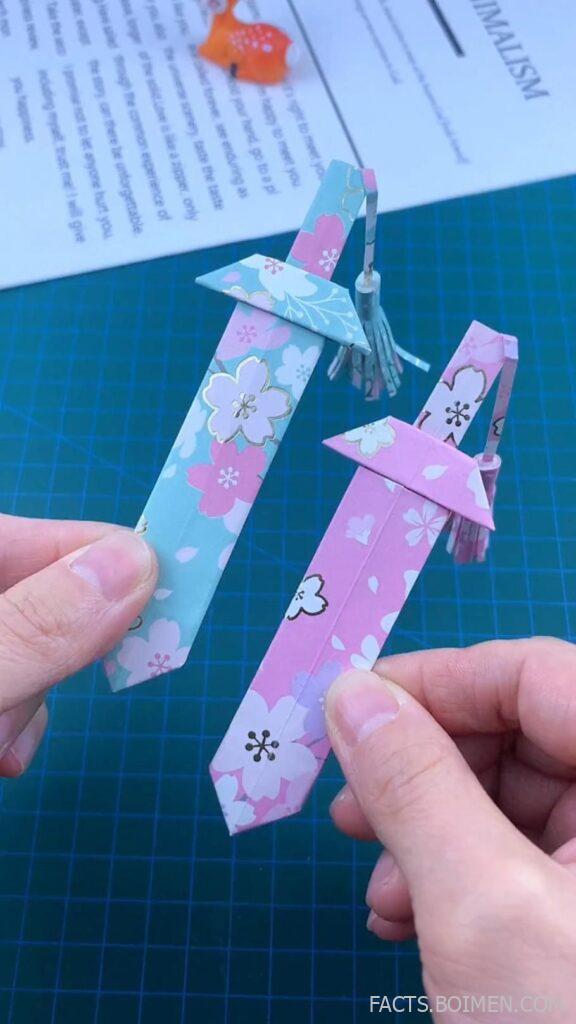
There is a particular kind of magic in handing a child a single sheet of paper and watching it become a sword. No batteries, no screens, no plastic, no cost. Just folds, creases, and the quiet satisfaction of building something with your own hands. Paper knives and origami swords sit at the perfect crossroads of craft and play: simple enough for a rainy afternoon, clever enough to teach real geometry, and sturdy enough to survive a backyard duel. Below you will find eighteen step-by-step paper knife and origami sword projects, each chosen for how clearly it can be taught and how well it holds up in the hands of an excited kid.
Table of Contents(Click to Toggle)
- Why Paper Swords and Origami Knives Are Worth Your Afternoon
- 18 Paper Knife and Origami Sword Projects
- 1. Origami.me
- 2. Origami Way
- 3. Paper Kawaii
- 4. Origami Guide
- 5. Origami Instructions
- 6. Instructables
- 7. wikiHow
- 8. Red Ted Art
- 9. Easy Peasy and Fun
- 10. Kids Activities Blog
- 11. Origami Resource Center
- 12. Craftsuprint
- 13. Papercraft Square
- 14. Folding Trees
- 15. Origami Spirit
- 16. Gilad’s Origami Page
- 17. YouTube Origami Channels
- 18. Pinterest Paper Craft Boards
- Bonus Mentions
- The Best Paper Sword Folds to Start With
Why Paper Swords and Origami Knives Are Worth Your Afternoon
Paper folding is one of the few crafts that asks for nothing but a flat surface and a sheet of paper, yet it quietly teaches symmetry, fractions, spatial reasoning, and patience. A paper knife is a gentle introduction: most designs take under two minutes and use a single square. A paper sword is the next level, usually built from multiple sheets joined into a handle, guard, and blade, which makes it a genuine engineering project disguised as a toy.
Parents and teachers like these projects because they scale. A five-year-old can fold a simple kunai-style knife with help, while a ten-year-old can tackle a full katana with a wrapped handle. The finished swords are safe, lightweight, and endlessly customizable with markers, tape, and colored paper. Best of all, the whole hobby lives on the open web, spread across origami archives, craft blogs, and step-by-step photo guides that have been refined for years. The eighteen sites below are where that knowledge lives.
18 Paper Knife and Origami Sword Projects
1. Origami.me : Clean step-by-step diagrams for beginner paper knives
What it is: A modern origami instruction site with illustrated, numbered diagrams for hundreds of models, including simple knives, daggers, and swords.
Category: Diagram-based origami tutorials
Why it stands out:
- Each step is drawn clearly enough that a child can follow without an adult reading over their shoulder.
- Models are grouped by difficulty, so you can start with a flat paper knife and work up to a three-dimensional blade.
- Most knife designs use one square sheet, which means no scissors and no glue.
Best for: Absolute beginners who want a paper knife finished in under five minutes.
2. Origami Way : Quick folds with printable instructions
What it is: A large library of beginner-friendly origami tutorials, including weapons, animals, and boxes, all written in plain language.
Category: Written and photo origami guides
Why it stands out:
- The written steps are unusually descriptive, which helps when a diagram is ambiguous.
- Several knife and sword models include a printable PDF you can hand to each kid at a party table.
- Pages load fast and are easy to read on a phone propped up on the craft table.
Best for: Parents running a craft table for several children at once.
3. Paper Kawaii : Cute, colorful takes on paper weapons
What it is: A polished origami blog known for kawaii-style models, with video walkthroughs and downloadable diagram sets.
Category: Video and diagram tutorials
Why it stands out:
- Video is filmed from directly overhead, so hand positions are never hidden.
- The site favors decorative paper, which turns a plain knife into something worth displaying.
- Free diagram PDFs accompany many tutorials if you prefer folding away from a screen.
Best for: Crafters who want their paper sword to look good on a shelf, not just in a duel.
4. Origami Guide : Difficulty-rated models you can trust
What it is: An organized origami hub where every model is tagged by difficulty level and number of steps.
Category: Curated origami index
Why it stands out:
- The difficulty tags mean you can avoid handing a frustrated eight-year-old an expert-level fold.
- Simple knife models sit alongside more complex swords, so the whole progression lives in one place.
- Step counts give you a realistic time estimate before you start.
Best for: Choosing the right model for a specific child’s age and patience level.
5. Origami Instructions : Traditional folds with a classic feel
What it is: A long-running archive of traditional origami, including the classic paper samurai sword and simple dagger.
Category: Traditional origami archive
Why it stands out:
- Focuses on traditional models that have been folded for generations, so the steps are well tested.
- Several weapons are built from two or three sheets joined together, teaching modular assembly.
- Minimal ads and clutter make it pleasant to read alongside a child.
Best for: Families who want the classic paper sword every generation has folded.
6. Instructables : Community projects with photos and feedback
What it is: A giant DIY community where makers post step-by-step projects, including durable paper and cardboard swords.
Category: Community DIY tutorials
Why it stands out:
- Many sword builds combine folded paper with tape and card for a sturdier blade that survives real play.
- Comments often contain fixes for steps that readers found tricky, which is genuinely useful.
- You can filter by difficulty and by materials on hand.
Best for: Older kids ready to upgrade from a delicate fold to a battle-ready paper sword.
7. wikiHow : Illustrated guides for almost any paper weapon
What it is: A collaborative how-to site with illustrated articles for paper knives, kunai, shuriken, and swords.
Category: Illustrated how-to articles
Why it stands out:
- Each article pairs a clear photo or drawing with a short written step.
- Multiple methods are often listed on one page, so you can pick the version that suits your paper size.
- Printable versions make it easy to work away from a screen.
Best for: A quick reference when you forget how a particular fold goes.
8. Red Ted Art : Kid-tested crafts with real classroom experience
What it is: A well-known kids’ craft blog run by a parent, with paper sword and knife projects designed for small hands.
Category: Kids’ craft blog
Why it stands out:
- Projects are tested with actual children, so the instructions account for common mistakes.
- Many builds use recycled paper and cardboard, keeping the cost at zero.
- Seasonal themes and group-friendly formats suit classrooms and parties.
Best for: Teachers and parents who need a craft that works for a whole group.
9. Easy Peasy and Fun : Printable templates and simple folds
What it is: A craft site with printable templates, including paper sword and dagger designs kids can cut and assemble.
Category: Printable craft templates
Why it stands out:
- Printable templates remove the trickiest measuring steps, which helps younger children succeed.
- Projects often include a coloring element, extending the activity well past the folding stage.
- Clear supply lists mean you know exactly what to gather before starting.
Best for: Kids aged five to eight who want to decorate as much as they fold.
10. Kids Activities Blog : Group-friendly paper weapon crafts
What it is: A large activity site covering crafts, games, and printables, with several paper sword tutorials.
Category: Family activity resource
Why it stands out:
- Articles often suggest variations, like turning a paper knife into a bookmark or a costume prop.
- Instructions are written for adults supervising children, with safety notes included.
- The site covers related activities so one project can fill an entire afternoon.
Best for: Planning a themed party or a full craft afternoon.
11. Origami Resource Center : Deep archive of diagrams and history
What it is: A comprehensive origami reference site with diagrams, book lists, and background on the craft.
Category: Origami reference archive
Why it stands out:
- The archive is broad enough to cover both simple knives and elaborate modular swords.
- Historical context turns a paper fold into a short lesson about Japanese paper craft.
- Links out to diagrams hosted elsewhere, acting as a reliable starting index.
Best for: Curious kids who want to know where these designs come from.
12. Craftsuprint : Downloadable papercraft weapon kits
What it is: A papercraft marketplace and library with downloadable sheets for swords, daggers, and props.
Category: Printable papercraft sheets
Why it stands out:
- Many sheets are free to download and print at home on standard card stock.
- Printed designs can look far more detailed than a plain folded model.
- Cut-and-fold kits introduce basic assembly skills that lead into origami.
Best for: Kids who want a realistic-looking paper sword with printed detail.
13. Papercraft Square : Templates for swords, props, and armor
What it is: A papercraft site offering downloadable templates for weapons, helmets, and costume pieces.
Category: Papercraft templates
Why it stands out:
- Templates are organized by theme, making it easy to build a matching sword and shield set.
- Projects range from simple to elaborate, so the site grows with your child.
- Card stock versions hold their shape far better than thin printer paper.
Best for: Costume builders and kids who want a full set of paper props.
14. Folding Trees : Tutorials with a designer’s eye
What it is: A craft blog featuring origami and paper projects with a strong emphasis on clean, attractive results.
Category: Paper craft blog
Why it stands out:
- Tutorials emphasize crisp creases and neat finishes, which noticeably improves the final model.
- Projects often mix origami with other paper techniques for a more interesting result.
- Photography is clear enough to copy folds directly from the images.
Best for: Kids who care about how their finished sword looks.
15. Origami Spirit : Thoughtful tutorials that explain the why
What it is: An origami site by an experienced folder, with tutorials that explain the reasoning behind each fold.
Category: In-depth origami tutorials
Why it stands out:
- Explanations help folders understand the structure rather than memorizing steps blindly.
- Video and photo combinations suit different learning styles.
- Encourages experimenting with paper size and weight, which matters for sword blades.
Best for: Older kids and adults who want to truly understand origami.
16. Gilad’s Origami Page : A serious reference for ambitious folders
What it is: A respected origami resource with model galleries, book reviews, and creator information.
Category: Origami reference and gallery
Why it stands out:
- Galleries show what complex paper weapons look like when folded by experts, which is genuinely inspiring.
- Book reviews help you choose a printed guide if you want to go further.
- Connects specific models to their designers, adding context to the craft.
Best for: Kids who have caught the origami bug and want to go deeper.
17. YouTube Origami Channels : Watch every fold in real time
What it is: A vast collection of origami creators who film paper knife and sword tutorials step by step.
Category: Video tutorials
Why it stands out:
- Watching hands fold in real time removes almost all ambiguity from tricky steps.
- Playback speed can be slowed down for the hardest folds.
- Creators often show the finished sword in use, which keeps kids motivated to finish.
Best for: Visual learners who struggle with static diagrams.
18. Pinterest Paper Craft Boards : Save and compare dozens of designs
What it is: A visual discovery platform where paper sword and knife tutorials are collected onto themed boards.
Category: Visual idea collection
Why it stands out:
- Seeing twenty finished swords side by side helps you pick a design before committing.
- Boards often link directly to the tutorial, saving search time.
- Easy to save favorites for a future craft day.
Best for: Browsing for inspiration before you choose a project.
Bonus Mentions
Origami Fun : Simple animated diagrams
A small, friendly site with animated step diagrams that show folds in motion. Handy when a static picture is not quite enough.
Origami Club : Hundreds of free models by category
A long-standing Japanese site with an enormous free library. The weapons section is small but the diagrams are precise.
Card Stock Upgrade Tip : Make any paper sword last longer
Printing your template on 160 to 200 gsm card stock instead of standard paper transforms a floppy blade into one that holds its edge through an afternoon of play.
Tape-and-Fold Hybrid Method : The sturdiest option
Folding the blade from paper and reinforcing the handle with a strip of tape gives you the look of origami with the durability of a cardboard prop.
The Best Paper Sword Folds to Start With
If you only try one project from this list, start with a single-sheet paper knife from Origami.me, then graduate to a two-sheet sword once the basic folds feel natural. The progression matters more than the destination: each model teaches a fold that the next one reuses, so skills compound quickly. Within a week, most kids can fold a knife from memory and are ready to design their own variations.
What makes this hobby genuinely special is that it costs nothing and travels anywhere. A stack of paper in a bag covers a restaurant wait, a rainy afternoon, a long car ride, and a birthday party. The eighteen sites above give you more than enough designs to keep that going for months, and the bonus tips will help your creations survive actual play.
Which paper sword or knife design did you try first, and how did it hold up? Share your favorite fold in the comments.