21 Phonics Smash Activities
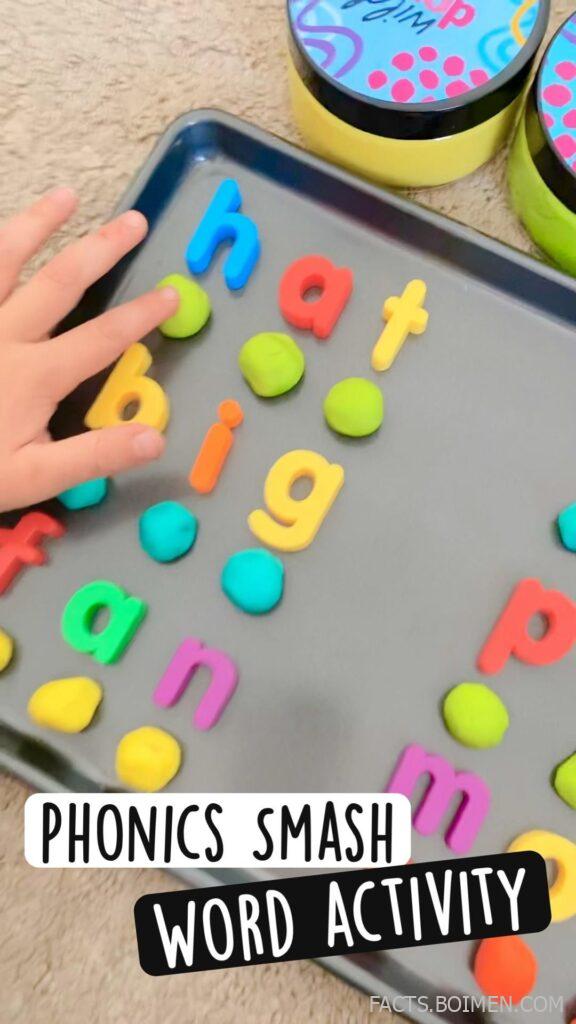
What it is: The classic activity you saw on the pin: a baking sheet, magnetic letters, and play dough. Place a letter on the sheet, call out a sound, and have your child smash the matching letter with a ball of play dough.
Category: Hands-on phonics game
Why it stands out: It’s incredibly simple to set up, requires minimal materials, and can be adapted for any skill level. You can use it for letter recognition, beginning sounds, or even CVC words.
Best for: Preschoolers and kindergarteners just starting to learn letter sounds.
What it is: Write sight words on index cards or paper squares and place them on a table. Call out a word, and your child smashes it with a play dough ball or a fly swatter.
Category: Sight word recognition
Why it stands out: This turns rote memorization into a high-energy game. You can easily differentiate by using words from your child’s reading list.
Best for: Kindergarten through second grade.
What it is: Use magnetic letters on a baking sheet. Call out a letter name or sound, and have your child smash the correct letter with a play dough ball.
Category: Letter recognition
Why it stands out: The magnetic surface keeps letters in place, making it easier for small hands to aim. You can also use it to spell simple words.
Best for: Toddlers and preschoolers learning the alphabet.
4. CVC Word Smash : Building and Smashing Three-Letter Words
What it is: Write CVC words (like cat, dog, sun) on paper or use letter tiles. Call out a word, and your child smashes it after they’ve built it or found it.
Category: CVC words
Why it stands out: It reinforces both decoding and encoding. You can also have them smash each letter as they sound it out.
Best for: Kindergarten and first grade.
5. Digraph Smash : Mastering Sh, Ch, Th, Wh
What it is: Create cards with digraphs and pictures of words that contain them. Call out a digraph, and your child smashes the matching card.
Category: Digraphs
Why it stands out: Digraphs can be tricky, but the smash game makes them memorable. You can also have them smash the digraph in a word they’ve written.
Best for: First grade and struggling readers.
6. Blend Smash : Practicing Consonant Blends
What it is: Write blends like bl, st, fr on cards. Call out a blend, and your child smashes it. Or, say a word and have them smash the blend they hear.
Category: Consonant blends
Why it stands out: It helps children hear the individual sounds in blends, which is a key pre-reading skill.
Best for: First and second grade.
7. Rhyming Smash : Identifying Word Families
What it is: Place pictures or word cards of rhyming words (cat, hat, bat). Call out a word, and your child smashes all the words that rhyme with it.
Category: Rhyming
Why it stands out: Rhyming is a foundational phonemic awareness skill, and this adds a physical element that keeps kids engaged.
Best for: Preschool and kindergarten.
What it is: Place a picture card (like a cat) and several letters. Call out the picture, and your child smashes the letter that makes the beginning sound.
Category: Phonemic awareness
Why it stands out: It isolates the first sound, a critical skill for reading. You can use any pictures from magazines or printouts.
Best for: Preschool and kindergarten.
What it is: Similar to beginning sound smash, but focus on the ending sound. Call out a word, and your child smashes the letter that makes the ending sound.
Category: Phonemic awareness
Why it stands out: Ending sounds are often harder to hear, so this targeted practice is valuable.
Best for: Kindergarten and first grade.
What it is: Write vowel teams on cards and have words with those teams on separate cards. Call out a word, and your child smashes the correct vowel team card.
Category: Vowel teams
Why it stands out: Vowel teams are a common stumbling block; this game makes them fun and memorable.
Best for: First and second grade.
What it is: Create cards with ar, er, ir, or, ur and pictures of words that contain them. Call out a word, and your child smashes the correct r-controlled vowel.
Category: R-controlled vowels
Why it stands out: The “bossy r” concept is easier to grasp with a physical game that reinforces the sound.
Best for: First and second grade.
12. Syllable Smash : Counting Syllables with a Smash
What it is: Write words on cards and have your child smash a play dough ball once for each syllable they hear.
Category: Syllable awareness
Why it stands out: It combines auditory processing with gross motor movement, which helps with syllable segmentation.
Best for: Preschool through first grade.
What it is: Write several word family words (like cat, hat, bat) on cards. Call out a word, and your child smashes all the words in that word family.
Category: Word families
Why it stands out: It helps children see patterns in words, which accelerates reading fluency.
Best for: Kindergarten and first grade.
What it is: Use printable play dough mats that have letters or words on them. Your child covers the correct letter or word with a play dough ball and then smashes it.
Category: Printable resources
Why it stands out: These mats are reusable and can be found for free or cheap on sites like Teachers Pay Teachers. They’re perfect for centers.
Best for: Classroom teachers and homeschooling parents.
What it is: Write letters or words on paper and tape them to a fence or wall. Fill water balloons and have your child throw a balloon at the correct target when you call out a sound or word.
Category: Outdoor learning
Why it stands out: It’s a perfect summer activity that combines phonics with sensory play and gross motor skills.
Best for: Warm weather days, ages 4-8.
16. Smash and Write : Combining Writing and Smashing
What it is: After smashing a word, your child writes it on a whiteboard or paper. This reinforces the spelling and connects the physical action to the written form.
Category: Writing integration
Why it stands out: It adds a literacy component that extends the activity beyond just reading.
Best for: First grade and above.
What it is: Place word cards on the floor or table. Call out a word, and your child smashes it with a fly swatter (clean, of course).
Category: Game variation
Why it stands out: The fly swatter adds a fun, silly element that kids love. It’s also great for groups.
Best for: Classroom review or family game night.
What it is: Use kinetic sand instead of play dough. Shape it into balls or flatten it and press letters into it. Smash the sand to reveal the letter.
Category: Sensory play
Why it stands out: Kinetic sand has a unique texture that some children prefer. It’s also less messy than play dough.
Best for: Children who are sensitive to textures.
What it is: Instead of using hands, let your child use a toy hammer to smash play dough balls on top of letters or words.
Category: Gross motor play
Why it stands out: It adds a satisfying *thwack* that some kids find incredibly motivating.
Best for: High-energy kids who need to release some steam.
What it is: Write words on index cards and scatter them on the floor. Call out a word, and your child throws a soft ball at the card to “smash” it.
Category: Gross motor play
Why it stands out: It’s a great way to practice phonics while also working on hand-eye coordination.
Best for: Active learners, ages 4-7.
What it is: Several educational websites offer digital smash-style games where kids click or tap on the correct letter or word to make it explode or smash.
Category: Digital learning
Why it stands out: These are perfect for when you need a screen-based option, and many are free. They also provide immediate feedback.
Best for: Tech-savvy kids or as a reward activity.
Bonus Mentions
This Reading Mama : A Treasure Trove of Phonics Printables
What it is: A blog with hundreds of free phonics printables, including smash mats and other hands-on activities.
Why it stands out: It’s a go-to resource for parents and teachers looking for low-prep, high-engagement activities.
What it is: A platform where educators share and sell original teaching resources, including many phonics smash games.
Why it stands out: You can find ready-made smash activities for every phonics skill, often for just a few dollars.
Pinterest : Endless Smash Inspiration
What it is: The same platform you came from! Search “phonics smash” or “play dough smash” for countless ideas.
Why it stands out: It’s a visual goldmine for creative variations you haven’t thought of.
The Joy of Smashing
Phonics smash activities are more than just a fun way to pass the time—they’re a powerful tool for building early literacy skills. By combining movement, sensory input, and phonics practice, these activities cater to a wide range of learning styles and keep children engaged. Whether you stick with the classic play dough smash or branch out into water balloons and digital games, the key is to keep it playful and positive. The more fun your child has, the more they’ll want to learn.
What’s your favorite way to make phonics fun? Share your own smash variations in the comments below!