
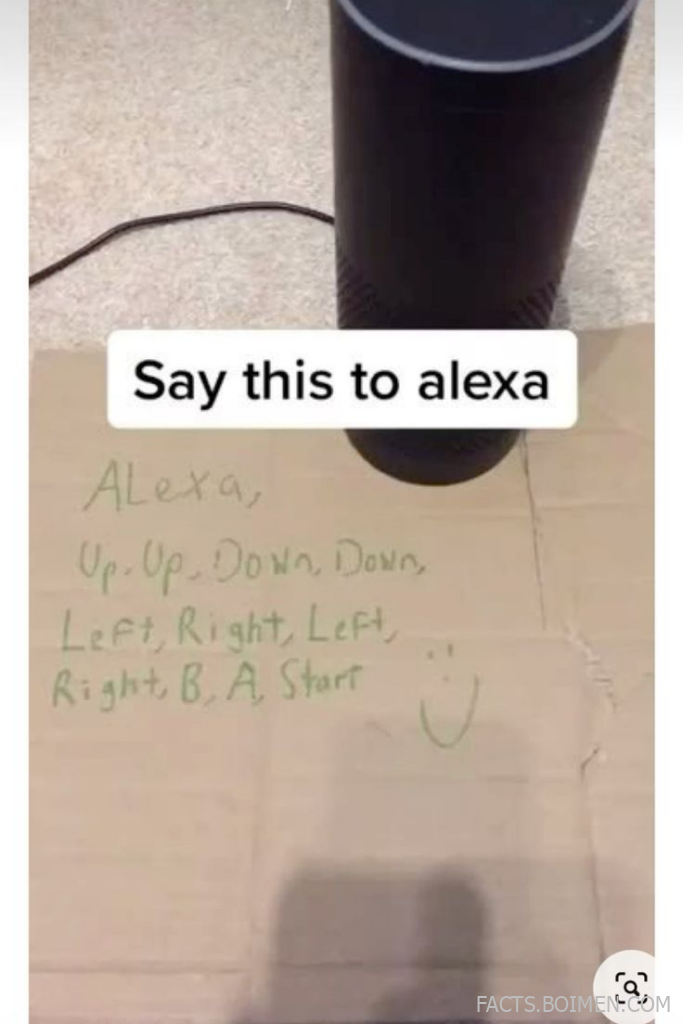
A small smart speaker sits quietly on a table. Next to it, a handwritten note reads: “Alexa, Up, Up, Down, Down, Left, Right, Left, Right, B, A, Start.” The message feels oddly familiar. For many viewers, it immediately triggers recognition—not just of a phrase, but of a memory.
This type of content works because it blends nostalgia, humor, and modern technology into one simple story. What looks like a joke on the surface is actually a strong example of how digital culture turns shared memories into engaging storytelling.
The Hidden Story in One Frame
At its core, the image tells a quiet narrative:
First, the smart speaker represents modern convenience and automation.
Then, the handwritten note introduces something unexpected—an old gaming sequence.
Finally, the contrast between eras creates humor and emotional connection.
Without needing movement or explanation, the scene communicates a complete idea.
Why This Concept Feels Instantly Familiar
The phrase written on the paper is widely recognized by gamers as a classic controller sequence often linked to unlocking advantages in older games. When placed next to a voice assistant device, the combination feels playful and ironic.
This reaction happens because:
- Nostalgia activates emotional memory
- Familiar patterns create recognition
- Unexpected context generates humor
The viewer experiences all three within seconds.
Storytelling Through Contrast
The strength of this image comes from contrast:
Old vs New
The handwritten note symbolizes analog simplicity, while the speaker represents advanced technology.
Serious vs Playful
Voice assistants are often used for practical tasks. The message reframes them humorously.
Silence vs Imagination
The static scene invites viewers to imagine what might happen next.
Why Nostalgia Works So Well in Digital Content
Nostalgia-based storytelling consistently performs strongly because it:
- Connects across age groups
- Feels authentic and emotional
- Requires little explanation
- Encourages sharing among peers
It creates an emotional shortcut between creator and viewer.
Visual Simplicity as a Storytelling Tool
Technically, the image succeeds because:
Minimal Composition
Few objects keep focus on the message.
Neutral Background
The clean surface avoids distractions.
Handwritten Text
Adds personality and authenticity.
These elements allow the idea to stand out clearly.
What This Says About Modern Internet Culture
This type of humor reflects how audiences now interact with content:
- They appreciate subtle jokes
- They value shared references
- They engage with familiar themes in new contexts
The result is a form of storytelling that feels both personal and universal.
Conclusion
The image demonstrates how nostalgia, contrast, and simplicity can create an effective visual story. It doesn’t rely on motion or complexity. Instead, it captures attention through recognition and imagination, showing how small details can carry powerful meaning in modern digital culture.