Want to draw an adorable panda but don't know where to start? This step-by-step guide breaks down the process into simple, foolproof steps that even a complete beginner can follow. By the end, you'll have a cute panda you'll be proud to show off.
- Start with simple circles and ovals to build the panda's structure.
- Place eye patches low and tilted for a realistic panda face.
- Keep your initial lines light to make corrections easy.
- Add small details like eye highlights and a 'W' mouth for charm.
- Practice the head daily for a week to see rapid improvement.
- Use a soft pencil (2B) for easier shading and smoother lines.
Why Drawing a Panda is Perfect for Beginners
Pandas are ideal for beginners because their large, rounded shapes and high-contrast black-and-white coloring make mistakes forgiving. You don't need to worry about intricate fur texture or complex shading—just a few circles and ovals will get you 80% of the way there. Plus, the instantly recognizable panda face gives you a quick win that boosts confidence.
Gather Your Simple Tools
You only need a pencil, an eraser, and a piece of paper. A standard HB pencil works fine, but if you have a 2B, it's slightly softer and easier to shade. Use a kneaded eraser if you have one—it lifts graphite without smudging—but a regular eraser is fine. Don't overthink your materials; the key is to start.
The Core Shapes: Circles and Ovals
Every panda drawing starts with basic shapes. The head is a large circle, the body is a big oval, and the ears are two smaller circles. By placing these simple shapes in the right positions, you create a solid foundation that makes the final drawing look accurate. This is the 'block-in' method used by professional illustrators.
Perfecting the Panda Face
The face is the most important part. The eye patches are not perfect circles—they're slightly angled ovals that tilt toward the nose. Place them about one eye-width apart. The nose is a small triangle or oval right below the center, and the mouth is a simple 'W' shape with a vertical line down from the nose. These small details bring your panda to life.
Adding Character: Expressions and Posture
Once you have the basic panda, you can make it unique. Tilt the head slightly to one side for a curious look, or draw the eyes a bit larger for a 'kawaii' effect. For posture, have the panda sitting with its legs forward, or holding a bamboo stalk. These tweaks add personality and make your drawing memorable.
Common Mistakes and How to Avoid Them
The biggest mistake beginners make is drawing the eye patches too symmetrical and round, making the panda look like a bear with glasses. Another is placing the eyes too high on the head—remember, panda eyes are low, almost at the same level as the nose. Also, don't outline the body with a heavy hand; keep your lines light until you're satisfied.
Practice Routine for Quick Improvement
Spend 10 minutes a day for a week drawing just the panda head. After 7 days, you'll have drawn 7 heads, and you'll naturally improve. Then move on to the full body. Consistency beats long, infrequent practice sessions. You'll see measurable progress in just a week.
The Hacks, Step by Step
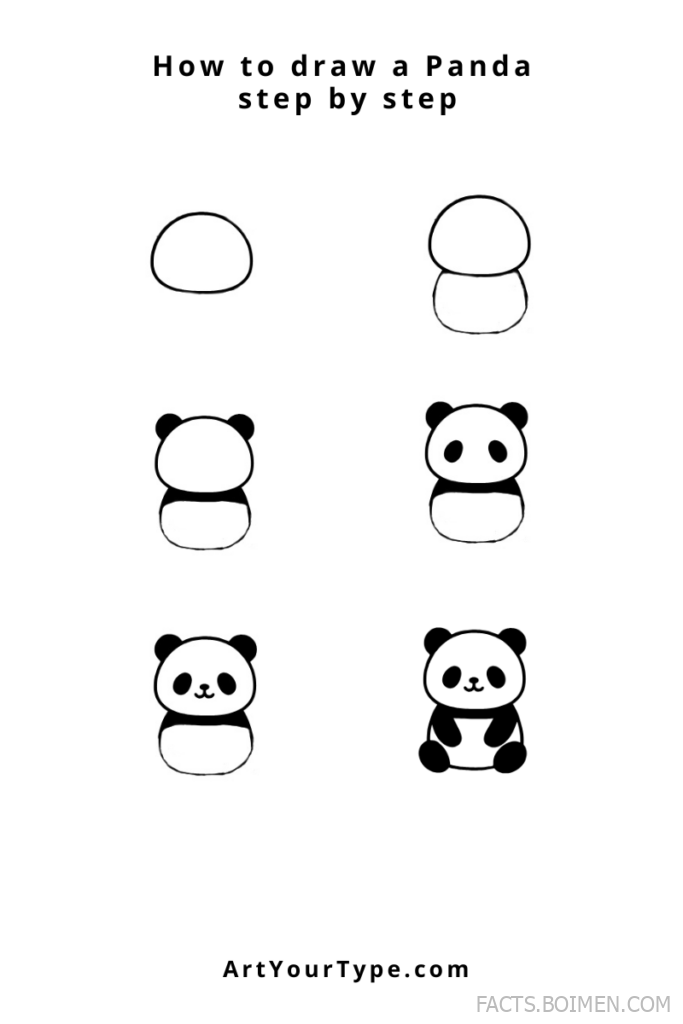
- 1Draw a large circle for the head
Lightly sketch a circle about the size of your fist. This will be the panda's head. Keep the line faint so you can erase later. - 2Add two small circles for ears
Place a small circle at the top left and top right of the head circle, slightly overlapping. These will be the ears. Make them about one-third the size of the head. - 3Sketch a big oval for the body
Draw a large oval below the head, overlapping it slightly. This is the body. Make it about twice the height of the head to give your panda a chubby look. - 4Draw the eye patches
Inside the head, draw two tilted ovals that angle toward the center. They should be about one eye-width apart. Position them low, roughly at the vertical midpoint of the head. - 5Add the eyes and nose
Inside each eye patch, draw a small dark circle for the eye. Add a small triangle or oval just below the center of the head for the nose. Leave a tiny white highlight in each eye for a lively look. - 6Draw the mouth
From the bottom of the nose, draw a short vertical line downward. Then curve two lines outward and up to form a 'W' shape. This creates a cute, smiling mouth. - 7Add front legs and feet
Draw two short, rounded rectangles extending from the bottom of the body for the front legs. Add two oval shapes at the bottom for the feet. Keep them simple and rounded. - 8Outline and erase guide lines
Once you're happy with the shapes, darken the final lines with your pencil. Erase any remaining guide lines. Then, fill in the ears, eye patches, arms, and legs with black. Leave the rest white.
The secret to drawing a cute panda is not perfection, but keeping the shapes simple and the eyes expressive.
Frequently Asked Questions
How do you draw a panda for beginners?
Start with basic shapes: a circle for the head, ovals for the body and ears, and then add the facial features. Keep your pencil strokes light and build up gradually.
What is the easiest way to draw a panda?
The easiest way is to use the 'block-in' method: sketch simple geometric shapes first, then refine them into the final panda. This avoids getting lost in details too early.
How do you draw a realistic panda face?
To draw a realistic panda face, focus on the eye patches: they are not circles but elongated ovals that angle downward toward the nose. Also, place the eyes lower on the head than you might expect.
What materials do I need to draw a panda?
You only need a pencil, an eraser, and paper. A standard HB pencil is fine, but a 2B pencil is softer and better for shading. A kneaded eraser helps lift mistakes cleanly.